Latest Posts

Great Fantasy Prophecies.

Prophecies can add a fascinating plotline to a novel, giving the book depth, mystery and intrigue.  It also instills the story with a great sense of importance – as if the ages were just waiting for this one conjuncture of events, or particular character to come to prominence.  It can sometimes be found in historical novels, but it is fantasy writing that the use of prophecy is far more common, becoming almost an art form in itself.  Many readers may think that creating a fictitious prophecy would be straightforward, but it certainly isn’t, and it is especially difficult if you wish to imbue it with a high level of mystery and complexity.  After sprinkling prophecy throughout Game of Thrones, George R R Martin said ‘Prophecies are, you know, a double edge sword.  You have to handle them very carefully; I mean, they can add depth and interest to a book, but you don’t want to be too literal or too easy…’ www.adriasnews.com
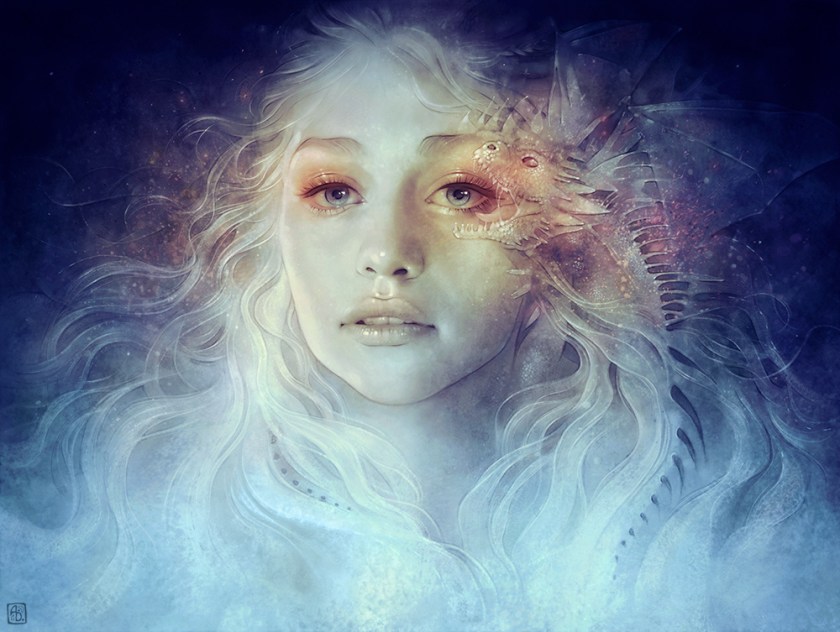
mother_of_dragons_by_escume.deviantart.com

escume.deviantart.com

George R R Martin, Game of Thrones

So let’s look at how a few fantasy authors have handled prophecy and look at their different approaches to this aspect of their writing.  As I’ve already mentioned George R R Martin, let’s look at his prophecies that come in the form of prophetic dreams in Game of Thrones.  The first example comes from Daenerys Targaryen, at the start of the series, when she is often beaten by her brother, Viserys.  This is what she dreams…

“Her thighs were slick with blood.  She closed her eyes and whimpered.  As if in answer, there was a hideous ripping sound and the crackling of some great fire.  When she looked again, Viserys was gone, great columns of flame rose all around, and in the midst of them was the dragon.”

Daenerys becoming the mother of dragons is first foretold in this passage, and from that starts the remarkable journey of Daenerys as she first marries the great Khal Drogo, who rids her of her troublesome brother, and she goes on to become the conqueror queen with the aid of her three dragons – birthed in fire after the death of her husband.

Another of Martin’s prophecies comes from Bran Stark who foresees the impending war with the Lannisters, that will tear the Seven Kingdoms apart.  He has a dream showing his father and sisters…

“There were shadows all around them.  One shadow was as dark as ash, with the terrible face of a hound.  Another was armoured like the sun, golden and beautiful.  Over them both loomed a giant in armour made of stone, but when he opened his visor, there was nothing inside but darkness and thick black blood.”

You will notice that Martin’s prophecies are quite dark and graphic, not sparing the reader from the violence that makes up much of his story, and is a suitable accompaniment to his great series.  However his grim and brooding visions are not the only way to go, as our next example shows…

Sword_of_Truth_(glowing)_legendoftheseeker.wikia.com

legendoftheseeker.wikia.com

Terry Goodkind, Sword of Truth series.

By winter’s breath,

The counted shadows shall bloom.

If the heir to D’Hara’s vengeance

counts the shadows true,

his umbra will dark the world.

If he counts false,

then his life is forfeit.


You can see that Goodkind’s prophecies come in the form of complex riddles, that the reader can try and decipher, with varied levels of success.  This particular prophecy is forked and says that the ‘heir to D’Hara’s vengence’ the sinister Darken Rahl, could either take over the world through the choice he needs to make, or forfeit his life.

What makes Goodkind’s prophecies interesting, are that some lines are easy to decipher, whilst others are more obscured, meaning that you only truly understand the full prophecy when the story reaches its climax.  This is important for great prophecy writing – give the reader enough to be intrigued, but not enough to tell them what’s going to transpire, you don’t want to give the game away too early.

This complex problem may explain why some prophecies are not revealed in their entirety at the start of a novel, or series of books, instead coming to light piece by piece, as the characters in the story reveal more of what is to be foretold.  This is the technique used in my next example…

dragon-reborn_wallpaper.metalship.org

wallpaper.metalship.org

Robert Jordan, Wheel of Time series.

Yet one shall be born to face the shadow,

Born once more as he was born before, and shall be born again without end.

The Dragon shall be reborn,

And there will be wailing and gnashing of teeth at his rebirth.

In sackcloth and ashes shall he clothe the people,

And he shall break the world again by his coming,

Tearing apart all ties that bind.

Like the unfettered dawn shall he blind us, and burn us,

Yet shall the Dragon Reborn confront the Shadow at the Last Battle,

And his blood shall give us the light.

Let tears flow, O ye people of the world.

Weep for your salvation.


The full Karaethon cycle prophecy is far too long to write here as it goes on for multiple pages, but it centres on the rebirth of the man known as the Dragon.  The man who’d once defeated the Shadow, but in his madness afterwards, destroyed the great civilisation he’d created – a time called ‘The breaking of the world.’

The early passages of the prophecy foretell his rebirth, but as you can tell from the small excerpt shown here, also foretell him destroying the world once again, before he can face the Shadow once again at the Last Battle.  Unsurprisingly, the people of his world are not sure whether his coming should be something they should celebrate or dread, as the prophecy is very clear on the destruction he will bring, despite the eventual salvation he offers.

Much of the prophecy is ambiguous and its meaning clouded, so you’re never quite sure how it will come to be fulfilled, but gradually through the series (which is also of an epic length) the passages come true as yet more is revealed.  It is a great example of prophecy being done well, but to see prophecy at its best, you really need to go back to the beginning, and the book that started the fantasy genre, I’m talking about Tolkien of course…
lotr_twitter.com

twitter.com

J R R Tolkien, The Lord of the Rings.

All that is gold does not glitter,

Not all those who wander are lost,

The old that is strong does not whither,

Deep roots are not reached by the frost.

From the ashes a fire shall be woken,

A light from the shadows shall spring,

Renewed shall be the blade that was broken,

The crownless again shall be King.


The first thing to notice about this poem, is the quality of the prose.  With the greatest respect to the other great writers used as examples in this article, it is clear that Tolkien’s mastery of poetry was on a far higher level.  His passage manages to conjure thoughts of times lost, and hope being renewed.  It foretells the Return of the King of the West, the Dunedain Aragorn, who goes by the name Strider in the first of the books, and is far more important than his appearance would suggest.

I think it is a wonderful poem, and a beautiful example of Tolkien’s effortless master of the English language.  It shows how fantasy writing can be greatly enhanced by prophecy, but also shows the level of care and work needed by aspiring writers if they are ever going to achieve the spine-tingling sense of portent that a great prophecy produces.  Prophecy needs to be treated with care and attention, as it can be the making and breaking of a novel.  As George R R Martin’s fantastic character, Tyrion Lannister says in Game of Thrones, “Prophecy is like a half-trained mule.  It looks as though it might be useful, but the moment you trust in it, it kicks you in the head.”


Ancient Weapons of War!

It is great to have a castle, or large fortress, to set a scene in a historical novel.  The high curtain walls, the gatehouses, the murder holes and cunningly placed arrow slits.  All give the writer great scope in describing formidable bastions that appear all but impossible to penetrate.  However, history teaches us that the appearance of impregnability can be illusory, as ever since people started building walls to protect their buildings, others have been devising ways to get in – by fair means or foul.

Ancient siege weapons – the Greek Catapult.

When I started writing my first novel on Alexander the Great, I spent plenty of time researching the early catapults that Alexander used in besieging the many cities of Persia, in his conquest of the Persian Empire.  I proudly presented a long chapter to my father (who was helping me edit the novel) which held long explanations of the mechanics of the engines, describing them in great detail.  My father promptly put great red crosses through all the pages and scribbled “Too much information!!”

It was a great lesson for me as a writer, and taught me that historical detail should always be added subtly to novels, and not forced upon the reader in an endeavour to cram all the writer’s knowledge into the work.  When writing a historical novel, it is paramount to remember you are a writer first and foremost, and not a teacher.

However, my clumsy attempt to give prominence to these weapons wasn’t without reason.  When we think of Alexander the Great today, we tend to think of his vast land battles in which he led his Macedonian army so courageously, such as  Issus or Gaugamela.  But in his day, what Alexander was most famous for, was storming walls, and taking fortified cities.  The reason for this was Alexander the Great was the first man to truly achieve this repeatedly.  Up until Alexander came along, the chances were if you built a thick enough wall around your city, you’d probably be safe.  Alexander changed the rules, and warfare would never be the same again.  Alexander used a variety of rams, and covered siege towers, that he used to directly assault walls, but normally he’d weaken them first, using the latest technology of the day – the catapult.

A few hundred years earlier, the Phoenicians had devised the first great composite bows that could fire bolts much larger than your normal bow and arrow.  The composite bows would be made from two materials, one that was very difficult to compress, such as horn, and the other half something that was very springy, like yew.  The horn would be bound to the inside of the yew, and together they would make an incredibly powerful bow that could be drawn with the help of a lever.

However, by the fourth century BC, and the time of Alexander, this technology had moved on with the torsion engine.  A thick cable of sinew was wrapped around a lever and repeatedly twisted, building up a great amount of energy before being released without breaking.

Oxybeles_hellenicaworld.com

hellenicaworld.com


This combined with the composite bow, made for a very powerful machine that could shoot either bolts or rocks, which were flung at the walls and could reduce all but the strongest walls to rubble.


Roman

When the Romans brought the Greek states into their Empire via conquest, they also inherited the Hellenic torsion technology and like most things they came across, they developed and improved it.  The Roman Ballista was one such machine that was powered by two horizontal arms which had been inserted into two springs of sinew that were tightly wound by the use of a winch.  These came in a verity of sizes, the smallest used to hurl rocks or bolts over the city walls, whilst the largest could hurl projectiles that weighed three talents (approx. 80 kg or 175 pounds) and be able to destroy most obstacles that lay in its path.

Ballista_pinterest.com

pinterest.com

They also developed other uses of the torsion technology such as the Onager that’s kicking action resembled the wild ass it was named after, and the self-loading Polybolos that could fire a succession of smaller bolts repeatedly.

After being assailed by such weapons, the opposing city or fort could normally be forced into surrender, but if necessary the Romans were prepared to assault the walls themselves with a variety of Rams.

RAM_warmuseums.nl.jpg

warmuseums.nl

Medieval

After the Roman Empire fell, and the world slipped into the dark ages, most of this technology was forgotten for a time, and clever siege engines and sophisticated catapults disappear from history for several centuries.  Competing Kings would prefer to put their faith in god, rather than rely on technological solutions.

However, with the onset of the medieval age, and the upsurge in Castle building and formidable thick walls, something more tangible than blind faith was needed to prise them open.  Small scale catapults or ballistae were no longer going to cut it, for this you’d need something larger – much larger…

hybridtrebuchet_redstoneprojects.com

redstoneprojects.com


The Medieval Trebuchet.

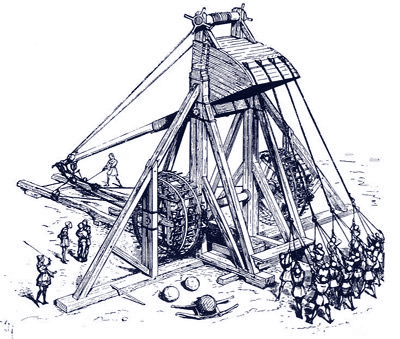
The concept of the Trebuchet is actually very simple, a large counterweight is attached at the end of a long lever.  Attached to the long lever, is a sling, so when the counterweight is allowed to fall, the energy is transmitted into the end of the throwing arm and the projectile is sent skyward with great force.  The ancient Chinese and the Romans had used this technology previously, but by the medieval age the weapons were growing in size, so that vast stones weighing over 1000 kg could be hurled at enemy castles, at a range of 300 meters.  The cycle rate was also impressive, a rock capable of being launched every 15 seconds.  These weapons were so effective that they lasted well into the 15th Century, despite the introduction of gunpowder.


Malazan Book of the Fallen

51pDraZRUIL._SX308_BO1,204,203,200_

Some stories just cannot be told in one book.  Many historical and fantasy epics span several volumes, taking well known characters through countless adventures, as the twists and turns of their stories unfold through multiple novels.  Sometimes starting such a long journey can be daunting – do I really want to commit myself to such a long story?  When will it ever end?

However, recently, I began to miss the involvement such an immersive story gives you, so decided to start Steven Ericksen’s long fantasy epic – Malazan Book of the Fallen.  The story starts with the novel, Gardens of the Moon.  Just reading this series is an ambitious project as it spans nine books and promises to take up a lot of my time.  Now I should point out, that at the time of writing this, I’ve just read the first of these novels.  So I’m unqualified to speak on the series in its entirety, but I was pleased with the start that Gardens of the Moon has made in taking me into this journey.

The world we find was once dominated by the elder races, of which there were four, who were imbued with vast magical powers, enough to challenge the Gods themselves.  However, the remorseless march of time has wearied the elder races, and they have largely withdrawn from the world by the time we join the story, leaving lesser mortals to take over the lands.  We enter the story on the continent of Genabackis, as the Malazan Empire starts its campaign of expansion against the Seven Free Cities.  We join a squad of soldiers, as they prepare to assault one of the cities and bring it into the Empire.  However, all is not what it seems, and soon their loyalty is tested to breaking point in a tale of intrigue and betrayal.

Their world is very different from our own, as mages of extreme power war against one another, pulling power from their particular ‘warren’ of magic, that represents the source of their craft.  Different mages have different talents and can draw from different sources, so Erickson’s novel gives us a very varied array of magical powers, that are almost limitless in number.  These are complicated further by the remnants of the Elder races, who occasionally make an appearance, with their vast arcane knowledge.  Those without the aid of sorcery are hardly defenceless however, as some are armed with swords made from the rare otataral ore, that can deflect the influence of magic – which I thought was a neat counter-point to the otherwise all-encompassing power of the mages.

The story is fast paced as we are introduced to a whole host of characters that I am guessing will play an important part in the story to come.  Each one is well thought out with their own back story and personality.  The first book culminates in a vast convergence of power at the city of Darujhistan, where competing forces wrestle for mastery over the great city, the jewel of Genabackis.

I’m not sure how many of you wish to embark on such a long journey with this series, but judging by the first novel, it won’t be a boring ride…

GardensoftheMoonrevisedlimited1

Picture from the-Void.co.uk

Magical Swords

What is it about magical swords and fantasy fiction?  The concept of such weapons seem perfectly natural in a fantasy realm, and they feature as a centre point to many classics of the genre.  They fill readers’ minds with wistful thoughts of holding such weapons themselves, and being able to smite adversaries with the ease of the heroes (or villains) who wield them in the books.  Despite the regularity of such swords turning up in fantasy novels, the idea never grows tired, as a succession of authors have invented new modifications or types of mythical blades, seamlessly interweaving new flavours of mystery and interest into the forging of their weapons.

The list of them all would be endless, so instead I have just a few of my favourites.

Excalibur – numerous authors.

excalibur_unisci24.com

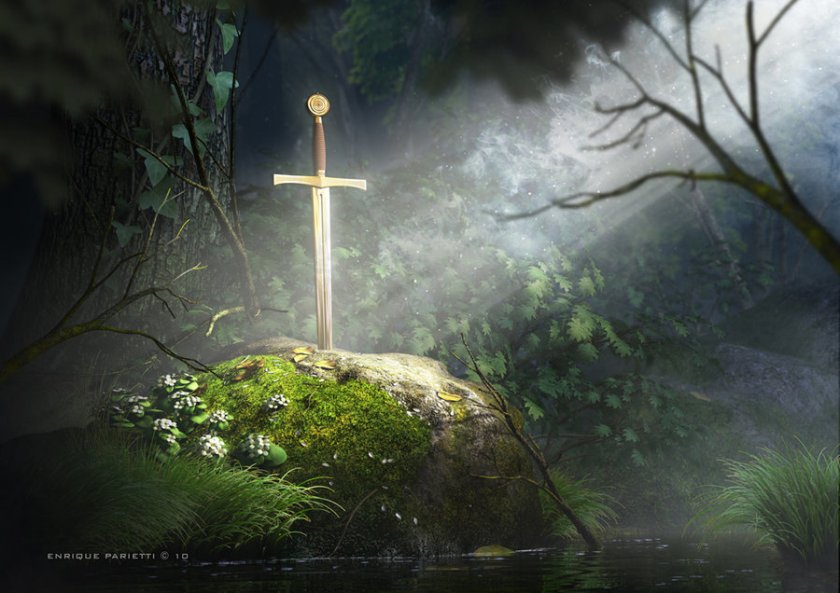
Where else to start but the mythical blade of King Arthur, King of the Britons, and one true King of its shores.  Also referred to by its Celtic name, Caliburnus, it is interwoven into the legend of King Arthur almost as strongly as the Round Table, or Merlin the Wizard.  It was said that only the true king could draw the weapon from the stone which Uther Pendragon drove it into on his death.  Many tried, but only his son Arthur, hidden from his enemies by the sorcerer Merlin since birth, managed to pull the sword free and went on to rule  Camelot for an age.

On his demise, the sword was returned to the Lady of the Lake, to once again await the true king, who will come when the land was once again in dire peril.

Narsil – The Lord of the Rings, J R R Tolkien

Narsil_flickr.com

lotr.wikia.com

The sword of Elendil, that was wielded by Isildur, striking the finger and Ring from the hand of the Dark Lord Sauron, shattering in the process.  The Ranger Aragorn held the blade and re-forged it at Rivendell, renaming it Anduril – The flame of the West.  Argorn used it to identify himself as the heir and rightful King of the West, something that proved useful in convincing the shades of the men of Dunharrow to fulfill their vows and come to aid of Minas Tirith.

Tolkien showed with this sword, that is isn’t just magical powers or traits that make a sword (although the sheath that Legolas gave Aragorn for it meant it stayed ever sharp and unbreakable) but also its history, its own story, that makes a sword special.

The other magical blade in The Lord of the Rings, was named Sting.  It didn’t have quite as spectacular back-story, but it did glow when orcs were near, and showed its worth against the giant spider Shelob when Sam drove her off by poking holes in her.Glowingsting2_lotr.wikia.com

lotr.wikia

Shardblades and Honorblades – The Stormlight archive, Brandon Sanderson.

ShardbladeRecaptains

Recaptains.com

The Shardblades of the Stormlight Archives are truly awesome weapons, cutting through armour and other blades as easily as a knife cutting through butter.  Their wielders dominate the battlefield, being able to cut down anything in their path.  The only objects that can resist their destructive power are other Shardblades or the equally impressive Shard-plate that can resist several blows from such weapons before dismantling.

Originally these weapons were the preserve of the Knights Radiant, ten mythical orders of knights that kept justice in the world of Roshar.  However, the Knights Radiant, for reasons unknown, left the world and abandoned both their armour and the mighty blades – leaving them to be picked up by less virtuous and worthy recipients.  Due to their power, the holders of these weapons soon became the land’s nobility as the weapons were passed down from father to son.

However, Shardblades are not the ultimate weapons in Roshar.  These are Honorblades, which were held by the Heralds, the ten demi-gods that each order of Knights Radiant followed.  Only ten ever existed and they are far more powerful than Shardblades, being able to destroy Shard-plate, and imbue the wielder with other powers.

Otataral swords – Malazan book of the fallen, by Steven Erikson.

Shadowthrone_pinterest.com

pinterest.com

The last one I would like to discuss are the dark swords, made from Otataral ore, that appear in Steven Erikson’s excellent series based in his realm of the Malazan Empire.  These swords have the ability to nullify magic, and are therefore carried by individuals who are adept at being mage-killers, redressing the balance of power in his novels, which otherwise would be completely dominated by the all-encompassing power of the mages.  I think it is an interesting twist on the magical sword, opening up new avenues of stories and conflicts of power.  It just shows that although magical swords in fantasy novels are nothing new, there are always ways of adapting this idea, and coming up with ways of making it original.


Heraldry.

A great device to give both historical and fantasy novels depth, are a Coat of Arms.  A family history, or tradition, encompassed into a heraldic emblem, a brightly painted shield and banner, complete with family motto.  This can give characters an intriguing edge, stories from their family’s past hinting at hidden secrets and mystery.

In a historical novel, especially those set in the High Middle Ages, they can be used to show authenticity, being such an important aspect of that age.  Whilst in a fantasy novel, they are equally useful giving the authors world credibility and tantalising the reader into what the mythical land holds.

Heraldry in a Historical context

Some people date the start of heraldry as far back as ancient Egypt, when standards topped with the names of kings and gods, can be seen depicted in their art.  However, the type of heraldry we would recognise as such today, started to appear in the middle ages when large armies, all being equipped with full helmets and faceplates, required some way for individuals to recognise one another.  A crest on a helmet and a colourful design on a shield was a simple method of ensuing that they could tell friend from foe.  The ‘coat of arms’ was developed further in the crusades, when knights found the use of a surcoat, worn over the armour, was beneficial to protect the knight from the hot sun and also could be used to display the knight’s family colours and affiliation.  In fact, the three Lions of England, which is still used on the badge of the England’s football and cricket teams shirts, was first used by Richard ‘The Lionheart’ I in this conflict.

three lions_123rf.com

With so many different families, knights, and designs, spread throughout Christendom, it naturally became difficult to remember what devices belonged to who, so it became the responsibility of the ‘Herald’, a nobleman’s messenger, to remember them all and inform his lord, who was who.  Hence the study of Heraldry was born, and the various rules and protocols associated with it.

knight

Any historic novel set in the High Middle Ages must incorporate this branch of history, as it played such an important part in that time period.

Heraldry in fantasy novels

Like many aspects of our own history, heraldry is also found in many great fantasy novels.  In Mark Lawrence’s Broken Empire series – where our world turns into a twisted shadow of our past – heraldry once again signifies the ruling families of the competing nation states.  Whilst in Brandon Sanderson’s Stormlight Archive novels, we find the Knights Radiant.  Ten orders of knights, each one following one of the Heralds – an elite group of semi-godlike beings who formed them.  Each order wear armour etched with magical glyphs that represent their order and hold mystical properties, a neat adaption of the symbology so important to Heraldry.

Slider_knightsRadiant_stormlightarchive.wikia.com

However, it is in the Game of Thrones novels, by George R R Martin, that Heraldry really plays a huge part.  The ruling families of Westeros all have family emblems and mottos that define their houses.  The Lions of Lannister, the dire wolves of house Stark in the North, the Roses of Highgarden, all are known by their family traditions and house emblems.  It is not surprising that heraldry plays such an important part in these novels, as so much of the story was inspired by the War of the Roses, the great conflict that divided  England in the Middle Ages for generations.

gameofthroneshouses.pinterest.com


Common devices used in Heraldry.

I couldn’t possibly list all the thousands of variations of heraldry and their meanings, however, if you want my (very) condensed and simplified versions of heraldry, here goes…

Firstly, you have the more simple shield designs, these tend to be in the form of the Cross, Saltire, cheques, stripes, or chevrons.  These types of designs were called ordinaries.

chequeschevronsstripes

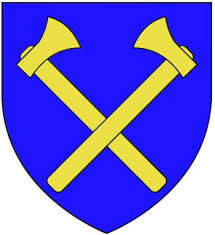
However, the number of ordinaries’ variations were obviously limited, so powerful ruling families would commonly mount “charges” on their shields or banners.  These could be man-made objects such as arrows, spears, or axes (as well as hammers, sickles, or horns) etc.

axesword and key

But more commonly were animals, such as lions, dragons, boars, unicorns, fish, Eagles, or any other thing that took their fancy.

boar

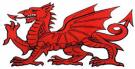
These were displayed in typical poses, such as Passant: dragon

Vol: eagle

Rampant:Rampant

To distinguish various branches of the family, smaller symbols such as a crown, Rose, fleur-de-lis, or crescent could be added to distinguish seniority.

rose

When various powerful families were joined together through marriage or other means (such as murdering their rightful heirs and stealing their castles and lands) they needed to combine two or more designs on the shield.  This was called “Marshalling” and could either involve dividing the shield, quartering it, or dividing it up as many times as necessary so different branches of any given family could be represented.

marshalling

War & Peace.

Many describe it as the greatest novel ever written, Tolstoy’s historical classic, that takes us across the vast sweeps of Eastern Europe and into the Russian heartland.  Napoleon’s reign of European domination begins and culminates in him leading an army of unparalleled strength – the pride of France – into a doomed campaign against Alexander I’s Russia.  The army reaches Moscow before its calamitous retreat from the great city that now lay in burnt ruins, and Napoleon’s army’s eventual destruction in the long flight.

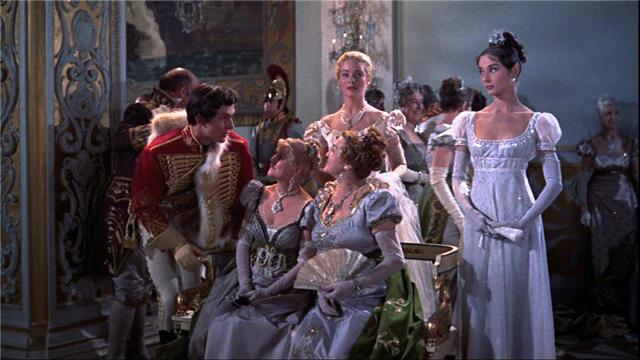
The novel is well named as it brilliantly describes and depicts vivid battle scenes, whilst also following the grandeur and splendour of early nineteenth century Russia, with its large beautiful estates, balls, and the wealth of the ruling aristocracy.  The story follows the Rostov, Bolkonsky and Bezuhov families as they wrestle with the changing times, the struggle of liberal ideals, and the rise and fall of their respective family’s fortunes.  These breaks from the military campaign give the narrative real depth, and you appreciate the titanic sacrifice and strength of the Russian people as they opposed the French military dictator.

WP10_ferdyonfilms.comferdyonfilms.com

Most regular readers of historical fiction are aware of War & Peace as a novel, and aspire to reading it one day, but often put it off – I know, I did myself for years!! So what is it that stops us?  It is its length? It is because we worry it might be heavy or difficult reading?  Well, the first thing to say about War & Peace is that it’s not what I expected.  I guess, like many others, I thought that the novel would be tricky to read, and heavy going.  But I was surprised how easily the novel reads, Tolstoy brilliantly communicating the various wants, fears, and insecurities of the main characters, so that we can all identify with them.  Characters fall in love, find themselves betrayed, worry about their place in the world, fall in love again, and search for meaning to the tribulations and calamities that life throw at them.  All this, whilst a French Emperor is steadily crushing everything in his path to reach them and send their world into complete upheaval.

There is one other aspect of the novel however, that cannot be ignored: its length.  There is no getting away from it, this is long, long, book, and at 587,287 words, is longer than anything readers have read before.  But it must be remembered that it only seems so long as it is published in just one volume.  We are quite used to trilogies or a series of novels to be of these epic proportions, so why think of War & Peace in any other way?

war-and-peace-1024x680_bookriot.combookriot.com

Tolstoy, throughout the book, will sometimes break off from the story, and write a chapter regarding the historic context of the specific event his is about to write about.  He will angrily denounce the historians of his times (especially the French ones) that have in his opinion misconstrued or misrepresented various historical events.  In particular he bemoans those who almost excuse the great amount of suffering and death caused by the French dictator’s actions as those of a ‘genius’ whose strength of will empowered him to command his people to expand into Russia.  These diversions from the story can put some people off, and most dramatizations of the novel – the recent one by the BBC included – exclude them as an outdated commentary of long dead historians whose views are of no concern.  But I’m actually with Tolstoy on this one, because people STILL speak of Napoleon in such vain-glorious terms, and just recently I saw a documentary (also on the BBC, who should know better) with a historian so wrapped up and enamored with Napoleon that as he recounted the French Emperor’s life, it was impossible to take anything he said seriously (which was mostly complete nonsense, by the way).

Either way, most of these interludes are quite short and at least give an understanding of how seriously this topic was being discussed at the time of Tolstoy’s writhing, some 50 or so years after the events he depicted.  The one exception is the endlessly long ‘Second epilogue’ that even I admit is a bit of a tedious read, where he expands on these views and discusses the meaning of history and how we understand it.  But this is at the end of the novel, after the story has been finished, so you can miss that bit if you like!

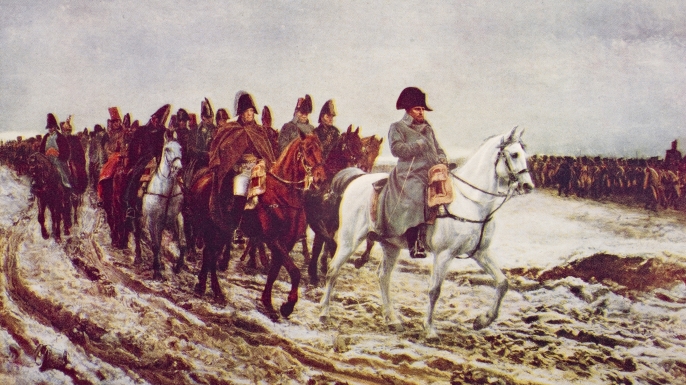
hith-napoleon-moscow-113625989-1-E_history.comhistory.com

Leaving aside Tolstoy’s interludes, it is the story that grips you in War & Peace.  Tolstoy used his own experiences in the Russian army to add to his writing, so he understood how unclear and confusing battles could be.  Countless times in the novel, French and Russian commanders issue meaningless commands, trying to somehow restore order to the long lines of their troops – meaningless, because by the time those same commanders hear of a situation and act on it, that information is already out of date.  Such was the early 19th Century battlefield, where armies would be deployed over many miles, and communication was limited to the speed of a man on his horse.

The spirit, camaraderie, and the ebb and flow of the soldiers morale is described in special detail through the course of the long campaign and the subsequent French retreat.  Tolstoy was very observant of human nature, and his insights into the desires and motives behind people’s behaviour struck me as authentic, albeit framed within the traditions and conventions of those times.  The Russian army is riven by fierce rivalries among its high command, as competing generals endeavour to curry favour with their Emperor, and undermine each other and their commander, the General Kutuzov.  The experienced and patient commander still manages to somehow steer a path to victory through these clouds of subterfuge and interference.

d8a52a4c56b5c9f4f735657fce3a9b76_pinterest.com
pinterest.com

Leaving aside the campaign, War & Peace really is the real deal when depicting real life in 19th Century Russia, and as you are swept through the complex story of love, betrayal, and heartbreak, you learn a great deal of the issues that were dividing the Russian people, whilst still highlighting a fascinating and, in some ways at least, an enviable lifestyle.  The epic length and involvement of the story means you get to know each of the characters very well, and you become entangled in their hopes and failures, so that by the time the novel ends you know each of them closely.

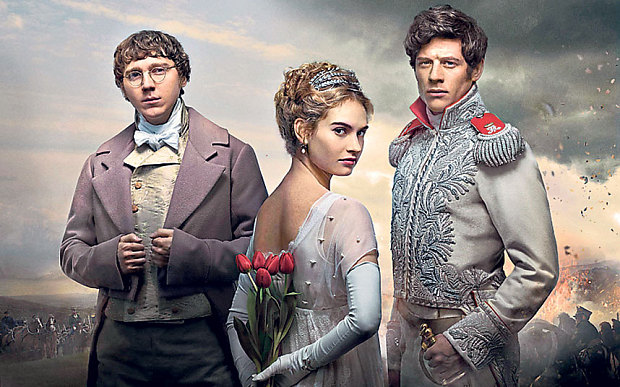
war-and-peace_BBCIndepedendent.co.uk

War & Peace really is a novel that can’t be ignored, it tells the story of one of the most dramatic periods of European history, and it does it brilliantly, possibly better than anyone else could – surely a must read, at least once in a lifetime…

A Spanish adventure to write about…

Sometimes starting a new novel can be difficult, not least because the sheer scale of the work involved can be daunting.  Do I really want to commit so much of my time to such an arduous project?

Fortunately, it isn’t all hard work, and the pluses always out-way the negatives.  One such example is going away to do the groundwork for a historical novel.  I recently took a holiday to Northern Spain to research the sequel to my novel Roman Mask.  Spain might seem a surprising destination for those who are familiar with Roman Mask, as so much of that story is set in the forests of Germany, and I’m guessing many readers would expect any sequel to also be entwined into that dark mist-shrouded and menacing landscape.  However, without giving too much away, my story involves the brother of Julius Arminius, and takes my main character Cassius to a completely different land and will show how the disaster in the Teutoburg forest had far reaching effects throughout the Roman world.

Spain was always an incredibly valuable province to the Romans.  It’s close proximity to Italy meant that is had great strategic importance to them.  In Rome’s past it had been used very successfully against them, when the great Cathar General, Hannibal, raised an army against them from Spain and invaded Italy.  Hannibal destroyed several Roman armies and came within a whisker of sacking Rome itself.  The Romans had long memories and despite the fearsome resistance they faced from the Celtic-Iberian tribesman were determined to subdue the peninsular under their rule.  This was only achieved in 27BC after nearly 200 years of tribal wars and rebellions to their rule.  As well as Spain’s strategic importance, it was also vastly rich in minerals, and the gold and silver mines were especially important to Rome in funding their Empire.

pic 1 brightened

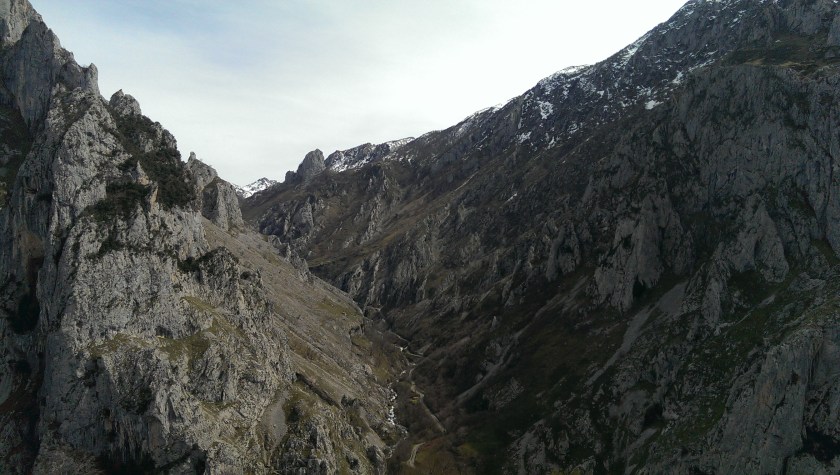
One of the most important aspects of the Roman-Spanish wars was the terrain of the peninsular.  Much of Spain is mountainous and these high peaks and hidden valleys played an important role in making it an incredibly challenging land to conquer.  I always wanted to set the majority of my novel in the North-Western quarter of Spain, within the picos de Europa, a stunning mountain range a short distance from the Northern Atlantic coast.  There was just one problem setting my novel there – I’d never been there!  So, undaunted, I packed my bags and took a trip to this wonderfully unspoiled and beautiful region of Spain.

Pic 2 alt

I imagine most of you will now be expecting me to show you several pictures of Roman ruins that dot the Spanish landscape.  However, even though most of my holidays are spent visiting such places, and there are many magnificent sites within the peninsula, that wasn’t the purpose of this particular trip.  Apart from the so called ‘Roman Bridge’ that was located in the village I was staying in (and was in reality a medieval construction) I didn’t visit any ancient sites.  This isn’t to demean the magnificent array of valuable historic ruins in Spain (the walls at Lugo or the Aqueduct of Segovia being great examples of Roman architecture) it was just not what I’d come for.

pic 3

What I wanted was a way to visualise my story – of which I already held a lose idea of in my head – and map out how my story could develop through the unique and spectacular landscape.  As soon as I reached there I realised I’d made the right decision.  The mountain paths and rocky canyons screamed at my authors instincts, and gave me countless opportunities to develop my story-line.  My mind buzzed with possibilities as I turned over idea after idea.

pic 4


Now, I don’t want to give away too much of the storyline – for that you’ll have to wait until the book is finished, but I’m sure if I manage to convey just a fraction of the drama that the landscape inspires into my novel, I’ll have a thrilling and exciting novel, so I’m more excited than ever in how my story can develop further.


pic 5


Spring Madness! Roman Mask 0.99 Sale!

Spring is finally here and the sun is beginning to shine.  This has always been my favourite season, as the new found warmth in the air puts a smile on everyone’s face.  In this spirit, I have decided to reduce the cost the Ebook\Kindle version of my novel Roman Mask for the rest of the week.  The price will return to normal on Sunday, so grab it whilst you can!  This will apply to the Amazon Kindle version, and the iPad version, and the Nook version which you can buy and Barnes and Noble or Google books.

The classical world is brought vividly to life in this novel by BrookeDaily Mail, UK National Newspaper

 “Ancient Rome comes to life in all of its glory and menace” 5 Stars Brokenteepee

“I read Roman Mask in one sitting; it was that powerful, that mesmerizing” 5 Stars TomeTender

“As a reader, I became emotionally entwined with Cassius; his fear, inner turmoil, his search for courage and love” 5 Stars readersfavorite


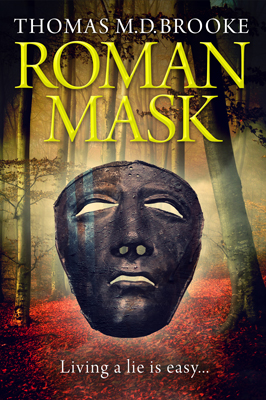
dfw-tb-trm-cover-small

Rome AD 9

Augustus Caesar rules Imperial Rome at the height of its power, as the Roman Empire stretches across the known world.  Cassius, son of one of her most powerful families, is the personification of Rome’s imperial strength: wealthy, popular, a war hero with a decorated military career – none of Rome’s fashionable parties are complete without him – except, he hides a secret.

After his nerve is broken in Germany, the thought of genuine armed combat is enough to send him into a cold sweat of fear and shame.  But this doesn’t dissuade him from living off a false reputation so he can continue a life of casual affairs, wine, and parties, as he is seduced by the many vices of Rome.

However his scandalous life is soon upset by a summons from the Emperor’s wife.  It ends his happy decadent life and returns him to Germany to assist the Roman legions in their greatest ever trial, and the events that will resound down in history, in the dark forests of the Teutoburg…

Links to Buy!

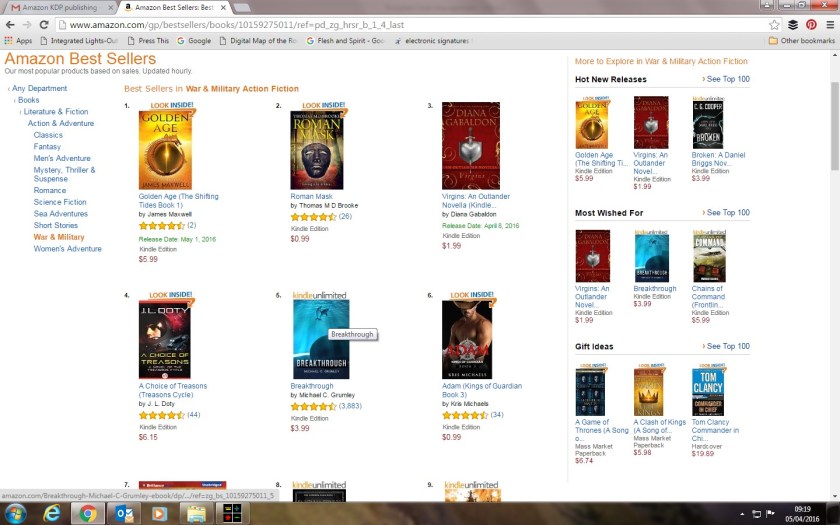
By the way, for any of you wondering how well Roman Mask is doing, look who is at number two…

Best sellers

The Archer’s Tale – By Bernard Cornwell

The Archers Tale

The set of books I have decided to look at this week is Bernard Conwell’s Grail Quest novels, which starts with The Archer’s Tale.  For these novels, Cornwell has chosen a fascinating period of history: The One Hundred Year’s War that raged through the fourteenth and early fifteenth century between England and France.  What is unusual about these novels is they follow the story of a young archer on the English side.  Why is this unusual?  Well, normally in any form of novel, be it historical, fantasy, or Sci-Fi we expect to follow the story of someone fighting to protect their homeland, livelihood, or some other righteous cause.  But by following the English, who were undoubtedly the aggressor during this long conflict in France, he has departed from this usual convention.  At the start of the novel we meet our hero – Thomas of Hookton – as the English coast is attacked by French raids.  I’m not sure whether Cornwell was trying to suggest that these raids may have led to the century of warfare or not, but either way, I didn’t buy it.  The One Hundred Years War was an inevitable conflict between the two nations when William of Normandy conquered England way back in 1066 leaving a state lying on both sides of the English Channel.  English Kings having claims to land in France might not seem a promising cause to base a set of novels on, but remember, these are the sort of reasons people made war upon one another back then.  The armies involved very rarely, if ever, concerned themselves with the right or wrong of any conflict, being more concerned with the more immediate matters, such as staying alive, having food to eat, drink to get drunk on, and the comradeship of their fellows.

Vagabond

Thomas of Hookton was one such soldier, an archer from the army of King Edward III of England.  Thomas is a long-bowman, the English army’s decisive weapon of the conflict, that led the largely peasant army of the English to beat a succession of larger more heavily armoured French armies.  It is here that we meet the true star of these novels – The English longbow.  This terrible and powerful weapon could only be drawn and used by those trained from birth.  The young archer as he grew up, would be given a succession of bows, each slightly larger than the last.  Only then, will the archer develop the powerful chest muscles and strength to draw the full size war bow which was over six feet tall.  Only in England and Wales, where a strong tradition of archery with these weapons existed, could they develop an army of these highly skilled masters of the battlefield.  Why was this weapon so decisive?  Because the power of the longbow was such that it could punch through the French Knight’s mail, out-range the crossbowmen drafted in to oppose them, and also have an astonishingly rapid rate of fire – successive volleys of arrow raining down on the French army would destroy any line or formation.  This weapon gave the English such a massive advantage that the French simply didn’t have an answer to.

Heretic

Forget about notions of chivalry, patriotism, or any other romantic notion of war, this is true gritty history, showing how a small highly skilled peasant army can upset the odds against the vast armies of France.  The story of Thomas of Hookton is an engaging one as he follows the English army through France and is confronted by many enemies (from both sides).  He finds adventure, love, and danger as the story in interspersed with the many battles between the opposing monarchs.  Cornwell is at his brilliant best in understanding and describing the battle tactics of each side, and how the English longbow could be used to such devastating effect.  I thoroughly recommend these set of novels to anyone interested in the period of history, or just fancies an enjoyable ride, full of excitement and action, as you slowly come to understand the long standing animosity between the two nations.  Cornwell once again shows historical fiction at its best!

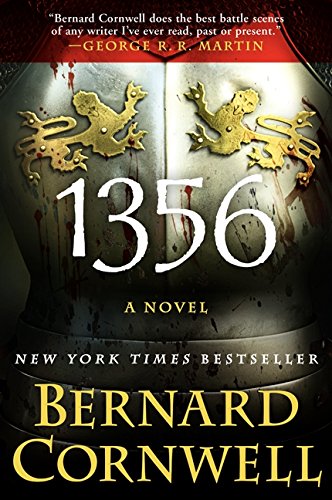
1356

10 books that will teach you to read like a writer. Guest Post by Kory M. Shrum

What are the first steps we take to become writers?  The most important starting point, is to love books ourselves, and to be avid readers.  Kory M. Shrum The successful author of the Jesse Sullivan fantasy series, who has well over 300 Amazon reviews for her  novel Dying for a Living has taken this a step further and explains in this insightful guest post how a writer should read.  She has given strong examples to support her case and shows how much we can learn from other masters of the craft.  So I will pass you over to Kory…

Thomas M D Brooke

Kory

10 books that will teach you to read like a writer.

Before I tell you about the books, let me answer this question: Why SHOULD you read like a writer? It’s important to read like a writer for a couple of reasons.  A reader who is reading like a reader does so for pleasure mostly. Or to be informed about a certain topic or idea. Contrastly, a writer reads to study to the craft. A writer will be more likely to examine the story as someone who wants to recreate it. Imagine you are a boat builder and you see a gorgeous sailboat cutting waves in the harbor. It’s so beautiful! Look how it turns! Look how the willow white sails ripple. Admire the sunlight cutting across the pale pine hull. It’s gorgeous and you can’t help but oogle it. But don’t stop there. Why is it beautiful? And what can you do to create something as lovely?
Read like a writer.

61sEWVN+uPL._SX324_BO1,204,203,200_

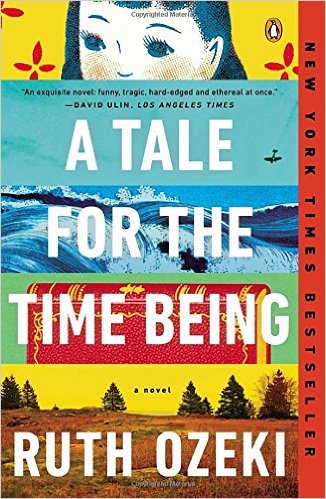
The Tale of the Time Being by Ruth Ozeki

This book should be read for structure. Ozeki seamlessly weaves two narratives following 16-year-old Nao in Japan and adult novelist Ruth in Canada. It’s full of humor, beautiful prose, amazing characters—but the structure is particularly worth noting. If you read this novel closely, you can’t help to learn a lot about how to craft a well-built tale. Runner-up: The Vampire Chronicles by Anne Rice. She is a master of the framework tale as well as knitting the past and present together without a hitch.

Beloved

Beloved by Toni Morrison

Dialogue is hard to do. “Oh geez, why Tim?” “Well, Bob let me tell you. To the spaceship!”
Thankfully there are a few novelists out there who have written beautiful novels that can show us how it’s done. One such novelist is the amazing Toni Morrison, particularly her novel Beloved. In the book the conversations never seem forced between characters and it’s just the right about of tension and character development. But don’t take my word for it. Read it like a writer yourself. Runner-up: The Hitchhiker’s Guide to the Galaxy by Douglas Adams

Stephen King

The Stand By Stephen King
Few people can craft a character like The King—Stephen King that is. And of all the novels I could choose from (he’s one prolific guy!) I chose The Stand. Not only because The Stand has an amazing cast, but it has quite the ensemble. There are several POV characters so you’ll gain intimate insight into an array of very different people. And for those of you put off by the idea of reading “horror” fear not. This isn’t really a horror story. It’s more of an Outbreak, oh everyone got sick and society collapsed novel—with some mysticism mixed in. And besides, the education you’ll gain in character development is unbeatable. Runner-up: Harry Potter series by J.K. Rowling

Ursula (1)

The Left Hand of Darkness by Ursula K. Le Guin
The mark of good world building, is that an entirely new world is created and yet remains recognizable. But not in some cheap, let’s-just-slap-a-new-label-on-it, kind of way.  Le Guin has created a world where there is no gender binary and reproduction is unlike anything we know. The politics, the world order, all of it is unlike anything we know. And it’s done so well! The level of detail is astounding and there’s plenty to learn. Runner-up: the Dune series by Frank Herbert. Another great example of entirely new world rendered palatable by a writer’s pen.

spin

Spin by Robert Charles Wilson  

So much tension! There’s a love story, a father-son conflict, ecological/world-ending problems, and a growing up saga. Every page keeps you turning because you want to see how this ends. So for an excellent education in how to turn the page, read this SF thriller. Runner-up: Jane Austen. Not much excitement (read: car chase, crash, heroics) happens in Austen’s novels (Pride, Prejudice and Zombies aside), yet she was very good at building tension between characters. And funny to boot! So don’t let your aversion to classics steer you away from some excellent material.