Latest Posts

Half a King by Joe Abercrombie, a different kind of hero

Abercrombie

In most fantasy novels we have become quite accustomed to heroes with impressive physiques, great with a blade or bow, probably good looking too.  There is nothing wrong with that, one of the great things about fantasy writing is that we can escape to other worlds, where an early grave is often only avoided by our heroes’ physical prowess.  However, there are other ways to be remarkable, and sometimes it’s refreshing to find someone who survives through their wit rather than their brawn.

That’s the case with Joe Abercrombie’s new ‘Shattered Sea’ series, which starts with the novel ‘Half a King’.  The lead character, a prince of a ruling family, has been born with one withered arm and a malformed hand.  As he lives in a warrior society, where a man’s worth is judged by how adept they are with their weapons, he suffers the scorn of his peers and his stern father.  But our character has assets that the others don’t, a sharp mind and resourceful spirit.

I won’t go into the plot in detail as I don’t want to spoil it, but it is a great tale of betrayal, innocent love, and of friends found and lost.  However, what I most enjoyed about this novel is how the character slowly develops and matures.  This is nothing new of course, plenty of fantasy novels involve growing up and coming of age, but I like it in this novel because it is subtlety done and in a believable way.   The character is far from perfect, and makes plenty of mistakes along the way, but that only helps give him some realism.

This looks to be a great start to the series, so I’m looking forward to reading the rest of this story.  If you like your characters clever rather than brawny, I’ll think you’ll like it too…

You can buy this novel here.

Borderlands and frontiers part 2: Historical

Last week I looked at the borderlands in the fantasy genre, the contested boundaries that have been immortalised by writers.  This week I want to look at the borderlands in our own world, and look back into history to find the lands along borders that can be a great place to set a historical novel.

300picture: thewardrobedoor.com

Greece – Asia Minor. 1200 BC to AD 334

Some of the most famous settings for the great scenes of classical world took place on Greece’s border with her neighbour.  Agamemnon’s siege of Troy, when the King of Kings led all the nations of Greece against the great city to its ultimate downfall.  Then a few hundred years later, you have the Persians being held up at the pass of Thermopylae by Leonidas and his three hundred Spartans, before Xerses can lay ruin to the Greek mainland.  Finally you have Alexander the Great going back the other way and landing in Asia Minor and defeating the Persian Satraps at the battle of Granicus.  Literally thousands of books have been written and been inspired by these three events alone and they remain some of the most well-known tales of all time.

Rhinepicture: w-qyusader.blogspot.com

French, Belgium, and German border. AD 9 to 1945.

When the Roman’s gave up trying to turn Germany into a Roman province, after losing their three Eagles in AD 9, the frontier between the Empire and the hostile tribes settled around the Rhine, and just as the Romans found out, this was no simple task to secure.  This became the topic of my own novel Roman Mask.  In more modern times, from the Napoleonic to the first and second world wars, this border played a key part. The sad reality is that the commencement of hostilities in this region nearly always lead to a war more disastrous than any could possibly envisage.

Warkworth Castlepicture: warkworth.co.uk

England – Scotland, AD 122 to 1707

The Romans started it by building a wall separating their lands, and from that point on the two sides never really got on.  The borders between the two great nations were the scene of countless battles and some of the greatest castles can be found here as a necessary defence against one another.  Their constant raids back and forth over the border meant the region was a pretty lawless place until the two nations finally decided to settle their differences and make an act of union in 1707.  From then on they became more concerned with building an Empire together, so I guess some countries preferred them when they were at each other’s throats….either way, a great place to set a novel.

crusadespicture: Theguardian.com

The Holy Land, Europe and Middle East 1091 to 1291

After the Pope proclaimed the first crusade in 1091 with the aim of restoring Christian access to the Holy Land, the battle lines were drawn.  Crusade followed crusade and a succession of endless conflicts between the forces of Christendom and Islam.  After the fall of Acre in 1291 to Muslim forces, the Roman Catholic Church never really again went close to controlling the region, but the Middle East being a hotbed of contention, in both political, economic, and religious grounds has never truly gone.

Cowboys and indianspicture: treadwaygallery.com

The Wild West, USA 1780’s – 1912.

Like most people my age, I was brought up with films involving cowboys and Indian’s and the great Westerns documenting America’s past.  Those frontiersmen and outlaw’s names and deeds were as well-known then as in the days they lived.  Then Hollywood, apart from the odd exception, stopped making Westerns, and I couldn’t really tell you why.  Certainly we have a more enlightened view of the plight of the Native Americans being forced off their own land and onto reservations, however that shouldn’t mean this fascinating period of history should be ignored.  Some of the greatest American novels ever written were set in the wild west, surely that’s a tradition worth continuing?

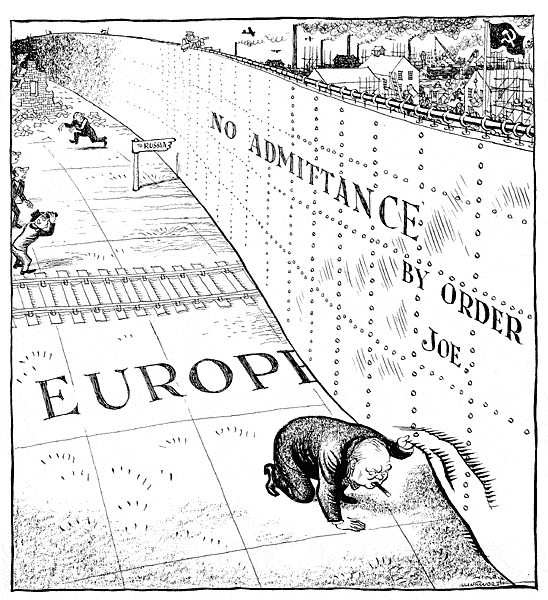
Under-the-Iron-Curtainpicture:schoolworkhelper.net

The Iron Curtain, East and West Europe – 1946 to 1989

“From Stettin in the Baltic to Trieste in the Adriatic, an iron curtain has descended across the continent.” Winston Churchill.

Not all wars are hot, sometimes when both sides dare not risking all out hostilities, an uneasy hostile truce can remain despite the animosity of both sides.  The cold war and the iron curtain that split Europe down the middle is the best example of this.  Espionage and covert actions rule the day, and when the consequence of that truce failing is mutually assured destruction for both sides, the stakes couldn’t be higher.  From Bond to John le Carre a great literary tradition exists in this dark and murky world.

A final walk along the Wall and then home…

IMAG1433

Just a short post today, as I’ll be driving back from Northumberland today as it’s the end of my holiday.  It’s been a fantastic trip, staying in my old cottage, surrounded by history and the beautiful countryside of the area.  I even made it back to Hadrian’s Wall on Friday, after my first trip needed to be aborted due a heavy downpour of rain.  This time the weather was much kinder I had a fantastic walk between Steel Rigg and Housesteads.

IMAG1459

This section of the Wall shows the remains of a few of the mile-castles that were evenly spaced along the Wall, and each housed around thirty men.  I know it doesn’t appear that that much is left of the mile-castle in the picture, but when the Wall was in active use it would have stood at fifteen feet high, with battlements and a walkway all along the Wall, with three turrets or watchtowers interspersed between each mile-castle.  As you can see from the rocky and craggy countryside, that was no small building achievement along the cliffs and escarpments of the region.

IMAG1451IMAG1440

The walk ends with the fort Housesteads, which was one of the major encampments along the escarpment.  This would have been the headquarters of one of the main military presences along the Wall and housed up to eight-hundred men and was surrounded by a civilian settlement – sorry, I forgot to take a picture of the fort (opps!).

Once I am back in London I will be turning my mind to promoting my novel, so I will thinking up a few give-aways or other ways to get the word out regarding my book.  If you have any good ideas in this regard, be sure to let me know!

Not an ordinary fantasy trilogy – Robin Hobb, The Soldier Son Series

Shamens Crossing

I mentioned this series when I wrote my post on Wednesday, and since then I’ve been thinking about it quite a lot.  The Soldier son trilogy isn’t for everyone, and I know some people who were never keen on it as it was a big departure from Robin Hobb’s other books set in the Three-Kingdoms, or those on the Live Ships and Dragons of Bingtown.  The Soldier Son novels, despite being works of fantasy, are set in a relatively modern world with rifles and guns, and Hobb develops an unorthodox main character from that which you’d normally expect from a fantasy series.  However, these novels strengths are that they cover a lot of issues that we would recognise from our own world, and really make you think about our own perceptions to those same issues.

I don’t want to give too much away, but the conflicting issues in these novels are between the progress and development of the modern world on the one-side, and the traditions and magical beliefs of a land that is coming under pressure from the encroachment, on the other.  Our main character, the Soldier’s son, acts as a conduit to both points of views, and it is an interesting journey that he takes us through.  His former hopes and aspirations firstly being dashed, then replaced by a new calling.

Magic still holds a key role in this conflict, and as with everything Hobb writes, she has really thought about the magic in the novels, and describes their use, limitations, and how it is wielded.  That is because the forest mages’ in her novels are in effect used by the magic of the forest, rather than the other way round – the mages being tools to the forests will.

We are also challenged on our perceptions on physical attributes, weight, and how we view and judge people’s worth based on their appearance and how they fit in with our own ideals.

These novels are not fast-paced, or what you’d normally expect from a fantasy series, so if that is what you are looking for they’re probably not for you.  But if you want a thoughtful read that makes you stop and think about things, all told through Hobb’s brilliant and detailed writing, they really make a strong impression – I should know, as I still can’t stop thinking about them…

You can buy the first novel ‘Shamans Crossing’ here

Great Borderlands and frontiers in novels – Part 1 : Fantasy

For the past week and a half I’ve been staying in a small cottage up in the wild hills of Northumberland, one of England’s two counties that lie on the border with Scotland.  Evidence of previous animosity between the two countries are all around, not just with Hadrian’s Wall that runs through the borderlands, but in the number of castles and fortified buildings that lie festooned over the countryside.  My own cottage that I am staying in still has arrow slits in the outbuildings, a relic from its past when the inhabitants needed to defend themselves from the periodic raiding parties from the Scottish North.

This has made me think about borderlands in literature, and what a great location they are to set any novel.  Obviously history is full of hostile frontiers, and next week I will go through a few of those and show some examples.  But equally this works well for fantasy novels, and here are just a few great examples of fantasy novelists that have used this topic so well.

middleearthlargelargerstill

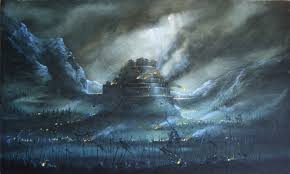
Mordor, Middle Earth.  The Lord of the Rings by J R R Tolkien.  What a great place to start!  The Dark Lord Sauron’s land is defended by the Black-Gate and although a back door exists through a winding-stair, this has a nasty big spider to protect it and a tower full of Orcs.  This means that most of the hostility between Mordor and its neighbour’s Gondor and Rohan take place around the cities of Minas Tirith and Osgiliath and the river of Anduin.  The unforgettable battle before Minas Tirith when Éowyn smites the Witch-King of Angmar is one that lasts long into the memory.

Shienar warrior

The Blight, Wheel of Time series by Robert Jordan.  The Blight is not only full of Trollocks and Fades, and all number of unwholesome beasts, it also destroys anything it touches, spoiling crops and any land it devours.  To halt its progress, the borderlands of Shienar, Arafel, Saldaea, and Kandor exist to keep the Trollocks and their evil masters at bay.  The men of the borderlands are just what you would expect from a frontier – tough, unyielding, and a lifetime wedded to the sword.

Dros Delnoch

The lands of the Drenai, Legend and other Drenai novels by David Gemmell.  The vast steps to the North of the Drenai are populated by the hordes of the Nadir, a warlike people that fight along the steps and threaten the peace and civilisation of the Drenai.  Fortunately they have Dros Delnoch to protect them, a magnificent fortress with many walls to withstand the unstoppable Nadir Hordes…it just requires the right leader to motivate the men – here enters Druss the Legend.

Forest Mage

The Forests of the Specks.  The Soldier Son Trilogy, Robin Hobb.  This frontier is different from the others, as it involves two different people with different philosophies in life.  One is concerned with the advance of civilization, and onward march of progress through the wilds.  The other wants to conserve their forest, their customs, and their way of life.  The connections to our own world are obvious, but it is interesting how people’s views have changed on this subject – if I was writing this article one hundred years ago, or even fifty, most readers sympathies would be with the explorers, but a modern reader is more likely to want to respect the rights of the aboriginal peoples.  The conflicting viewpoints in this series are just as pronounced, and is an interesting subject for that reason.

The Wall

The Wall – Game of Thrones, George R R Martin.  The wall of ice that protects the land of Westoros from the Others, and Wildlings of the frozen North.  George Martin claims he was inspired by this whilst visiting Hadrian’s Wall in Northumberland, so it is fitting that I have come full circle.  Westoros’ Wall has stood for a thousand years and is guarded by the Nights watch, a brotherhood of men united by their oaths of allegiance and a common purpose – fantastic!

I’m sure there are many more examples in fantasy novels…if so, post them here.

A great review for Roman Mask in the Daily Mail

I’m writing this from a small cottage, nestled in the Cheviot Hills in Northumberland, and even though it is late July, the weather has been disappointing and chilly, so I have a fire blazing in the fireplace.  It is a beautiful part of the world and I was hoping on showing you some great pictures of Hadrian’s Wall that runs through this county, unfortunately when I visited the Wall yesterday it was absolutely pouring with rain and I had to halt the exhibition – even the dog wasn’t too keen on going out in it as it was so heavy.  Still, never mind, I’m up here for another week, so there should be ample opportunity to re-visit the Wall.

The week hasn’t been a total loss anyway, because I received my first review in a national newspaper (The Daily Mail) for my novel Roman Mask. Unfortunately, I had no idea the review was coming out in the newspaper and because I was in the wild hills of Northumberland, by the time I heard about in the late evening there was nowhere for me to buy a copy of the paper!  Luckily a friend of mine sent me the link to their online version!  Anyway, this is what the review said:

Mail online

ROMAN MASK

by Thomas Brooke

thomasmdbrooke.com

The classical world is brought vividly to life in this novel by Brooke, a new voice in the crowded chorus of historical fiction. Set at the height of the Roman Empire’s power, Brooke’s writing brings us both the decadence that eventually undermined and destroyed the seemingly invincible Romans, and the merciless military action that won Rome its mandate to rule in the first place.

The novel’s chief character Cassius (not to be confused with Julius Caesar’s lean and hungry assassin) sups both the outrageous decadence and the dangers of war to the dregs, as he swings between orgiastic fun and a grim struggle for survival against the barbarian Germanic tribes in the dark forests of the Teutoburg.

Anyone who relishes Robert Harris’s Roman fiction should love this book, too.

So I think you’ll agree, it’s a very favourable review, so I’m delighted.  Ordering those Advanced review copies before the novel came out really worked for me.  Getting reviews is always really nerve-wracking, but you have to believe in your own work and if you are prepared to take the risk it can really pay off for you.  After all, if you don’t believe your own book is good enough, how do you expect others to believe it is worth the time and effort to purchase and read?

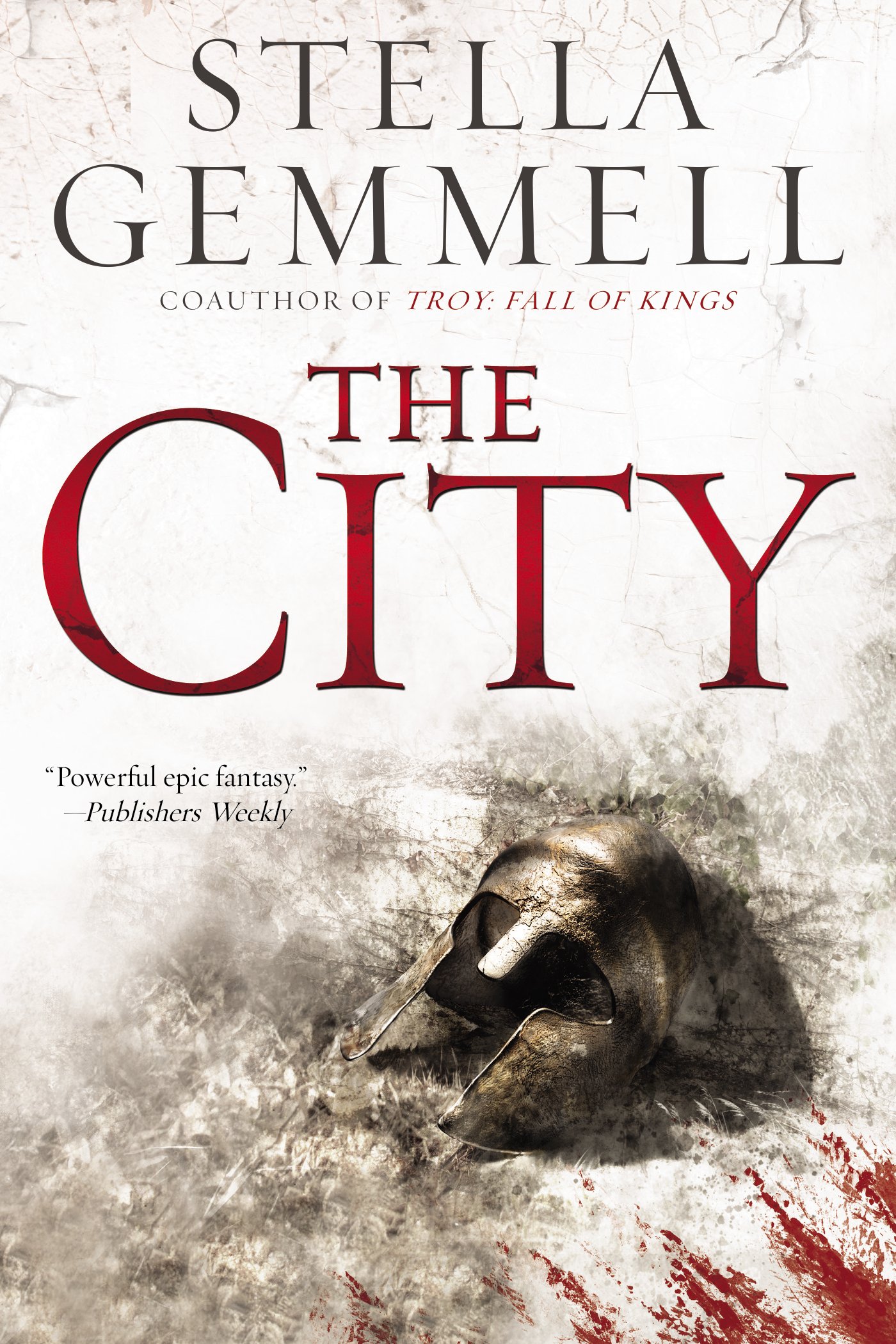
The City – Stella Gemmell

the city

It had taken me a while to purchase this novel, and get around to reading it.  David Gemmell, Stella’s late departed husband was one of my favourite authors, so I’m not sure why it had taken me so long, surely I should have been eager to buy it as soon as it came out…but I didn’t. I think the reason why was in case I was disappointed, and then the final link to her husband’s great writing would be gone.  But I shouldn’t have been so reticent, Stella Gemmell has proved with her first solo novel, The City, that she is a writer in her own right now, and I won’t hesitate to purchase more novels from her in the future.

Stella Gemmell has previously worked with her husband on many different projects, and finished David Gemmell’s last trilogy on Troy posthumously, so I knew I wasn’t dealing with a novice when I picked up her novel.  However, with her previous work I was never quite sure where her influence started and his ended, but in The City, this was all her own work.

Just as with her husband, Stella understands that the basis of a great novel is the characters and I really liked the characters she brought together in her novel.  They were a varied assortment of warriors and civilians, with different backgrounds and well researched back-stories, just the sort of characters that used to make her husband’s novels so vividly alive.

I was however less convinced with the general premise of the book, and the story that held the novel together.  I don’t want to be overly critical as that isn’t my way, but I felt the novel was missing something in holding me in a grip of suspense.  I don’t want to give too much away, but the story revolves around a pointless war, being waged by a corrupt Emperor and his close-knit group of family members.  But that’s the trouble with such a war…it’s pointless, so you can only see one way the story is going.  Maybe a more subtle backstory into the origins and motives of the war would have helped.

But I am quibbling here, it is still an exciting ride and the characters she creates compensate for any lacking in the story.  We have to remember that the difficulty Stella will always have, it that she will always be compared to her husband – it’s impossible for her not to be.  That might not be fair, but that’s life unfortunately (for example, look how often I have referenced him just in this post alone).  The trouble with that is that David Gemmell was a very experienced writer of twenty or so novels and this is her first solo work – it’s not a equal comparison, writing is like anything else in life, the more you do it the better you get at it.

I really hope Stella continues her writing career, and that I get a chance to read more of her novels.  She is developing a unique voice all of her own, and in The City she has proved she is a writer of no mean talent.  If the novel isn’t quite the finished article yet, I think it is a great start and I can’t wait to read more of her work.

You can buy the novel The City, from Amazon here.

Ancient Roman sites to inspire you…

Whilst writing my novel Roman Mask, I was inspired by many of the great ancient sites that can be found all around Europe and the Mediterranean basin.  This is by no means a complete list of all the wonderful sites that are in existence, but here are a few that inspired me…
Rome

Rome, Italy.  How could I start anywhere else?  The ancient city that was at the heart of her Empire has to be on everyone’s list of places to visit if they are interested in Ancient Rome.  So much still remains and is easily accessible in this fantastic city.  The Colosseum was incredible, but as it was built later than my novel was set I couldn’t use it for research, but it still gives an amazing perspective on the sheer power and dominance that Rome held over the world at the time.  The Augustan palace on the top of the Palatine Hill nearby was very useful for me, and stretches all the way to the ancient forum at the centre of Ancient Rome.  But it was when I looked out from the palace, on the top of the hill, down to the Circus Maximus that had the greatest effect on me.  I suddenly could imagine the chariots racing round the great oblong ring, pulled by teams of galloping horses, surrounded by the excited and jubilant crowd.
Hadrian's Wall

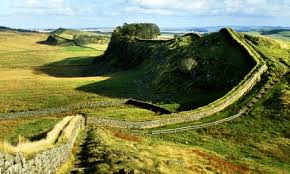
Hadrian’s Wall, United Kingdom.  From the heart of the Empire, to its very fringes – this is where it all started for me.  Long summer holidays spent in Northumberland, in my grandmother’s cottage situated near Hadrian’s Wall, had a profound effect on me growing up.  Visiting the ancient forts along the wall, the museums, walking along the Wall in the beautiful countryside, all combined to fascinate me and pull me into the ancient Roman world.  George R R Martin claims to have had a similar inspiration for his excellent fantasy series Game of Thrones, so I’m in good company at least!
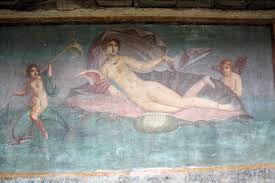
Pompeii

Pompeii, Italy.  If Rome was useful for getting a feel for the period of history, Pompeii brought it to a new level.  Even though the city was destroyed slightly after my novel is set, it was still a mine of information as so much of the ancient city has been preserved by the volcanic ash of Vesuvius, that it is simply breath-taking.  The murals on the walls retain such vivid clarity, and the streets are crammed full of historic detail.  One of the large houses in Pompeii became the basis of my character’s grand home on the Caelian Hill in Rome, and the gymnasium featured also, but it was the brothels with their lewd frescoes and the graffiti on the streets that helped give me a real feel for the people that inhabited the city.  I was blown away by Pompeii, just as most visitors are.

Herculaneum

Herculaneum,  Italy.  Just the other side of Mount Vesuvius is another ancient Roman town.  However, if you think that this would just be the same as Pompeii you’d be wrong.  This is because Herculaneum was destroyed and then preserved by boiling mud, rather than volcanic ash.  The scalding mud unfortunately destroyed the murals and frescos that make Pompeii so memorable, but the mud actually does a better job of keeping the entire structure of the Roman homes intact, so that entire streets, crammed full of perfectly preserved houses, complete with widows, roofs, and doorways can be explored and you need to pinch yourself to remind yourself that this was all built two thousand years before.

Taormina

Taormina, Sicily – Italy.  They still hold performances in the ancient Greek theatre in Taormina (it was later rebuilt by the Romans for Gladiatorial shows) that dominates the beautiful Sicilian town to the North of the island.  The dramatic setting, over the black cliffs and the beautiful blue sea that surrounds the town made quite an impression on me when I visited it a few years ago.  I was desperate to try and incorporate the island into my novel somehow, but found I couldn’t as the story was already taking my character from Rome to Germany, so a trip down to Sicily really wasn’t on the route.  I did however, make my main character’s father the governor of the ancient province, so there will be plenty of scope to bring any future novels down to this stunning and dramatic Island.
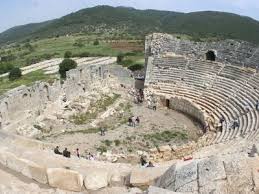
Patara

Patara, Turkey.  Often overlooked by those with an interest in ancient Rome, Patara has a special place in my heart.  I was staying at the nearby Turkish resort of Kalkan, and took one of the daily buses from there to the beautiful beach in the nearby protected area of Patara.  To my amazement, when I got there I found an entire Roman settlement still remained behind the beach, being preserved by the sand that covered the city, which has only been recently being excavated in modern times.  A gladiator’s colosseum, theatre, and countless temples, streets, and homes lay waiting for me to explore, accompanied only by the local goats – such a contrast to the crowds at Pompeii and Rome.  Exploring an Ancient Roman city alone is such an amazing experience, and I don’t think I will ever forget that day.

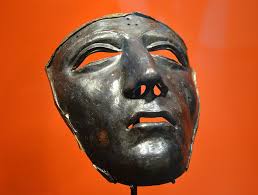
Mask

Kalkriese, Germany.  As Germany was never fully occupied by the Romans you’ll not find many Roman ruins in its interior (you will at its borders) so instead you can visit the museum set near the archaeological site of the battle of Teutoburg that is at the heart of my novel.  You won’t find any ancient ruins, but they have made a reconstruction of the wicker palisades that had such an impact in the battle, and the museum is full of the archaeological artifacts found at the battle-site including the famous Kalkriese mask that features so prominently on the front cover of my novel.  You can find an English version of their website here if you want to find out more about the battle-site itself.
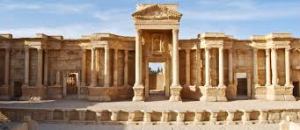
Palmyra

Palmyra, Syria.  I have left this one to last, because I have never visited it myself, and now may never get the chance.  My father visited it years ago, and he tells me that it is the most stunning of all the ancient cities – high praise from a man who has visited them all.  Since Islamic states occupation of the Syrian city, any visits are now impossible and we don’t know how they will treat the city under the occupation.  Recent examples of how they treat ancient monuments doesn’t bode well for the ancient city, so we can only hope that in this case they leave it intact.  It is an example to us all, how precious and fragile these sites are, and how easily we can lose them forever….

Okay, I know I haven’t even touched the surface of all the ancient Roman sites that can be visited, and I apologise if I have omitted your favourite!  If you think any more should join this list, post them here…

C J Sansom, Sovereign

I don’t often read crime novels, I’m not sure why, my grandmother used to love them, but I could never generate the necessary enthusiasm for finding out whodunit.  Maybe my mind just doesn’t work that way, or I have too much sympathy for the bad guys, either way, I’d have made a terrible detective.

So it’s an unusual choice of novel this week that I write about – C J Sansom’s Sovereign that features her sleuth Matthew Shardlake.  I was drawn to it because of the period of history, Tudor England in all its pomp and splendour; a court full of intrigue and danger, the land in a flux of great change and upheaval, yet beginning to erect the pillars of society that we now identify with as forever English.

As this is a crime novel I don’t want to give away the plot by discussing the characters too much, because as with any crime novel, they are key to the storyline.  I’ll just say that Shardlake is an interesting and unusual investigator, hunchbacked and often shunned by many of this peers.  He is likable, intelligent, and shrewd and without the arrogance often ascribed to the lead detective in novels of this type.

The part of the novel that I found so interesting is the history and events that form a backdrop to the storyline.  It centres on Henry VIII’s aggressive foreign policy that stemmed from his desire for England to pack a more powerful punch in world affairs. Instead it provoked a big bear in the form of the French who sent their large navy to put the upstart protestant King in his place.  This culminated in the two navies clashing outside Portsmouth harbour and led to the sinking of the Mary Rose.  How this maritime disaster unfolded is well told and fits in well with the storyline of the novel.

If you enjoy immersing yourself in Tudor England, whilst simultaneously solving an unusual riddle, whilst witnessing one of the most famous sea disasters of the day, this novel is a nice way to go about it.   You can buy the novel from Amazon here.

Five types of Battle!

There are many different ways to write a fantasy or a historical novel, but if you’re looking for a climatic finish, a great battle at the end is hard to beat, and it fits in nicely to both genres.  Here are five types…

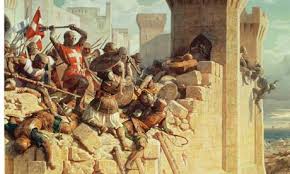
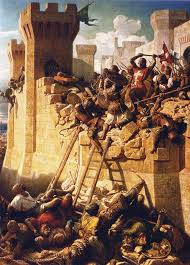
siege

The Siege.  I love castles, great fortresses of stone with arrow slits and murder holes, battlements festooned with banners.  A great setting for a defiant group of defenders to hold out against overwhelming odds – and for an added bonus you can arm your attackers with a whole arsenal of siege engines: Huge trebuchets, deadly bolt throwers, fearsome battering rams, crafty siege towers.

clovellhastingsstitched

The Set-piece. Rows of soldiers, resplendent in their burnished armour, lined up rank upon rank, the pride of a nations strength standing proudly in the sun awaiting the enemy to approach.  Only for them all to lie dead by the end of that same day – the tragic loss that comes from man’s ambition.  To successfully describe a set-piece well will require the author to have a grasp of the tactical strategy used by the opposing commanders.  However, be warned, if you get overly bogged down in complicated battle tactics, at the expense of the all-important action, you might bore your readers.  Keep your narrative clear and concise, so it doesn’t descend into a confusing muddle, and keep the pace fast and exciting.

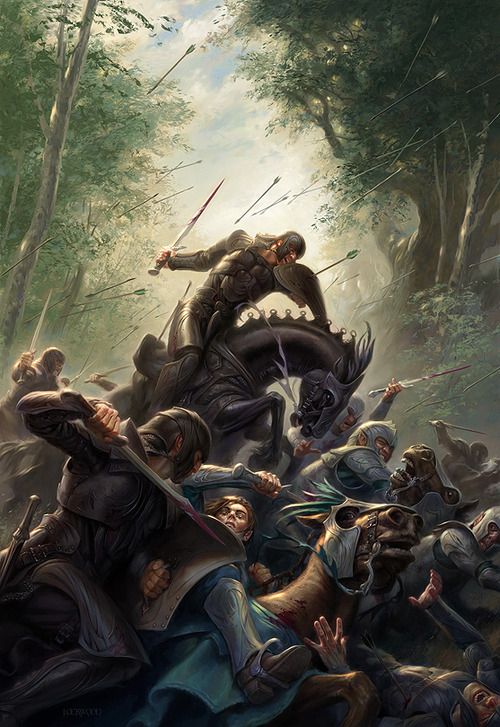
ambush

The ambush.  The trap is sprung on the unwitting enemy who walk blindly into their fate, oblivious of what awaits them.  A healthy dose of deception and trickery is as old as the hills, and ever since man first took up the spear, this form of combat existed.  Whether those ambushed manage to fight their way to freedom or die to a man is up to you – but don’t forget to show the confusion and terror that such an attack inspires.  My novel Roman Mask uses one of the most famous ambushes of all time as its central theme, the battle of the Teutoburg where three Roman legions were taken by surprise. 

granicus

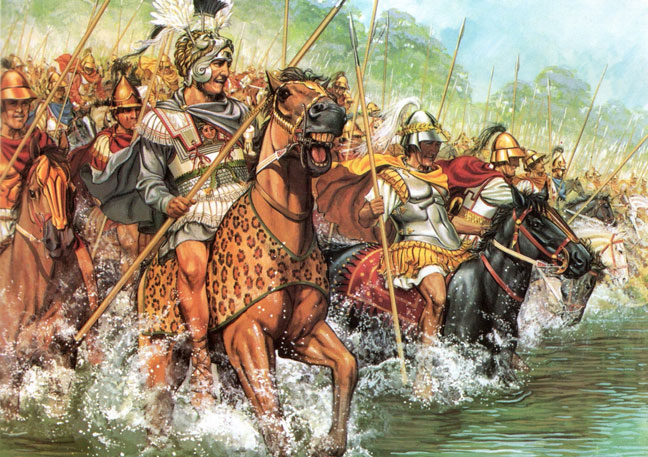
Invasion.  ‘You don’t just walk into Mordor,’ claimed Boromir – no you wait until you have all the free people of the West behind you only to find yourself still outnumbered when you get there!  As well as the Lord of the Rings demonstrating how to setup a great climax, history also give great examples of successful invasions.  Alexander the Great’s invasion of the Persian Empire, Ceasar’s ground shaking victories in Gaul…but don’t rule out the disasters too – not all wars go to plan!

Adolphe_Yvon_(1817-1893)_-_Marshall_Ney_at_retreat_in_Russia

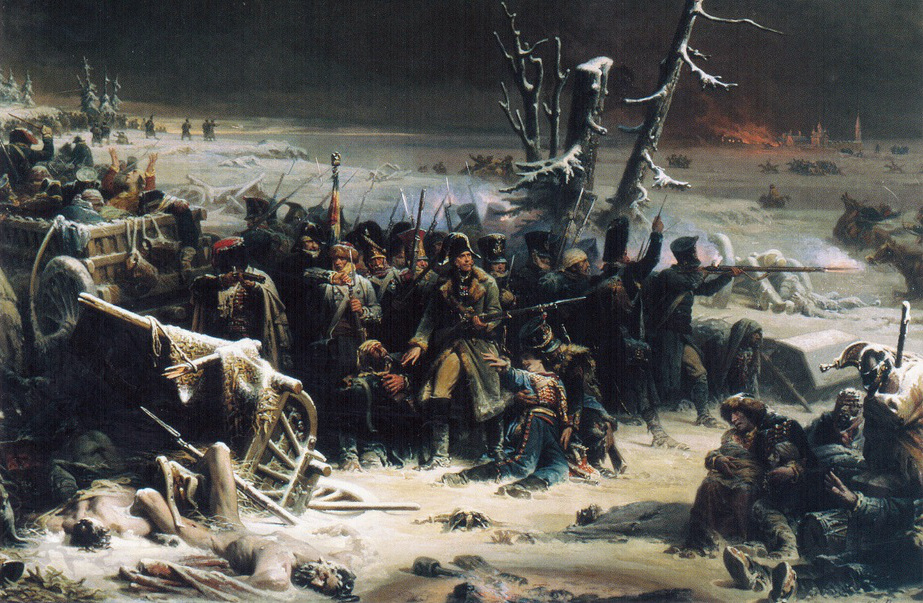
The fighting retreat.  After the battle is lost the story doesn’t necessarily end.  The survivors need to make their way to safety, often under assault the entire way, morale low, fatigued beyond endurance, yet a spark of spirit remains – the instinct for survival and a refusal to give in.  Not all novels need to end with magnificent victories and the triumph of good over evil.  Sometimes the darker the tale, the more compelling the story.

Okay, I think that covers most scenarios, but if you can think of any more, please feel free to post them here….