All posts filed under: Book reviews

My thoughts on books I’ve read

Transformation – Carol Berg

I’ve been looking forward to writing this about this novel because Carol Berg is one of my favourite fantasy authors, and I don’t think she gets nearly enough credit for the fantastic stories and characters she creates. I emphasise the characters, because that is the strength of Carol Berg’s writing, her characters – and as far as I am concerned, that is the secret of good writing. Carol Berg’s main character in this novel is Seyonne, a slave in the employ of Prince Aleksander, a ruler of a feudal regime that presides over an Empire that has been swallowing up neighbouring states, including Seyonne’s own sixteen years before. The past sixteen years of slavery hangs heavily on Seyonne, as he had once been a leader of his people, and now he finds himself enforced to work for Prince Aleksander as his personal secretary. The two characters couldn’t be more contrasting. Seyonne, is thoughtful, deliberate, and his moral compass remains intact despite the years of demeaning and degrading service he’d undertaken as a slave to the Empire. The …
‘Lion of Macedon’ and ‘Dark Prince’ by David Gemmell

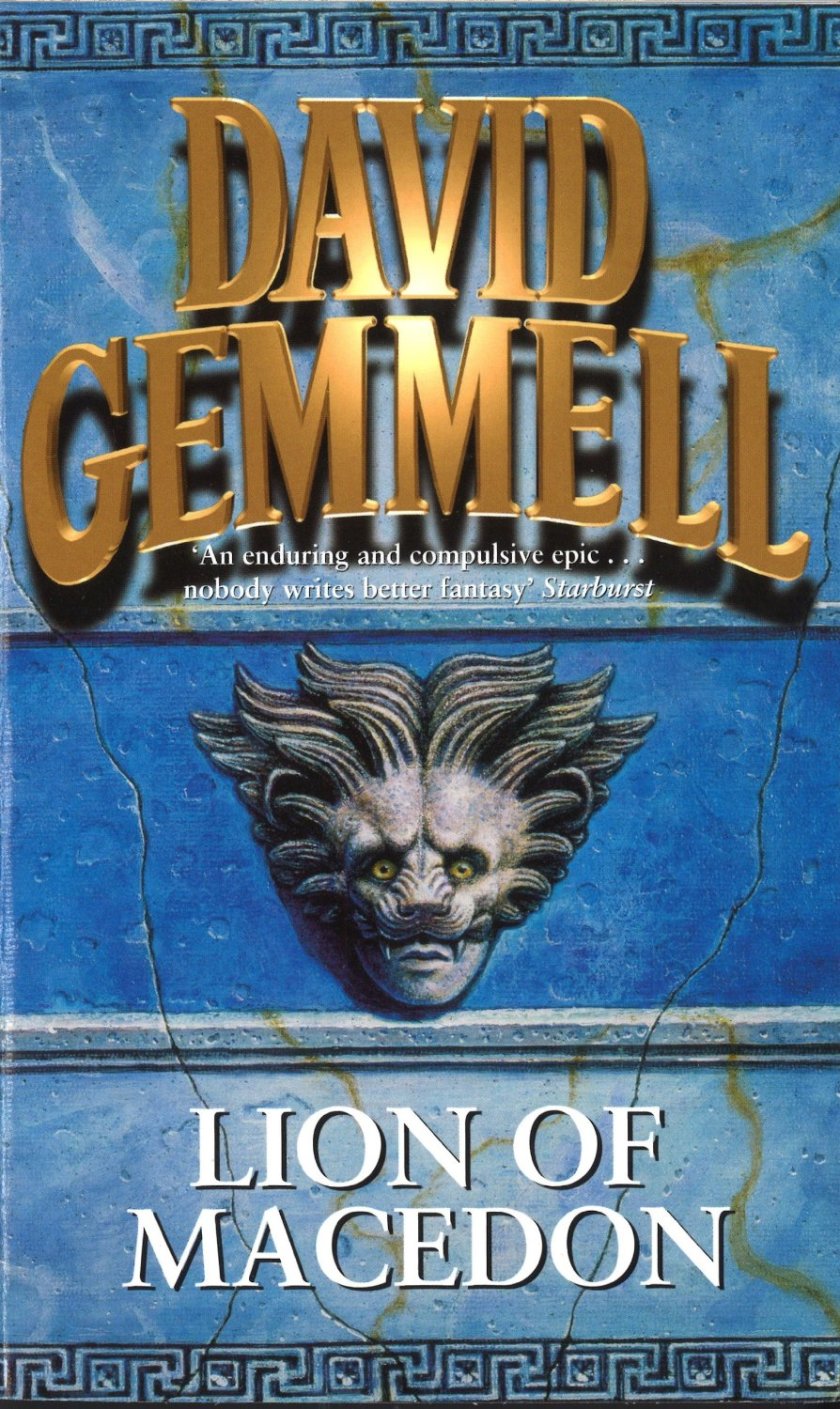
Where Fantasy and History blend. For those of you looking for a comprehensive and detailed history of Ancient Greece followed by Alexander the Great’s invasion of the Persian Empire you might find this series not exactly what you were expecting.   I think when Alexander starts fighting alongside Centaurs in a parallel world, this would steer you off the path of generally accepted mainstream history taught in most universities and schools…well, at least in this world. However, that’s not the point of these novels, and as with a lot of books written by the sadly departed David Gemmell, he is fascinated by the concept of parallel lands similar to our own but imbued with magic.   This series focuses on the personalities of Alexander, his father Phillip, and in particular their General Parmenion.  It is the story of Parmenion that Gemmell’s tale is based, with him being brought up in Sparta in their fighting tradition under the harsh military regime of that land.  Any fans of the film 300 will love this part of the story as …

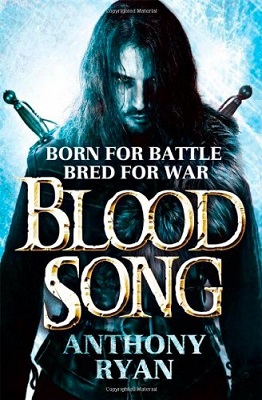
Anthony Ryan – Blood Song. Fantasy Novel

Some schools are tough…really tough.  Those who claim that school days are the happiest of your life have forgotten the playground bully – not to mention the coterie of sycophants who normally accompany the bully on their regular round of intimidation.  However, no matter how difficult and challenging some schools are, I’m pretty sure none go quite to the extremes depicted in Anthony Ryan’s novel Blood Song, the first of the Raven Shadows series. In the Unified Realm, power is shared between the King and seven religious orders.  The Sixth of these orders, takes young boys – from every echelon of society – and teaches them to be the ultimate warrior, skilled with sword, bow, knife, or any other device designed for cutting bits off, or poking into people.  The methods they employ are so extreme that many don’t make it through their school years – a sort of Darwinian survival of the fittest played out to wheedle out those not strong enough to represent the shady ideals of the military order. The story is based …

Brian Staveley ‘The Emperor’s Blades’

Brian Staveley’s new series ‘The Unhewn Throne’, which starts with the novel ‘The Emperor’s Blades’ follows three completely different storylines. The plot centres on three young adults, the offspring of the ruler of the mythical Annurian Empire, and how their lives are effected by his untimely death. Each sibling is separated from the other by thousands of miles, so each story is completely independent of one another.

A fun packed read, starting at the beginning – Gates of Rome, Conn Iggulden #historical #fiction #gladiators

When a famous character of the past is depicted in a novel, where do you start?  Normally the proscribed path would be to research the history books, find out where he or she first comes to the attention of the historians and start your story there.  However, with some historical figures that means that you don’t pick up their story until they are approaching middle age, and you learn nothing of what shaped their character or motivated them through their youth.  That’s certainly the case with Julius Caesar; by the time he started conquering Gaul he was already in his forties and often bemoaned the fact that Alexander the Great managed to achieve so much – he conquered all the lands from Greece to India – by the age of thirty. So rather than wait until Julius Caesar has become a successful Senator and skillful politician, Conn Iggulden, in his novel ‘Gates of Rome’ has gone right back to the beginning and starts his story when Julius – or Gaius as he goes by then …

The Name of the Wind by Patrick Rothfuss #Kingkiller #fantasy #novel

Magic is crucial to fantasy novels, spanning the genre in many different forms, as sorcerers of many different guises fill their novels with mystery, wisdom, and sage-advice from a lifetime of accumulated knowledge.  But other than giving a general explanation of ‘a lifetime of study’ or ’many years of hard work’ we often never find out how these same wizards, warlocks, or magicians learnt to weave their spells and magic. Patrick Rothfuss has taken this subject in his intriguing new trilogy named the Kingkiller chronicles, The first of which is called ‘The Name of the Wind’.  The story is explained through a series of recollections from his lead character, Kvothe, as he tells his story to a chronicler to give a genuine account of his life.  It reveals how Kvothe learnt his many different disciplines – both physical and mental – ranging from learning to fight, crafting magical items, to calling the wind to act via his will.  His studies, at a very unusual university, is interspersed with the friendships and the alliances he made, …

Mark Lawrence – Prince of Thorns

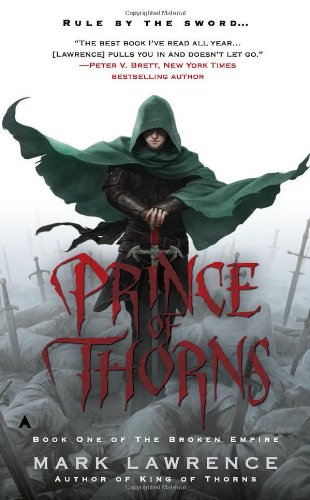
Ok, I have spent a fair bit of time discussing Historic Novels this week, so I’d like to return to fantasy novels in this post.  I have chosen to discuss one of my favourite recent series, The Broken Empire Trilogy, written by Mark Lawrence, starting with the novel The Prince of Thorns. When you first meet Lawrence’s character, Jorg, you are shocked.  No really, you are.  I’m used to un-conventional characters and anti-heroes, but this guy is just plain nasty, and the fact that he is just a young damaged youth somehow makes it worse.  But that is the attraction of these books – the complex but darkly charismatic Jorg gradually pulls you into his angry world.  I’ll not give too much away, but his psychopathic behaviour is intrinsic to the plot as the story unfolds.  Jorg leads a rough bunch of mercenaries, through a post-apocalyptic world full of knights, magicians, and radioactively mutated monsters.  If you’re hoping for brotherly companionship amongst the band of mercenaries, you’ll again be disappointed, as this lot will not …

George McDonald Fraser – The Flashman papers.

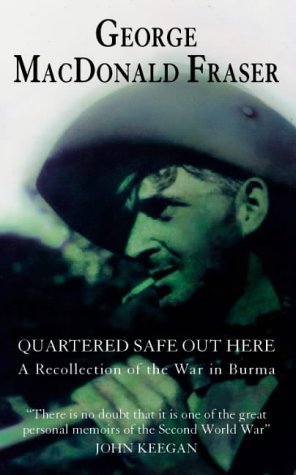
Okay, I’ll admit that this one isn’t for everyone.  George McDonald Fraser’s Victorian character, Flashman, that he took from ‘Tom Browns schooldays’ is a coward, a scoundrel, and a complete all round rotter.  Flashman manages to find himself involved in all the leading events of the nineteenth century, despite spending most of his time trying to run from trouble, and somehow always manages to come out smelling of roses, and being decorated with plaudits and medals.  The detailed historical research that went into these novels are also interspersed with George McDonalds Fraser’s quick wit, and they form a fun ride through some fascinating periods of history. The reason it is a controversial choice, is that even the most cynical hearted of readers couldn’t possibly condone some of Flashman’s behaviour, but it is key to these novels.  The novels raise an interesting point in the depiction of certain characters in Historical novels.  I know from my own experience of writing that it is impossible to create a believable character in the past if we try and …