Latest Posts

Sunday update and book giveaway!

Ancient-Greece-Government

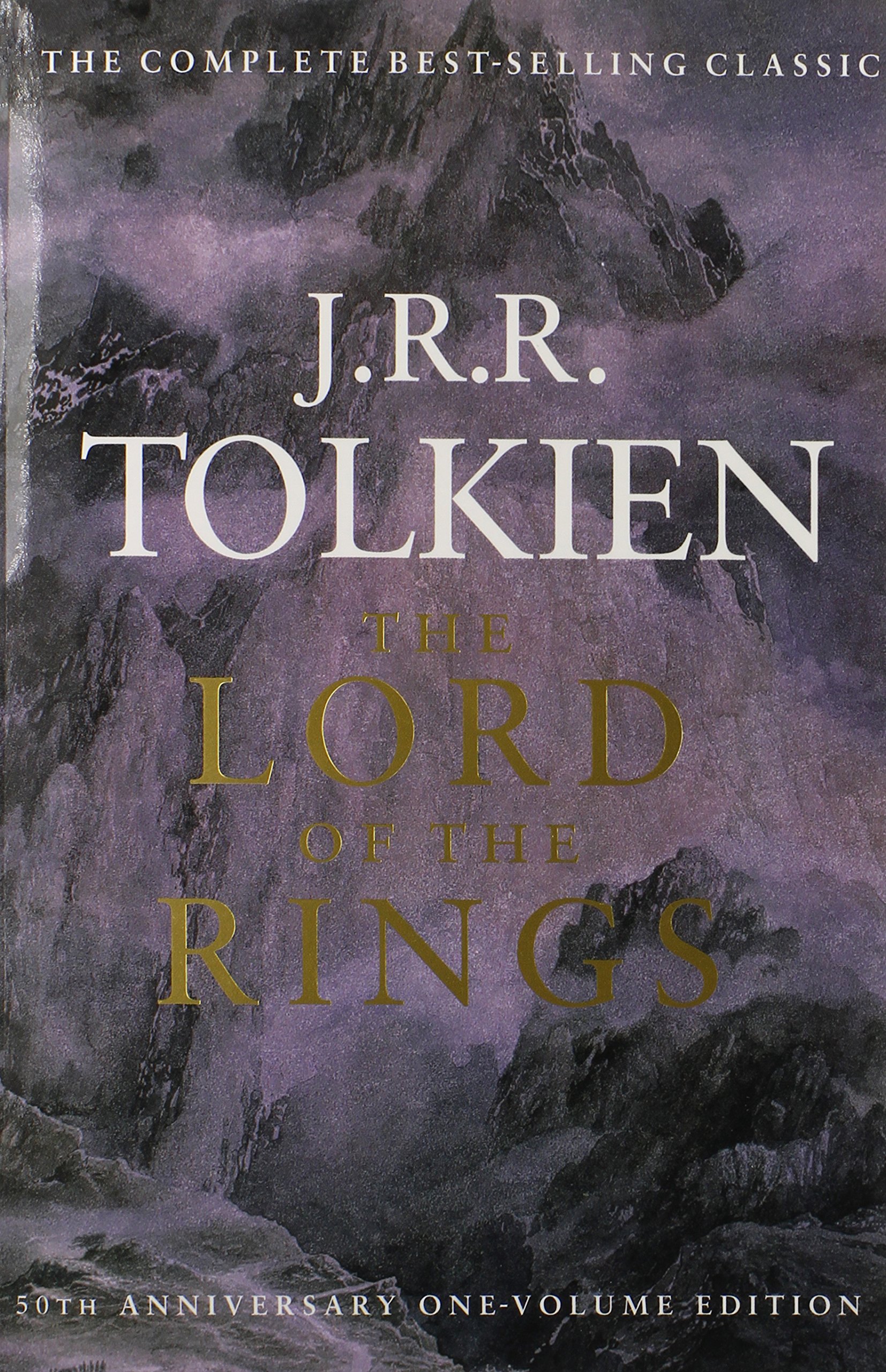
I hope you have enjoyed the Lord of the Rings season on this site, which was concluded on Friday with my final post of the series, with the search for the next Tolkien to grab the fantasy world’s attention.  I will return to other fantasy works soon, but I think on my next post I should come up with a post more centred on historical works…after all, this site does cover both genres.  It can be quite difficult to get the balance right, but as I’ve stated many times in the past, I think the two genres have more in common than they have differences.

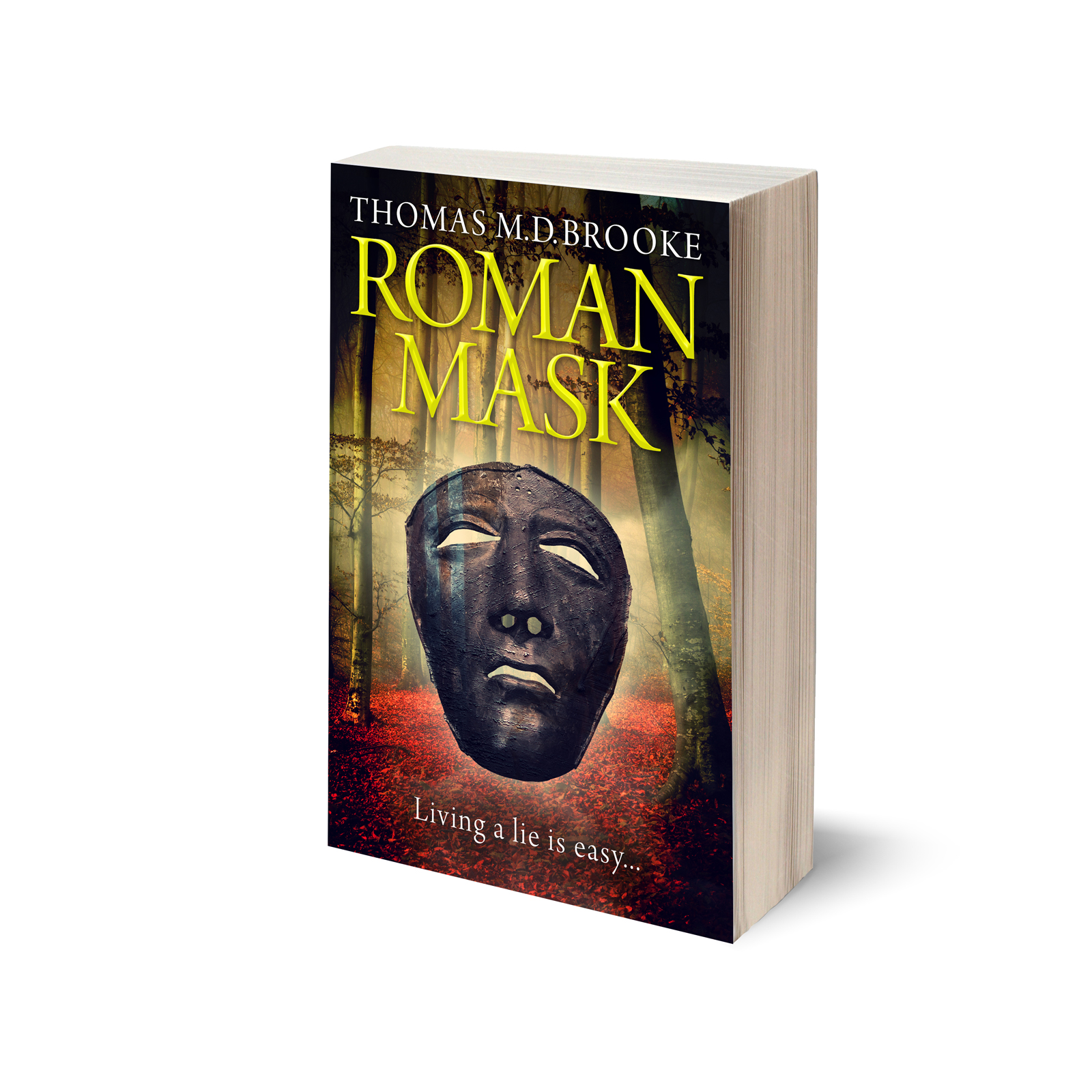
I try to be quite open to new ideas for this site, therefore in an endeavour to help involve my readers in the running of this site, I have come up with a new giveaway competition.  I will be giving away three copies of the paperback version of my book Roman Mask.  Possibly you haven’t purchased it yet, and even if you have you may only have read it on the kindle, so it might be nice to have something you can put on the bookcase.   All you need to do to enter is leave a comment to this post, suggesting things you may like to see on the site.  For example, “more ancient history” ,“more about new novels”, “more stuff about castles” anything you like really – as long as they can fit into the fantasy or historical novel genres.  I can’t promise to act on all of the ideas, but I promise to bear them in mind when I write future posts.   I will then pick out three names out of a hat next Sunday to pick the winners, and contact you to ask where you would like me to send the book.  This competition is open to anyone, wherever you live in the world, as long as you have a postal address I can send the book to.

If you are not aware of what the novel Roman Mask is about, there is a separate page specifically on the book on this site.  The latest review on the book which came out last week on the site Genre Queen says this about the book…

“I love books on Roman history, and let me tell you Thomas Brooke’s Roman Mask delivers!!!  This book was amazing!  Augustus Caesar is Emperor and Rome is at the height of its power, Cassius is our main character, to Rome he is a hero but he knows that is not the case.  I really liked Cassius, he was very flawed but there was just something about him that kept drawing me in.  When he gets summoned by the Emperor’s wife his worst nightmare comes true, he is going back to the battlefield.  Will Cassius redeem himself in battle or will he fall to the sword? I highly recommend this book to anyone who loves historical fiction!  You won’t be able to put it down!”

dfw-tb-trm-cover-3d-nologo

Who will take Tolkien’s place?

The Lord of the Rings

Over the past week and a half, I have posted several articles on the Lord of the Rings.  I don’t think anyone can deny the importance of Tolkien’s work to the fantasy genre, but maybe it is time to start looking beyond Middle Earth, to find the next great classic fantasy novel.  There have been several pretenders to the throne, various novels or series of books that for a time have come close to the popularity of Tolkien’s work, but so far, none have lasted the test of time.  I can’t possibly list them all as there are far too many but I will go through a few of the past, present, and future claimants to the throne…

Dragonlance

The Dragonlance series by Weis & Hickman – Back in the 1980’s, before computer video games hit their prominence, the game fantasy enthusiasts played was Dungeons and Dragons: a role-playing game played with character sheets, dice, and active imaginations.  The popularity of this game was in part fuelled by the massive popularity of the Dragonlance fantasy series of books with Tannis Half-Elven, Flint the Dwarf, the twins Caramon and Raistlin, and the Halfling Tasslehoff.  The books were exciting and fitted in perfectly to the role-playing world where every adventuring party was comprised of an Elf, a Dwarf, a warrior, a wizard, and a Halfling.  It was unsurprising where the inspiration for these characters came from, as the writers were keen Dungeon and Dragon enthusiasts themselves.

However despite their one time popularity and being a good read, I think modern readers of fantasy would now find these concepts a little dated, and the days when these novels outshone The Lord of the Rings have long past.

Wheel of Time

Wheel of Time series by Robert Jordan (and later novels by Brandon Sanderson).  I feel I have been reading these novels all my life.  I read the first of the Wheel of Time series as a teenager, thinking I was starting just another fantasy trilogy.  However, when I reached my mid to late thirties, I found I was still reading them!  The series hit book 14 before it reached its conclusion in The Last Battle.  Sadly the original writer of the first 11 books past away half way through book 12 so Brandon Sanderson had to come in and finish the series.  Fortunately, he was given extensive notes on how Robert Jordan wanted the story to end, so the many readers of the series weren’t left wondering.  Despite the novels epic scale and the long journey that a multitude of readers, like myself, spent from childhood to adult reading them, I doubt the series will ever be considered in the same breath as The Lord of the Rings.  I really liked the books but the critics were never quite so kind (they said it was too long!) so I doubt it will ever achieve the necessary gravitas to be taken seriously as a classic of the genre.  However, it could make a fantastic T.V. series or set of films.  Tolkien’s The Hobbit was unnecessarily stretched into 3 films when 1 or 2 would have done – with the Wheel of Time, you won’t be running out of material anytime soon.

Book 3 Ship of Destinyfarseer trilogy

The Farseer series and Liveship traders by Robin Hobb.  This is possibly the closest candidate we have available to be considered a modern classic in the fantasy genre.  Robin Hobb writes beautifully, her descriptive power is second to none, and her characters are always well thought out, with genuine personalities of their own.  These two series have different characters and plot-lines, but share the same world, so just as with Tolkien’s Middle Earth, it becomes richer and more real with every passing novel.  Will her novels pass the test of time and be loved down the generations as Tolkien’s have been?  Only time will tell.

Druss

Drenai saga by David Gemmell.  Since the death of David Gemmell, an annual award has been setup in his name to honour and find new and exciting fantasy writers.  This was to honour the name of the man who was such a great talent in writing heroic fantasy novels.  All his novels are fast paced and exciting, full of heroic deeds and terrible enemies.  It is the characters of his novels, and in particular those from the Drenai set of books, that are key to Gemmell’s writing.  Each character has a convincing back-story, personality and set of emotions.  Gemmell’s fantasy realms may not quite have the level of detail of Tolkien’s Middle Earth, but his characters are just as real and that for me is the most important aspect of writing.

game of thrones

Game of Thrones by George R.R. Martin. When I first read the first novel in this series back in 1999, I knew I’d found something special.  I didn’t quite expect the astounding success we see now, with adverts in every newspaper and magazine, together with billboards and posters in every bus shelter and train station, but then I never took into account the series becoming a worldwide Television hit with HBO.  Even so, even back then I was sure this was more than the average set of fantasy novels and as the series continued I became only more convinced of this.  When the TV series started, I loved this too, marvelling at how well they’d managed to convert his world of Knights, white walkers, grand castles and huge battles to the screen.  However, the incredible success of the TV series has put an element of doubt in my mind – not because they’re not good, they’re absolutely fantastic, but because now the TV series has caught up with the books, the story looks set to continue in that format first.  Will the remaining novels ever be written now? I don’t know, and even if they are, will they be as good?  Maybe how we judge success in the field of fantasy writing has changed.  Maybe the world is no longer looking for a set of novels to be as acclaimed as Tolkien’s but instead want to rival its success in the box-office or the level of merchandise available.  Certainly more money can be made that way, but I think that would be a shame.  The world deserves great fantasy novels, will you be the person to write the next great classic?

Middle Earth since the films…

Film4_digitaldomain.com

picture from digitaldomain.com

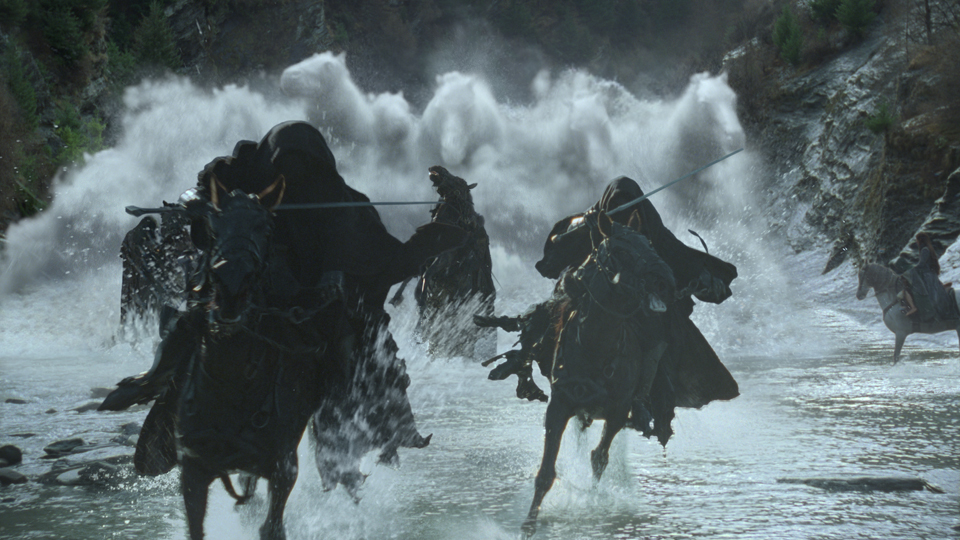
Despite being known primarily as a lover of books, I think I should make it clear from the start that I love Peter Jackson’s three films that make up his adaptation of the Lord of the Rings.  I don’t think Tolkien’s classic work could ever be completely captured in its entirety on film, but I really don’t think that anyone else could have done it any better – they really are fantastic.

I could try and nick pick here and there, how I wished they’d portrayed a particular part, this way or that, but I won’t bother – the film adaptation is just that, an adaptation, and it is a very good one.

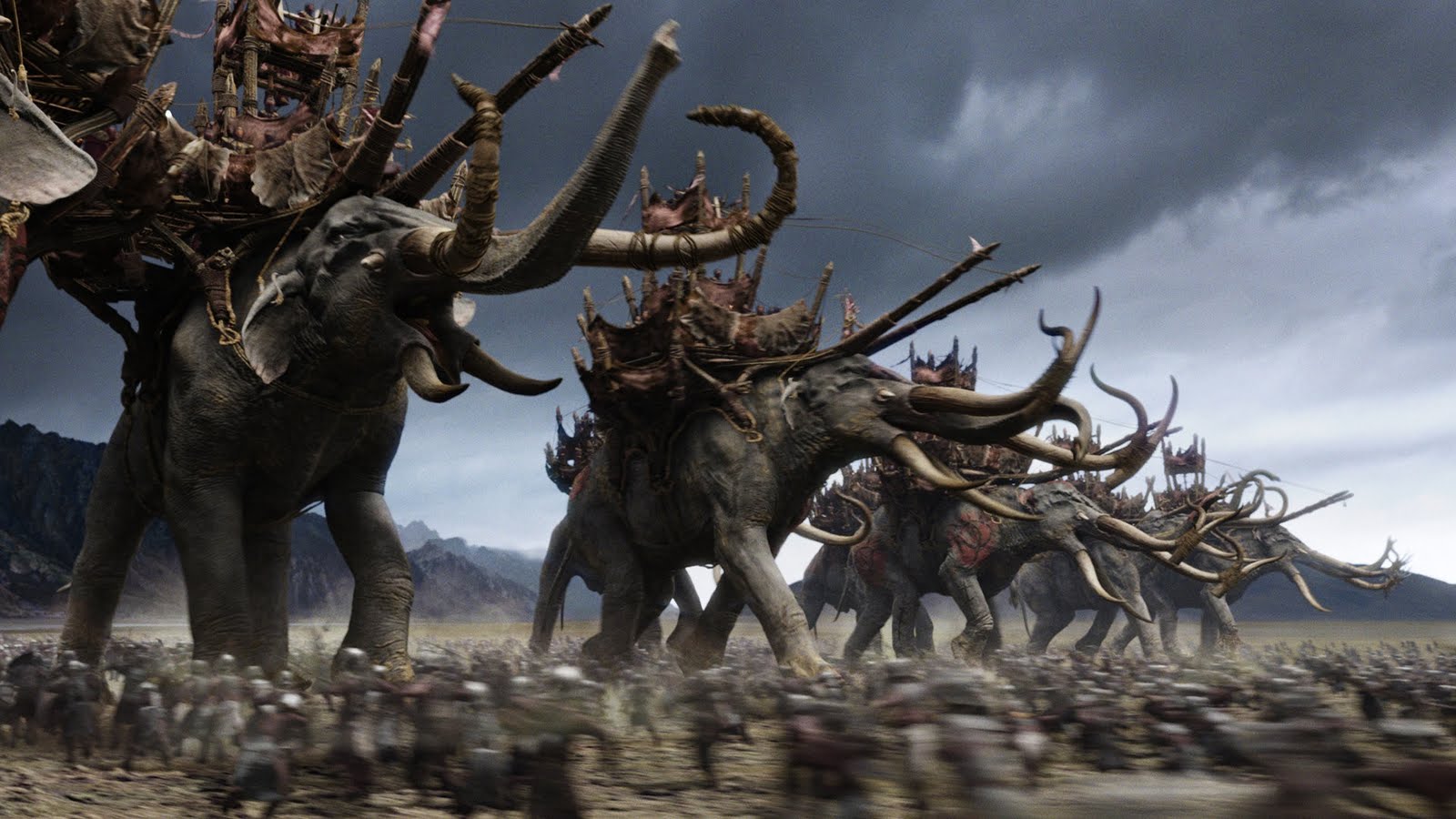
The films have done a lot for the fantasy genre as well.  They showed how the incredible advances in in CGI meant that virtually any imagined concept or world can now be achieved via the medium of film.  It used to be thought that fantasy novels could only be achieved in either books or animation because of the limitations of film, and the cost of special effects.

Film1_wallconvert.com

Picture from wallconvert.com

But although the cost still remains high, the top end restrictions in what is and isn’t achievable has been lifted and the only limiting factor now is the size of the budget and the scope of the writer’s imagination.  I don’t think we will see a whole host of new fantasy novels making it to the cinema, because film producers will still want to know they are onto a winner before they risk the quantities of money we are talking about.  But judging by how eager they were to carry on using Tolkien’s work with the three Hobbit movies – when it was clear that one or two films would have been more than adequate – they can see the rich potential of fantasy movies.  In fact, I have heard that each of The Hobbit movies made $1 billion each, so it’s not surprising they made three of them!

Either way, the films are magical, and they have brought a whole legion of fans to the realm of Middle Earth who would otherwise never have heard of the Ring of Power,the Lady Galadriel, the spider Shelob, and the Hobbits of the Shire.

Film2.wallpapervortex

picture from wallpapervortex.com

So I find myself torn, because as much as I love the films, I worry at how many people in future generations will now ever read the book?  I am sure that the book sales went up on the films release and immediately after, but how long will that last?  Gone with the Wind was originally a Pulitzer Prize winning novel before they made the film.  But how many people are even aware of that, let alone read it now? Everyone has seen the film so why bother?  But that is such a shame when it comes to The Lord of the Rings because you can only fully immerse yourself in the world of Middle Earth if you lose yourself in the books.  There are passages of the books which simply cannot make the transition across without the films slowing down to a crawl, so rightly they were omitted.  You might not think that this matters, but you are then missing out on so much of Tolkien’s rich and vibrant world.

Film3_buzzerg.com

Picture from buzzerg.com

When the companions in the The Fellowship of the Ring approach Moria, in the novels you learn a lot about the back story of the mines and how the Dwarves had wished to take them back forty years before.  This is difficult to show in the film, so they simplify the story.  I can understand why they did it, but you miss a part of the story, and never know the sense of loss and sadness that you experience when you learn of the dwarves fate in the books, or the fear as the drums start beating in the deep.  There are plenty of other examples of course, the Elves of Mirkwood, getting to know the Tree Ents of Fangorn, learning of Shadowfax, the sadness the Hobbits feel when they return to the Shire.  All these stories were necessarily cut short, simplified, or cut out completely.  I am not criticising those decisions, but only regret that their stories will now be forgotten altogether if the books become forgotten too…

Film5_wallpapervortex.com

picture from wallpapervortex.com

Sunday update!

Henderson.deviantart.com

I hope you have been enjoying the series on The Lord of the Rings this past week.  I started off with a post on my own memories of when I first read the trilogy and followed that up with a piece on what separates Tolkien’s work from other novels.  I could leave it at that, but I would like to write one more post on how our perceptions on the three books have changed since the films have come out, and what the legacy of The Lord of the Rings is likely to be, since the three film’s incredible success at the box office.  I will also try and look ahead, at other fantasy novels that may one day be considered classics and take their place alongside The Lord of the Rings at the top of the genre.  This will come out on Wednesday.

Gandalf

Roman Mask

An update on my own novel Roman Mask.  I still haven’t managed to work out what has happened to the three missing reviews from my blog tour which were supposed to come out earlier this month.  However, one review did come out on Patty Woodland’s excellent site Brokenteepee.com earlier this week.  Patty is a city girl who remarkably decided to leave that life behind and become a goat herder in Montana!  She runs a site from Montana where she writes about and reviews books from many different genres.  She is respected for her honesty and reviews on her site are well sought after.  You can read her whole review here. However, if you want the abridged review of my novel, this is what she says:

“The book is exceptionally researched and very well written. I was drawn in from the very first page. Ancient Rome comes to life in all of its glory and menace. It’s a weighty book but one that read quickly because it is one of those books where you just get lost in the story and time flies by. Despite the dark subject matter and the gore – war is gory, there is nothing to be done about that – I didn’t want the story to end. I just love books that bring a world to life like this.” 5 Stars!

It is most gratifying to see how well received my novel has been, and it is such a great feeling to receive such a positive review from someone the other side of the world.  Hopefully the three missing reviews will come out in time and they will be equally positive (who knows?).  I will always seek to find websites and newspapers that want to review my work, I am not afraid to submit my work to this close scrutiny (although of course it is scary!!) so if you know of any other sites that may want to review my novel, please let me know!

dfw-tb-trm-cover-3d-nologo

Why the Lord of the Rings is still such a great book!

Because the Lord of the Rings was brought to the forefront of everyone’s attention by the release of Peter Jackson’s magnificent set of films, it is easy to forget how great the books are.  For anyone interested in fantasy novels, The Lord of the Rings is still the most important book you can read, and here are a few reasons why.

Map.reddit.com

Picture from Reddit.com

Depth.  Middle Earth is incredible.  Not just because Tolkien envisaged such a land of rivers, mountain ranges, great forests, and towering ancient cities, but because of the depth and detail he used.  Well researched languages, myths and legends that go back millennia – only a selection of which made it into the pages of the trilogy.  New types of animals, races, and magic all imbue Middle Earth with its own mysticism.  If you research the history of any of the lands great cities in Tolkien’s other writings you will find details on who founded the city, why it was built, and the great battles fought for it.  No other author has ever poured such depth and history into a fantasy realm.

Dwarves.dwarrowscholar.wordpress.com

Picture from dwarrowscholar.wordpress.com

Races. The races that populate Middle Earth have become common to us in a vast array of fantasy novels, spawned by Tolkien’s novel which created the genre.  But let’s not forget how dynamic each of his races were.  When you first meet the Hobbits in the Shire at the start of the story, and hear of their carefree and happy lives, you realise how much Tolkien cared and loved the simple honest folk he created.  But equally, by the time you meet the elves of Rivendell and Lothlorien, it isn’t long before you are enraptured by their ancient wisdom and you long to learn of the secrets of the ages they hold – behind their ancient veil of mysticism.  The tales from the Dwarves are no less impressive, the brave souls that tried to reclaim their lost Kingdom in the Mines of Moria before encountering their end.

Sauron.videogamesblogger.com

Picture from videogamesblogger.com

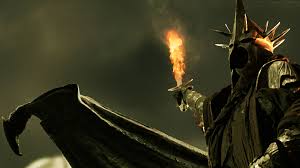
A brooding menace. Tolkien was almost unique in depicting his lead antagonist as an unseen presence.  Normally writers can’t resist to show their lead bad guy in the flesh; possibly giving them the best lines or allowing them the chance to explain their actions just before the end of the book.  However, Tolkien understood a fear of something unknown can be a powerful ingredient and the Dark Lord Sauron would be best portrayed as a malevolent force, working in the background, pulling all the strings.  His absence in the story only increases his sense of menace and that spell would have been broken if he’d appeared near the end.  A fear of something can often be even worse than the harshest reality and he used this to great effect.  This still left some great evil characters, such as Saruman or the Witch King, to play out his designs.

battle_for_helms_deep_thecloverlord.deviantart.com

Picture from thecloverlord.deviantart.com

Genuinely exciting battles.  My favourite chapter in The Lord of the Rings, together with most adolescents who read the book at the same age as me, was Helm’s Deep.  This is the section of The Two Towers when the men of Rohan make a last desperate stand in their fortress against the forces of Saruman, assisted by Legolas, Gimli and Aragorn.  It’s full of action, and Legolas and Gimli’s count of felled orcs is a constant running commentary.  By the time the riders of Rohan, under the command on Eomir and Gandalf show up you’re bursting with excitement.

Gollumn.wallpaper4me.com

Picture from wallpaper4me.com

Characters.  Whilst writing my own novel Roman Mask, I paid special attention to the creation of the characters, making sure I had a strong back-story for each of them, so I could develop their individual personalities accordingly.  However, Tolkien being the man he was, took this process to a whole different level.  I’m pretty sure he’d have been able to show a whole family tree of each of his characters and have documented where they came from, and what their family history was.  His attention to detail wasn’t wasted, as each of his characters are well rounded and complete.  We learn what motives each of them, what angers them, what it likely to make them laugh.  His portrayal of the inner conflict within Gollum, as his split personality rages against itself is a brilliant piece of work achieved by Tolkien building on the story behind the character.

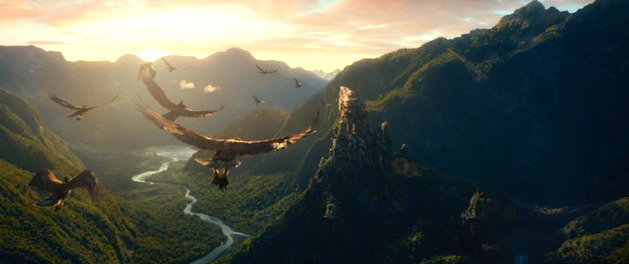
eagle_libriscrowe.com

Picture from libriscrowe.com

Progression. A lot has been made of how the writing style changes within The Lord of the Rings, as the story develops along with the story.  Gandalf starts the novel joking and laughing as he discusses Old Toby tobacco or sets his fireworks in the sky above the shire, but by the end of the series you are more likely to hear him utter prophesies or declarations of great power and presence.  I have no idea whether this was an intentional act or not on Tolkien’s behalf, but what is does achieve is a sense of progression through the novel, as you make the journey through the endlessly changing episodes of the book, you feel you have journeyed and grown with it.

The first time I read The Lord of the Rings.

Gandalf

I was eleven years old, when I first read The Lord of the Rings, and it changed my life.  I’d been a sporadic reader up until that point, occasionally reading a book when bored, or reading something to appease my parents.  But I soon realised as I slowly made my way through all three volumes over a long hot summer in the mid-eighties, that The Lord of the Rings was different.  This was a book that I loved. So much so, that from that point on I became an avid reader.  I was then always known to be the boy with a book in his hands, desperately wanting to recapture that feeling of complete immersion in a world far removed from my own.  Be it fantasy novels or historical, throughout university and beyond, the sight of me carrying a book or with a novel stuffed in a coat pocket or bag was so common that it was only remarked upon on the rare occasion it was missing.

The attraction of escapism is obvious, but this wasn’t the first fantasy novel I’d read, and none had gripped me like this.  In hindsight, I probably should have started with the Hobbit, but I didn’t, I plunged straight into Tolkien’s main work (another year passed until I picked up a copy of the Hobbit).  But it didn’t really matter, the first book in the series starts off in a similar vein to the Hobbit, in the nice and cosy Shire, with pleasant discussions on party business and types of Hobbit ale and tobacco.  It was only when I was quite far into The Fellowship of the Ring that I felt my imagination hooked, and by the time they descended into the mines of Moria, I’d lost myself completely to the story.

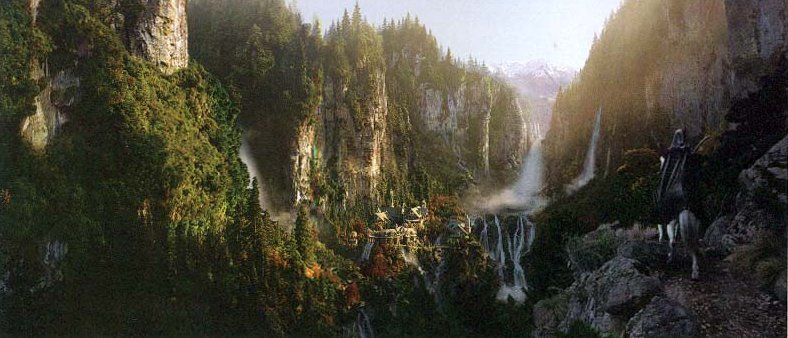
Rivendell.fanpop.com

Picture from fanpop.com

Strangely enough, one of my favourite characters was – and still is – Boromir, and I have no idea why? Possibly, even back then I was drawn to flawed characters.  Either way, his death moved me, but I loved how he had redeemed himself trying to rescue Merry and Pippin from the orcs, and I guess I’ve always loved stories of redemption from that point on.

But despite Boromir’s death, The Lord of the Rings hadn’t lost its grip on me, and just as Merry and Pippin were captured and forced to run with the orcs, I was dragged along by the story, never taking breath until the incredible battle at Helms Deep, the ultimate thrill of excitement as the Riders of Rohan, with the help of Aragorn, Legolas, and Gimli hold back the endless hordes of Uruk Hai.

Minas_Tirith_non-film_lotro.com

picture from lotro.com

I was a slow reader back then, and even now I’ve never been truly convinced of the merits of skim reading, or rushing through a novel.  So it was getting late in the summer when the I reached The Return of the King, and I felt I’d been on a long journey too, alongside Frodo, Sam and Gollum, as the Ring is finally returned to the fires of Mount Doom.

As autumn approached, the sense of loss I felt at nearing the end of the book was reflected in the scouring of the Shire, as the Hobbits returned to a disappointing homecoming in their land.  As the Ring-bearers finally departed to the West, I returned to school, but I was changed forever.  Now I have grown up and become an author myself, writing my own novel Roman Mask. I’ve fallen for many novels over the years, but just as with any first love, none will ever have such a strong impact as The Lord of the Rings.

Henderson.deviantart.com

picture from Henderson.deviantart.com

Coming up on the site soon!

The Lord of the Rings

Coming up!

It occurred to me recently that although I have highlighted and written about a number of fantasy novels, apart from the odd mention here and there, I have missed out the two most famous works in the Genre.   They are of course The Lord of the Rings by J.R.R. Tolkien and Game of Thrones by George R.R. Martin.  Possibly the reason I have avoided writing about them up until now is that since the films and the TV series have come out, so much has been said about them, I wasn’t sure I could offer anything more.  However, I now realise that was ignoring the elephant in the room, and to have a site which discusses fantasy novels, and not include these great books is ridiculous.

So this week I will start of writing some pieces on The Lord of the Rings, the book that I first read at eleven and did more to spark my imagination than anything else in my life.  It lead to a lifelong love affair with reading and ultimately writing, and I have Tolkien to thank for now realising my dream in becoming an author.

Writing just one post on the Lord of the Rings doesn’t seem right somehow, so I will try and write a few posts.  If anyone else out there wants to contribute anything on Tolkien’s work, please check out the submissions tab and send me your post.  I will be delighted to showcase other people’s views on the subject.

I will get to the brilliant Game of Thrones at some other time in the future…

game of thrones

Roman Mask news!

Up until now you have only been able to buy my novel Roman Mask in paperback, or E-book for the Amazon Kindle.  This will change at the end of the month, as I have just finished converting my novel into the format for the Nook and iPad.  My novel will soon be available on the Barnes and Noble site as well as a variety of other retailers.  The planned date for release in these formats is September 27th 2015 and I will update you as soon as they are live.

Some of you will notice that a number of the sites due to showcase the novel on my blog tour last week haven’t appeared yet.  This has been incredibly frustrating, but the lady who is organising the blog tour thinks that we will be able to get them rescheduled, once she finds out what the delay is due to.   Rest assured, as soon as they come out, I will let you know.

dfw-tb-trm-cover-3d-nologo

Bernard Cornwell, The Winter King. A great combination of myth and history.

Winter King

Bernard Cornwell has always been a great favourite of mine, managing to combine exciting action with historical events – informing the reader, whilst keeping them on the edge of their seat.  So I was intrigued when he decided to write a series of novels based on the legend of King Arthur.  The Winter King is the first of the Warlord chronicles and is set in ancient Britain just after the Romans left its shores and the Saxons started to make incursions into the British Isles.  King Arthur comes to hold back the impending storm, and by so doing spawns the legend that has inspired the myth that has lasted through the millennia.

The difficulty with any Arthurian novel is striking the balance between historical accuracy and the myth that has grown over the past fifteen hundred years.  Most people realise that Sir Thomas Mallory’s concept of knights in shining armour is completely inaccurate, but do you throw out all the elements of the legend you think untrue or exaggerated?  If so you may come up with a tale nobody recognises.  This is an issue with Arthurian novels, because readers will come to it with their own pre-conceptions and if you leave out characters like Lancelot, or elements like Arthur’s sword Excalibur or the round table, the reader might be so disappointed that they are completely turned off by the book.

Enemy of God

Luckily Cornwell, as ever, strikes a great balance.  He retains the ideas and concepts of the great legend, whilst combing it into a believable tale set in Britain’s past.  It would be impossible for him to please everyone of course, but I think most who love tales of Arthur will really enjoy his take on the myth.  We have all the characters we know so well, Lancelot, Guinevere and Merlin, but all sown into a story where the warriors wear leather or chain-mail suited to the period, and fight in a tight shield wall rather than with horse and lance, donning full plate armour.

Merlin is done especially well, where he is depicted as a Druid and performs the rights and rituals of the ancient pagan priests that had held sway in the land before the Romans appeared and put an end to their power, hundreds of years before.  Any magic in the novel therefore comes in the form of curses and prophecy, being a realistic way of portraying ancient mysticism and retains a sense of realism.  The character Merlin appears completely believable and fits in with the period of history.  The power he holds over others comes from their belief in his words and rituals, and is a clever way of writing this essential ingredient into the story, without it branching into the realms of fantasy.

Excalibur

I’ve always loved the legend of King Arthur and I really enjoyed Bernard Cornwell’s interpretation of the myth.  I had a few gripes of course, normally with the behaviour of the odd character, but that’s to be expected – we bring our own ideas with us when it comes to stories on Arthur, it’s what makes him such a fascinating subject to write about and I can’t recommend these novels enough.

You can purchase the first of these novels, The Winter King on Amazon here.

10 Castles to see before you die!

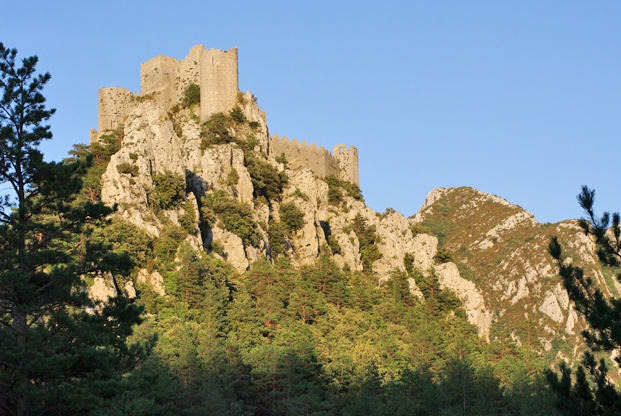
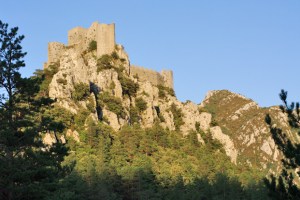
Chateau-de-Montsegur.Etonnantes-pyrenees.compicture from Etonnantes-pyrenees.com

Montsegur, Southern France.  Unless you know your European history well, you might be unaware that there was another branch of Christianity once.  They were called the Cathars and were based mainly in Southern France in the 12th and 13th century.  Alas, they fell out with the Catholic Church, who declared them heretics and with the co-operation of the French King pursued a religious crusade to wipe them out.  The Cathar’s last stand was held in this tiny castle in the Pyrenees.  A year long siege was ended by a daring raid of French knights who climbed up the cliffs to take the castle in the night.  The Catholic Church then burnt the 225 Cathar priests alive at the foot of the mountain (they apologised in 1979).
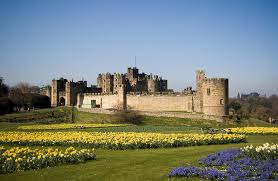
Alnwick.en.wikipedia.orgpicture from en.wikipedia.org

Alnwick Castle, Northumberland UK.  I had to have this one on the list because it used to be my favourite as a child.  My grandmother had dinner mats of different English castles in her cottage in Northumberland.  I used to always insist I had Alnwick castle because I thought it was such a fine looking castle – and it still is! The seat of the Duke of Northumberland, the English guardian of the North whose role used to involve keeping the troublesome Scots their side of the border.
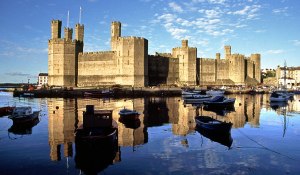
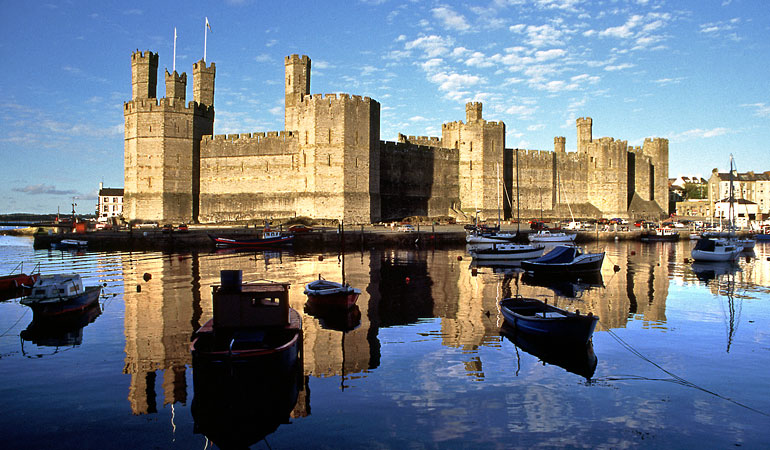
caernarfon. Castleexplorerpicture from castleexplorer.com

Caernarfon, Wales, UK. Edward 1st of England has been described as a great a terrible King and he certainly wasn’t a man of half measures.  Before becoming the infamous ‘Hammer of the Scots’ he needed to put the Principality of Wales in its place, and put an end to the many rebellions that sprang up periodically from that land.  His method was building a long chain of castles through North Wales, the traditional heartland of the rebellions.  From this point on, any uprising will need to involve the taking of several large castles.  Caernarfon is one of the larger ones.
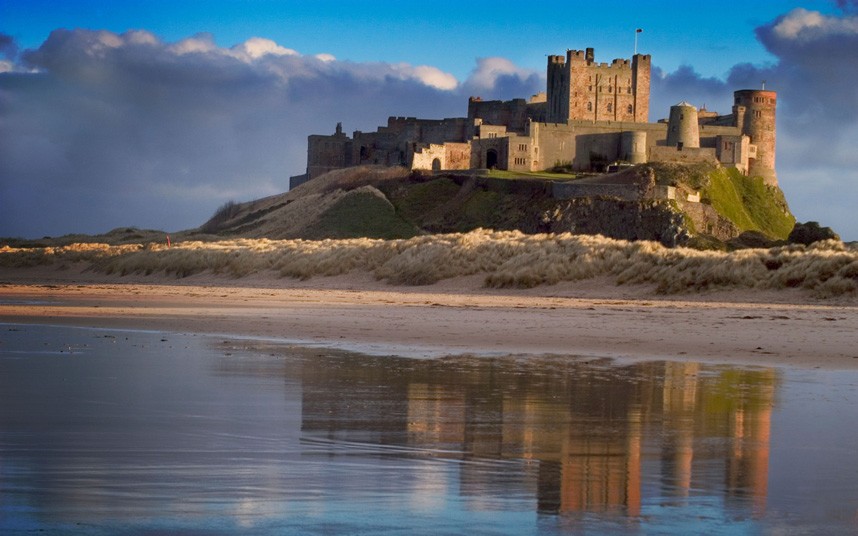
Bamburgh.Telegraph.co.ukpicture from telegraph.co.uk

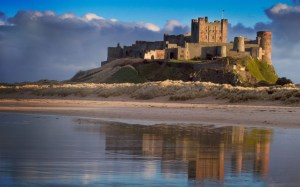
Bamburgh Castle, Northumberland UK.  Another border castle this one, nestled along the Northumbrian coast.  What is so amazing about Bamburgh is the stunning setting.  You can walk for mile either side of the castle along Northumberland’s unspoilt and beautiful coastline, taking in views of the magnificent castle along the way.  Historically, it was a vital fortress in the defence of the North coast of England, but also interestingly Sir Thomas Mallory considered Bamburgh to be the site of Lancelot’s mythical Arthurian castle, ‘Joyous Gard’.
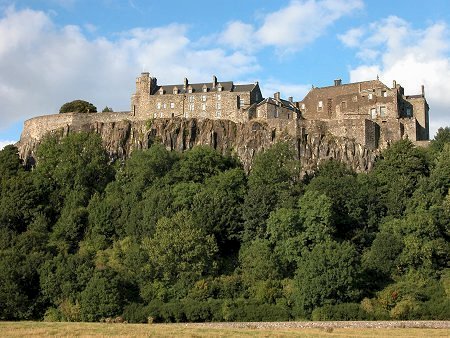
Sterling.Undiscoveredscotland.co.ukpicture from undiscoveredscotland.co.uk

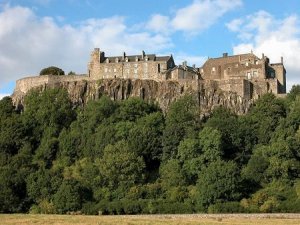
Stirling Castle, Scotland UK.  Possibly the most important castle in Scotland, Stirling comes up time and again in Scotland’s wars with her neighbour England.  Holding Scotland depended on taking the great fortress and both sides took it and lost it during Scotland’s wars of independence.  In 1297 it was the site of William Wallace’s great victory of Stirling Bridge when a sizable English army was chopped to bits by their Scottish cousins.
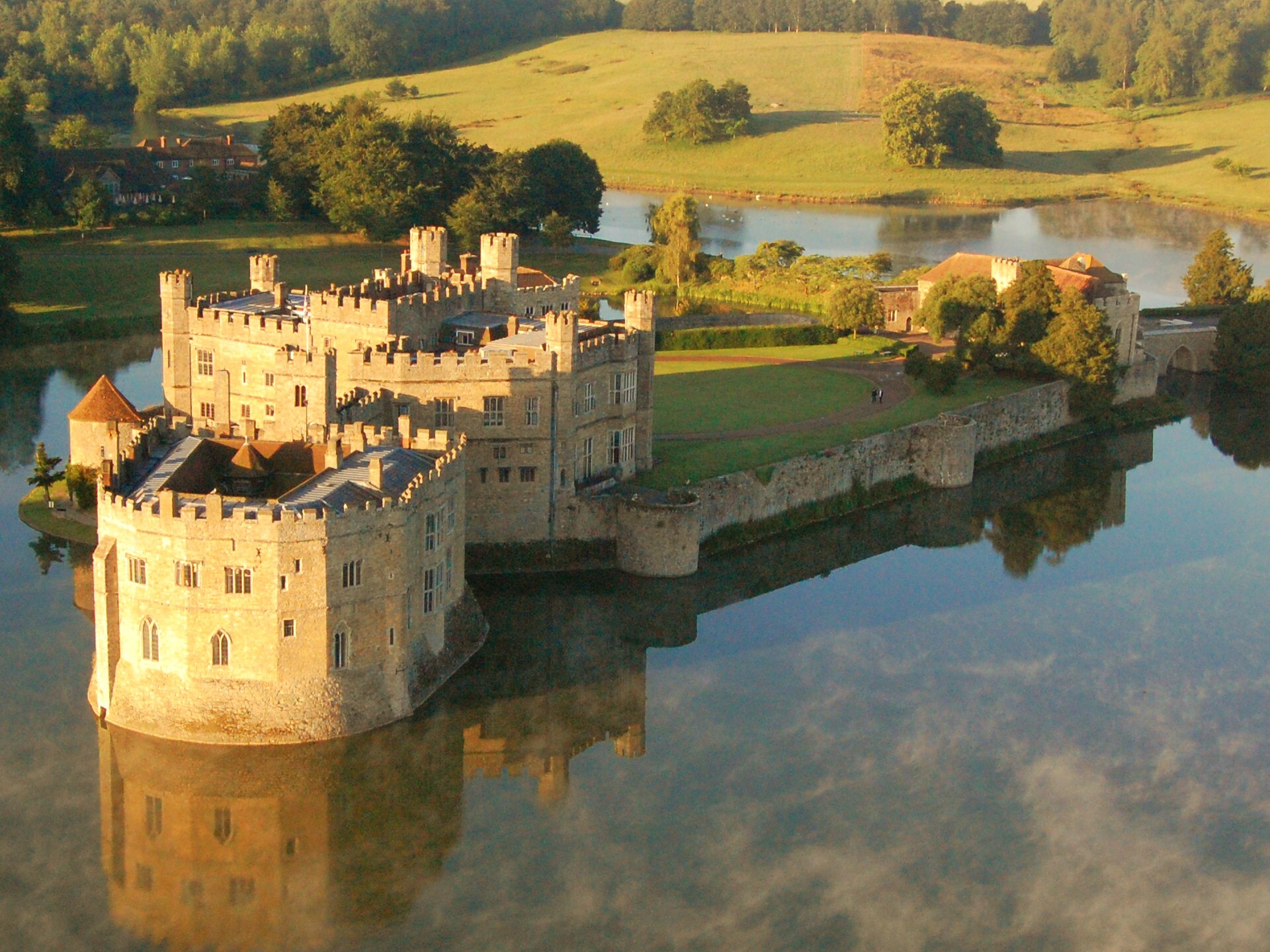
Leeds castle Kent. Outofthedoorpicture from outofthedoor.com

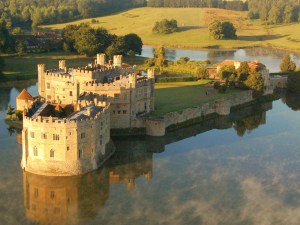
Leeds Castle, Kent UK. Leeds castle might not have seen the same kind of action as those in the borderlands of England and Scotland or the troubled regions of North Wales, but I’ve always thought Leeds is a beautifully designed castle with its fairy-tale perfect lines and large moat.  Possibly this is the closest to how we imagined castles in our childhood.
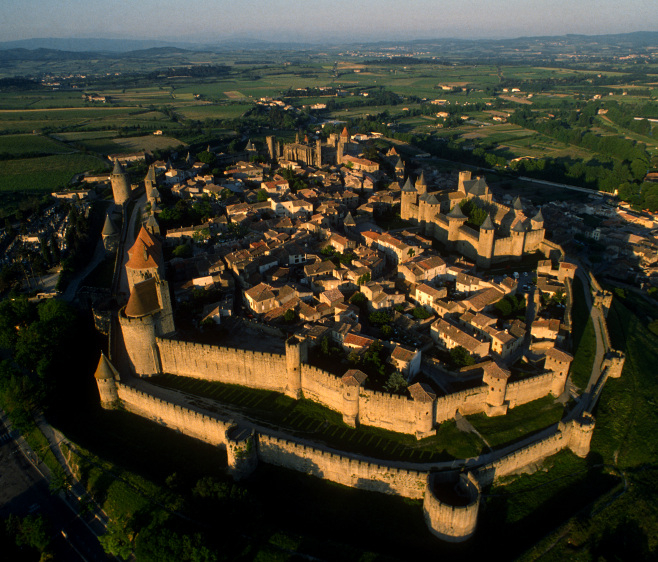
carcassonne_france.frpicture from france.fr

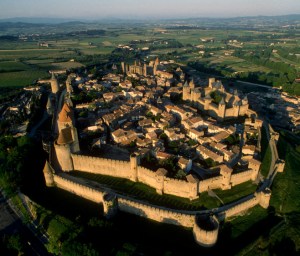
Carcassonne, France.  A citadel this time, rather than a castle in the traditional sense.  What’s great about visiting Carcasonne is how the outer wall still circles the great citadel rather than being buried in a sprawl of newly constructed houses.  Great if you want wander around the wall or discover the cities narrow and winding streets.  The extensive reconstruction in the 1850’s mean that the fortress is in good repair although some may feel that this means the citadel lost some of its medieval integrity with the works.
Jodpur.Stevemccurry.compicture from stevemccurry.com

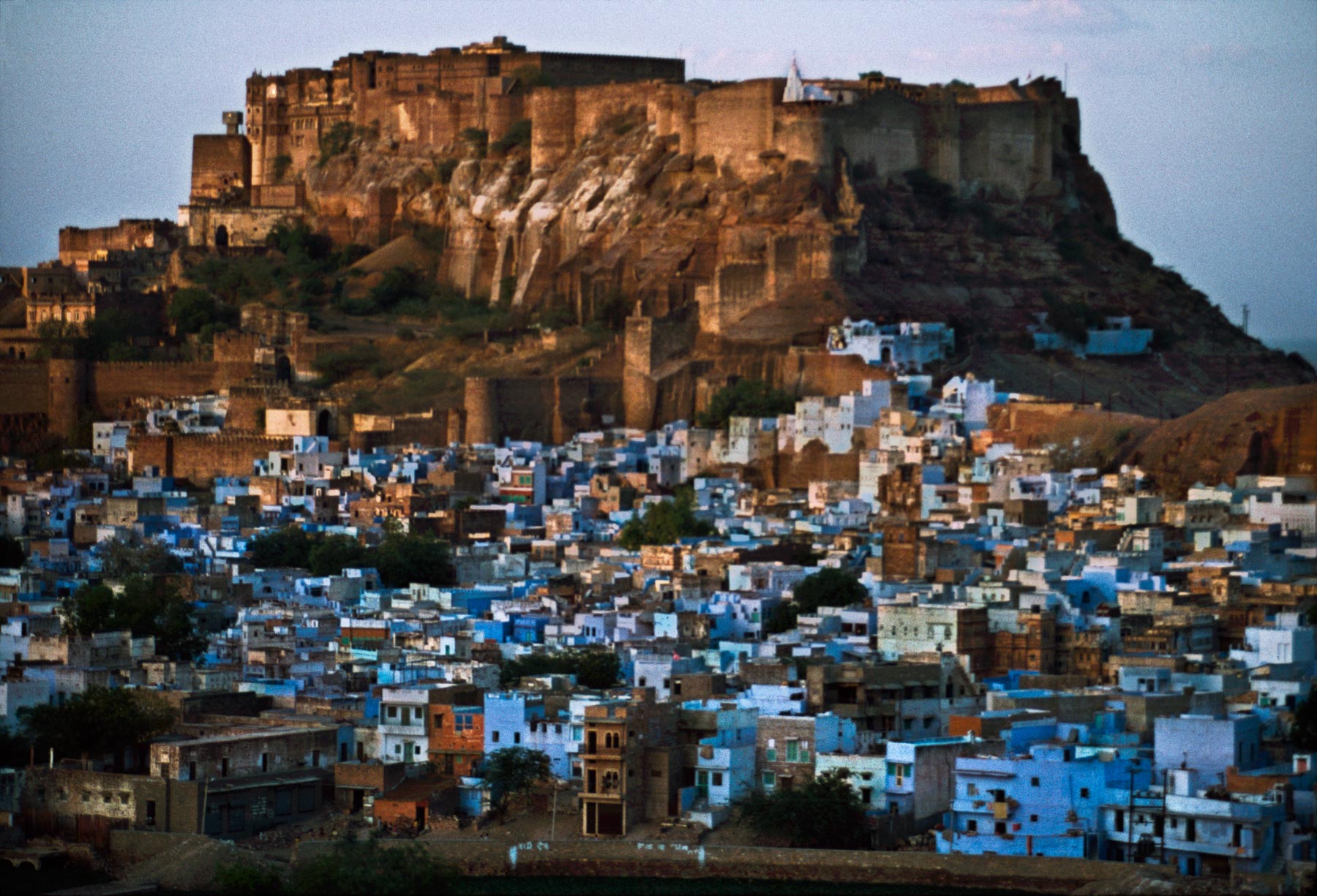
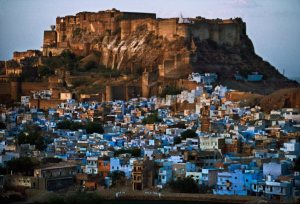
Mehrangarh Fort, Jodhpur India.  If some of the previous castles were grand in their ambition, they have nothing against the great fortress that dominates the skyline of India’s beautiful Blue city of Jodhpur.  It was named after a man called ‘Raja Ram Meghwal’ who was buried alive in its foundations in return for his family’s prosperity.  This was thought to ensure the forts good fortunes, and it has proved so in one respect, the descendants of Raja Ram Meghwal still live in the estate gifted to them by Roa Jodha, the chieftain who built the great fortress.  The sheer size and power of this stronghold strike you as soon as you enter the city and stays with you long after you leave it.
Rajasthan_Jaisalmer_Travel.india.compicture from travel.india.com

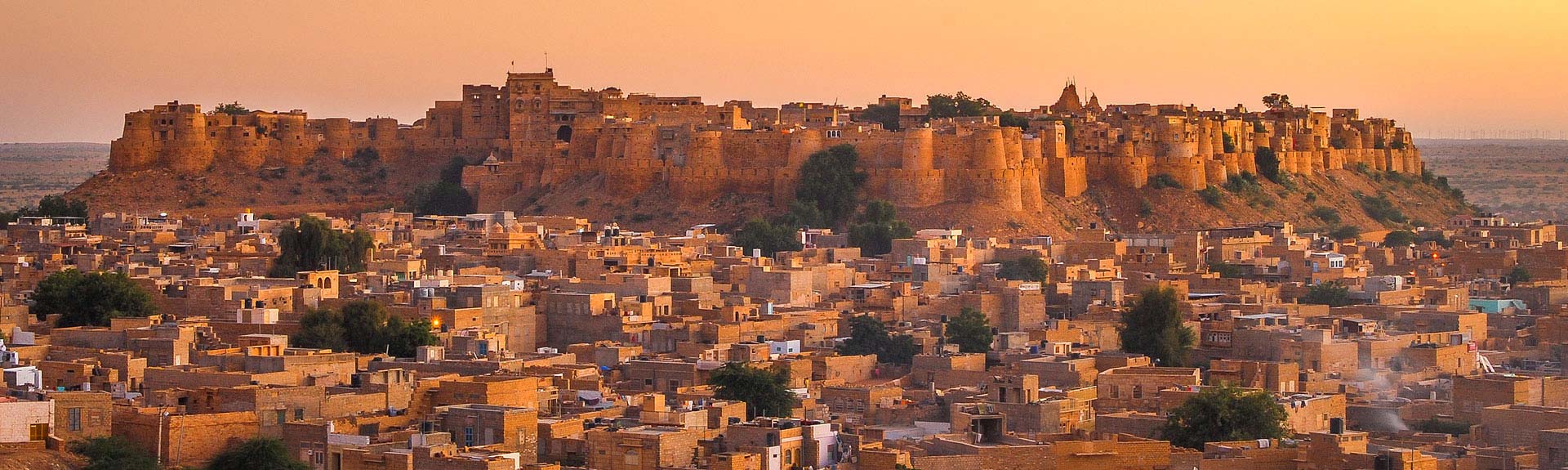
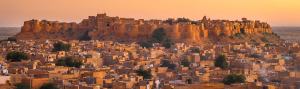
Jaisalmer, The Golden City India.  Another citadel this time, Jaisalmer is a magnificent golden city rising from the deserts of Rajasthan.  It was the scene of many ancient battles, and after its capture in the 13th century many of the forts women committed Jauhar or mass suicide rather than endure the attention of the invaders.  However it successfully repulsed one of the Moghul emperors in 1541 proving taking this great fortress was far from easy.  I always thought of it like a great sandcastle – absolutely magnificent.
Warworth visitnorthumberland.compicture from visitnorthumberland.com

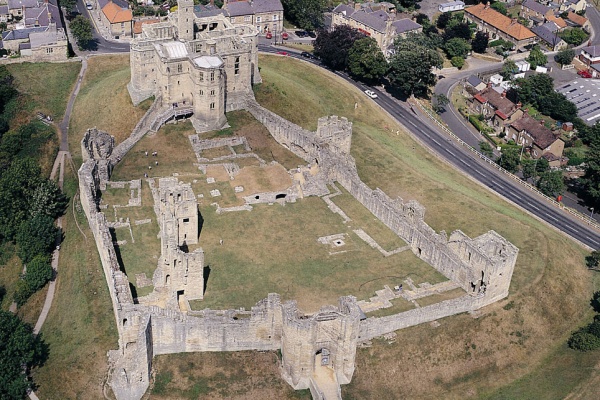
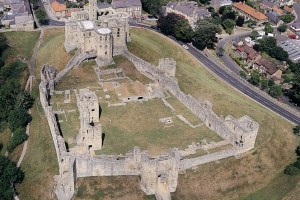
Warkworth, Northumberland UK. I’ve left this one until last as this in my (current) favourite.  There are much larger or spectacular castles than Warkworth, but I like it because it represents everything I love about castles.  It is slightly ruined, which is a good thing because it means it retains its authentic integrity – rather than being converted into a glorified stately home.  It also has a colourful past, being involved in many sieges and battles – therefore, it is a real castle, and not a pretend folly of some Lord or Baron.  It is also old with a dour and imposing appearance – this was a castle built for war, and nothing else.  Built around 1157 it was first raided in 1174, was twice besieged by the Scots (unsuccessfully) in 1327, had a leading role in the War of the Roses, and was damaged in a siege during the English Civil war in 1648.

Many of you will love Castles that I have missed from this list, this isn’t a definitive list, it is just my 10.  If you have some of your own, let me know in the comments below!

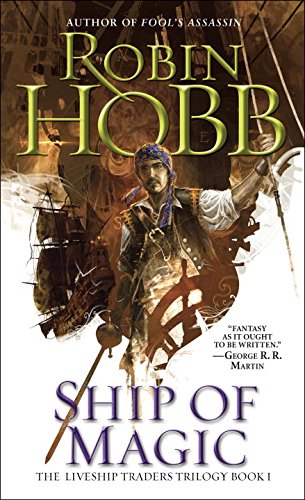
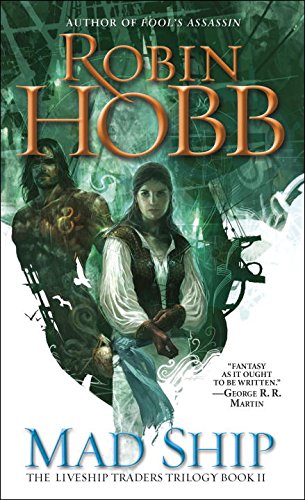
The Liveship Trilogy by Robin Hobb. A master author at the top of her game.

Book1 Ship of Magic

The Liveship traders of Bingtown operate to the south of Six Duchies – the land we visited with Hobb for her Farseer novels.  However, don’t expect the same characters to pop-up or a continuation of the raids from the Red Ships.  This is a very different story, and although the lands and novels are intrinsically linked, you need no knowledge of the Farseer novels before you embark on this series.   We meet a new cast of well-crafted characters and a set of books that possibly represent Hobb’s most accomplished work.

The story revolves around the Bingtown traders, a group of families who prosper on the Cursed Shore – a land where life is made difficult by the acidic waters of the Rain Wild River that runs from far inland into the sea near their town.  The secret of their prosperity is their Liveships.  They are crafted from Wizardwood that comes from a secret source far up the Rain Wild River and give their ships a great advantage over their competitors, not least because only ships made from this wondrous wood can reliably navigate the treacherous acid waters of the Rain Wilds.

After three generations of trading on their great ships, the Wizardwood has another startling advantage.  On the death of their third captain, the ship will quicken and literally become alive, formed from the bled personalities of its former captains.  The carved human figurehead will begin to talk and converse with their crew and their accumulated knowledge from the former captains make them masterful rulers of the sea, far outstripping the sailing vessels of the other nations – and in particular those of the Chalced States, a neighbouring slave-owning country that eyes Bingtown’s prosperity enviously.

The Mad Ship book 2

What ranks this series of novels so highly, is the descriptive power of the writing.  Hobb lays out and explains every aspect of this strange land beautifully.  The incredibly detailed passages of these books will make you realise that this was a real labour of love for the author, as her writing goes into a level of sophistication rarely found other than by masters of their craft.  Hobb doesn’t rush you through the story at breakneck speed, instead it is slowly unfolded as the secret behind Bingtown’s Liveships gradually comes to light.

The Liveship traders novels are an amazing achievement and she rightly received high literary praise for her work.  An epic tale told by a master author at the top of her game.

Book 3 Ship of Destiny

You can buy the first in the series, ‘Ship of Magic’ on Amazon here.