Latest Posts

Walking along the Wall and through History…

07052010342

This may be my last Sunday update for a while, as I will be driving up to Northumberland next Sunday so I doubt I’ll be able to write my normal Sunday post.  I am very fortunate that my family own a small cottage up in the Nortumbrian hills, somewhere I can go to write, relax, and a be inspired.

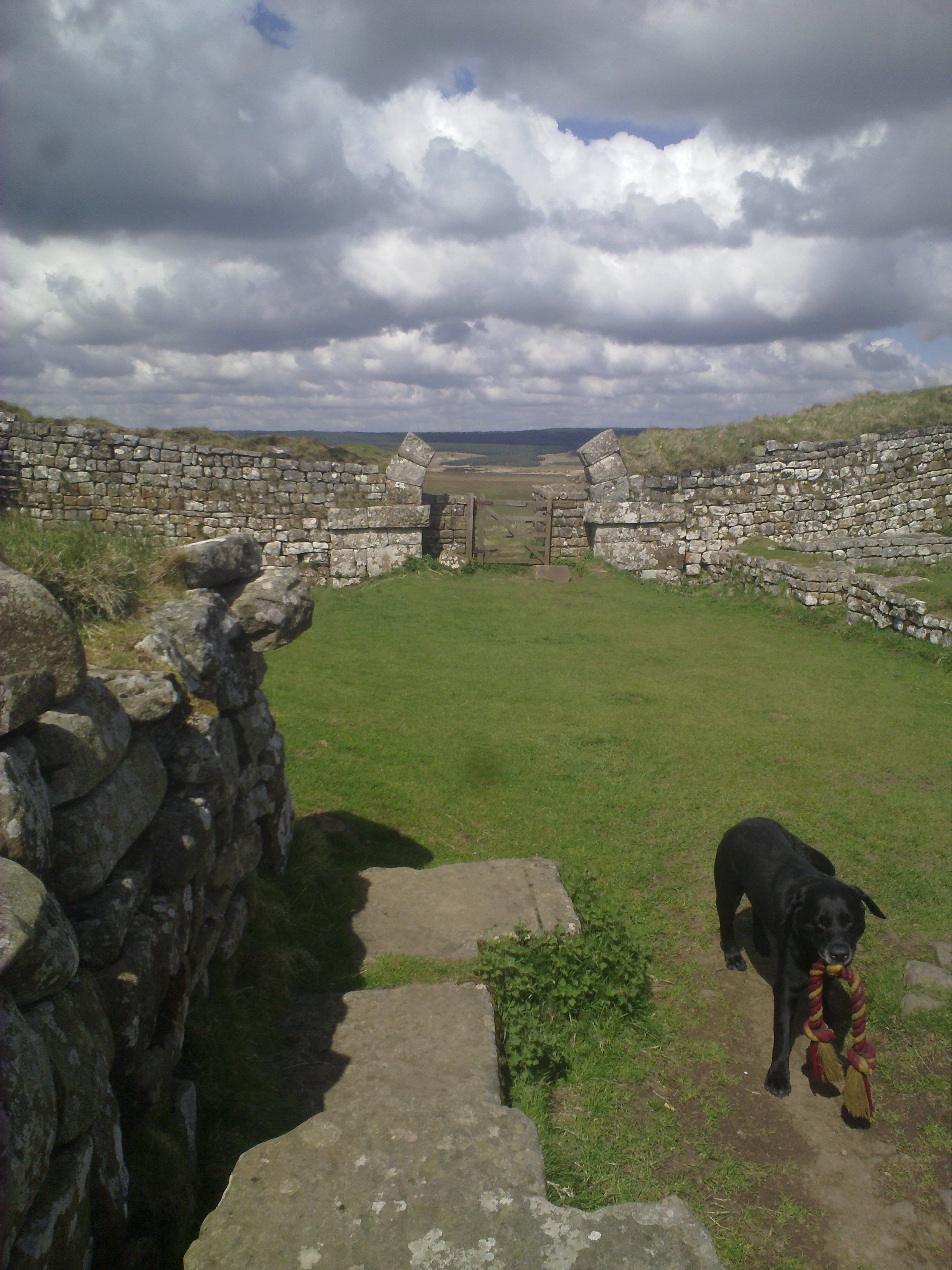
Anyone familiar with this beautiful part of England will know that Hadrian ’s Wall runs through the county.  It one of Rome’s most famous engineering projects and not only divided the British Isles but also continued to shape its history long after the Roman’s left our shores.  Would England and Scotland have developed separately without the Romans dividing their lands before either nation existed?  Who knows, but I doubt it.  Either way, it is an amazing example of their ambition, as well as their military and engineering might.

George R R Martin says it was whilst visiting Hadrian’ Wall that he started to form the idea for the Wall that divided Westeros in his magnificent Game of Thrones series.   I’m not surprised, as it is such an awe-aspiring monument, and it was whilst spending long summer holidays walking along the wall as a child, that sparked my imagination and was the reason where my love of Roman history developed.  It came in handy during the writing of my novel ‘Roman Mask’ too.  Despite the wall being built over a hundred years after my novel is set, it was still instructive to wander around the Roman forts on the wall: Chesters, Housesteads, and Vindolanda.  Not only did they give me ideas for the Roman camp in my novel – for example Varus’ having his own bathhouse in his home, just as the commander of Chesters had – it is important to get the feel of a Roman fort so you can clearly picture it in your mind before writing about it.  After all, if you can’t picture it clearly, how do you expect your readers to be able to?

This is one of the joys of writing an historical novel.  If like me you really love history, the researching of a subject isn’t a chore, or just a necessary step, it is actually fun and one of the most exciting parts of the project – discovering something that can be used in a novel gives me such a thrill.

So I’ll be returning to my beloved Northumbrian Hills, taking in the fresh-air, walking along the Wall, and hopefully becoming inspired for my next novel – although that might be getting a bit ahead of myself…

IMAG0367

And the winners are….

The winners of my mask competition are Nige Denton, Michelle, and Karolina Radzicka!  Please send me the address you would like me to send the mask to at thomasmdbrooke@gmail.com

Thanks for taking part, and I’m sorry to those that took part and were not pulled out of the hat.  Don’t worry though, I plan to be doing many more free give-aways in the coming months, so you’ll have more chances to win.

Transformation – Carol Berg

Transformation

I’ve been looking forward to writing this about this novel because Carol Berg is one of my favourite fantasy authors, and I don’t think she gets nearly enough credit for the fantastic stories and characters she creates. I emphasise the characters, because that is the strength of Carol Berg’s writing, her characters – and as far as I am concerned, that is the secret of good writing.

Carol Berg’s main character in this novel is Seyonne, a slave in the employ of Prince Aleksander, a ruler of a feudal regime that presides over an Empire that has been swallowing up neighbouring states, including Seyonne’s own sixteen years before. The past sixteen years of slavery hangs heavily on Seyonne, as he had once been a leader of his people, and now he finds himself enforced to work for Prince Aleksander as his personal secretary. The two characters couldn’t be more contrasting. Seyonne, is thoughtful, deliberate, and his moral compass remains intact despite the years of demeaning and degrading service he’d undertaken as a slave to the Empire. The Prince however, is spoilt, short-tempered, violent, and vain…but also intelligent, funny (at least to me), and has hidden depths of character. The story hinges around the relationship between these two men, which starts off fraught as the angry Prince is not shy from beating his slave, or treating him cruelly. At first the story revolves round how Seyonne deals with his erratic master, but then when the demons of Seyonnes past (literary in this case) come back to haunt him, he has no choice but to warn his Prince and protect him from them – something that Seyonne is uniquely equipped to do as the skills from his past life re-emerge.

The contrast between the two characters is a delight and as the relationship between the two men changes, and they become allies against a terrible foe, the story becomes further enriched. We delve into Seyonne’s past, whilst also explore the Prince’s insecurities, and also surprisingly find his softer side.

I can’t really recommend this story enough, however I do have one gripe…I never liked the cover much – apologies to the artist who designed it! I saw this book in a bookstore once, and never bought it.  I know you should never judge a book by its cover, but we all have at some point, intentionally or not. Fortunately for me, a friend or my sister (I forget which) gave me a copy of this novel and I read it, and I am so glad I did as I so nearly missed out on such a fantastic tale. So don’t make the same mistake I did, look past this novels cover and discover how brilliant a writer Carol Berg is.

You can buy this novel on Amazon here.

A reminder of everything that Greece has done for us…

I certainly don’t want to join the political debate raging through Europe at the moment regarding the Greek bail-out, but I have heard a few unflattering comments regarding Greece and their contribution to the European community lately.  So I thought it only fair to remind everyone, how much we all owe to the Greeks and how their culture and ideas help shape the modern world, and that their values were the foundations upon which Western society was based.
medicine

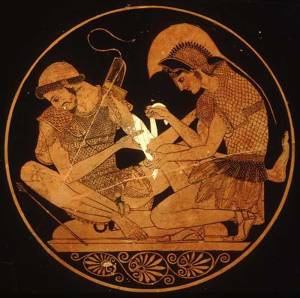
Medicine.  The ancient Greeks were the first to develop theories that could be tested by symptoms and results.  This in itself, was a massive shift forward from the previous beliefs systems held by virtually every society of the ancient world that illnesses were either punishments or gifts from their respective gods or deities.  The foundation of modern medicine, ‘cause and effect’ was born. The Greek physician Hippocrates (460 BC – 370 BC) is now considered the ‘father of modern medicine’ after he devised the ‘Hippocratic oath’ and the methodology and value system that is still in use today.

Ancient-Greece-Government

Greek government.  The ancient Greeks held an enduring fascination with different ways to rule a state.  Rather than blindly accept that sovereignty should be held by a single monarch or tyrant, or even a select few oligarchs, they explored the possibilities of the rule of law being held by different officials or citizens.  This took many different forms across many different city-states, as each sought the utopian society.  The most famous of these was said to respect the interests not of the minority but of the whole people.  They called this system democracy and it is of course the foundation of all Western societies’ government.

referee-watches-greek-wrestlers-in-ancient-olympic-games

Olympics – The first of the ancient Olympic Games can be traced back to 776 BC and continued for nearly 12 centuries, not ending until AD 393.  For over a millennia the dreams of young athletes were not the winning of a World Cup, or the Superbowl, but to receive a sacred olive-tree wreath, or kotinos, being placed on their head.  The games held a deeply religious significance but the Greeks also recognised how the games could encourage good relations between the cities of Greece, and to showcase the Greek ideals and physical qualities of their young athletes.

eclipse

Astronomy – A study of the stars was present in many different societies of the age, and was used largely in order to try and predict future events or interpret omens.  However, it was the Greeks who started applying logical thinking and geometry to their observations.  This was how they discovered that the moon passed around the Earth and also that the Earth was round, what caused eclipses, and very accurately calculated the circumference of the world.  They even figured out that the Earth travelled around the Sun, before wrongly abandoning this theory due to the Earth not moving relatively to the stars. However, this theory remained for the first astronomers such as Galileo to begin their work when the telescope was invented.

map

Geography– As well as the Greek Anaksimander being the first man to create a map of the known world in 610 BC, the Greeks were also forward thinking in terms of cartography.  Due to successfully deducing the spherical shape of the Earth, and managing to calculate its size, they were able to make projections to produce maps with the first known meridians and parallels.  These lines later progressed so that locations on Earth could be pinpointed in terms of their latitude and longitude which is the same principle your GPS\Sat-Nav works on today.
Hermaphroditus_Asleep_Greek_Art2

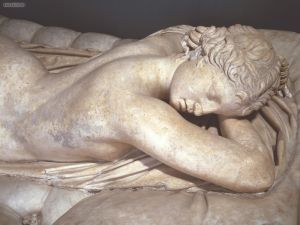
Art – The Greek artists of the fifth century BC aspired to representing vitality of life combined with a sense of clarity and harmony.  The artist Polykleitos formulated a system of proportions that achieved this artistic effect and was repeatable by others to produce magnificent bronze and marble statues.  In vase painting, when the Greeks developed the red-figure technique that superseded the black-figures, it led to advances being made in depicting the human body, particularly the human form in motion.  By the fourth century BC the nude Aphrodite of Knidos broke all previous conventions of art and its delicate proportions and stance began a new wave in sculpture and changed perceptions on how the female form was viewed in general. 

In Architecture the distinctive Corinthian column appeared and has remained the hallmark of buildings of grandeur to this day.  Equally, the acropolis of Athens and mausoleum of Halicarnassus showed that they were builders without peers.

Finally, Alexander the Great’s patronage of the arts saw the sculptor Lysippos set new standards in heroic portraits, and due to Alexander’s success on the field of battle saw the influence of Greek art spread throughout the known world.

socrates

Philosophy – It is possible that as great an influence as the other strata I have outlined are, it is in Philosophy that the Greeks made the greatest contribution to the Western world as they shaped how we think and view the world.  Classical Greek philosophy that started with Socrates, continued with his student Plato, and was furthered by Aristotle, made such an impression that a clear line can be drawn through to early Islamic philosophy, the European Renaissance and the age of Enlightenment.

Socrates would often confront the young attractive students who teased him for his distinctive looks (you can see his likeness in the picture above) and tell them that he was far better looking than any of them.  After all, surely the fact that his eyes protruded meant that they were better for seeing with, and that as his ears stuck out from his head, surely that meant that it was easier to hear?

Socrates once claimed to be the “Wisest man on Earth,” – the reason being? – “Because I know nothing….but at least I know, I know nothing.”

It was this breaking down of generally accepted knowledge and questioning everything that we see around us that can be viewed as the start of the empirical scientific approach – that theories should be testable and make falsifiable predictions.  Arguably this approach could later be exemplified by the brilliant 20th Century American Physicist Richard Feynman when he won the Nobel peace prize for physics, and later, just before his death, correctly questioned the presumptions and accepted wisdom of NASA, successfully diagnosing the true reason behind the Challenger disaster of 1987.  It showed that Socrates legacy was still alive and well.

I don’t have any answers here, and I know that the Greek debt crisis is very complex.  But let’s try and keep an open mind, and maybe question again any generally accepted wisdom.  After all, I can’t think of any other country that has contributed so much to Europe.
Roman Mask give away! Free Roman Masks up for grabs!

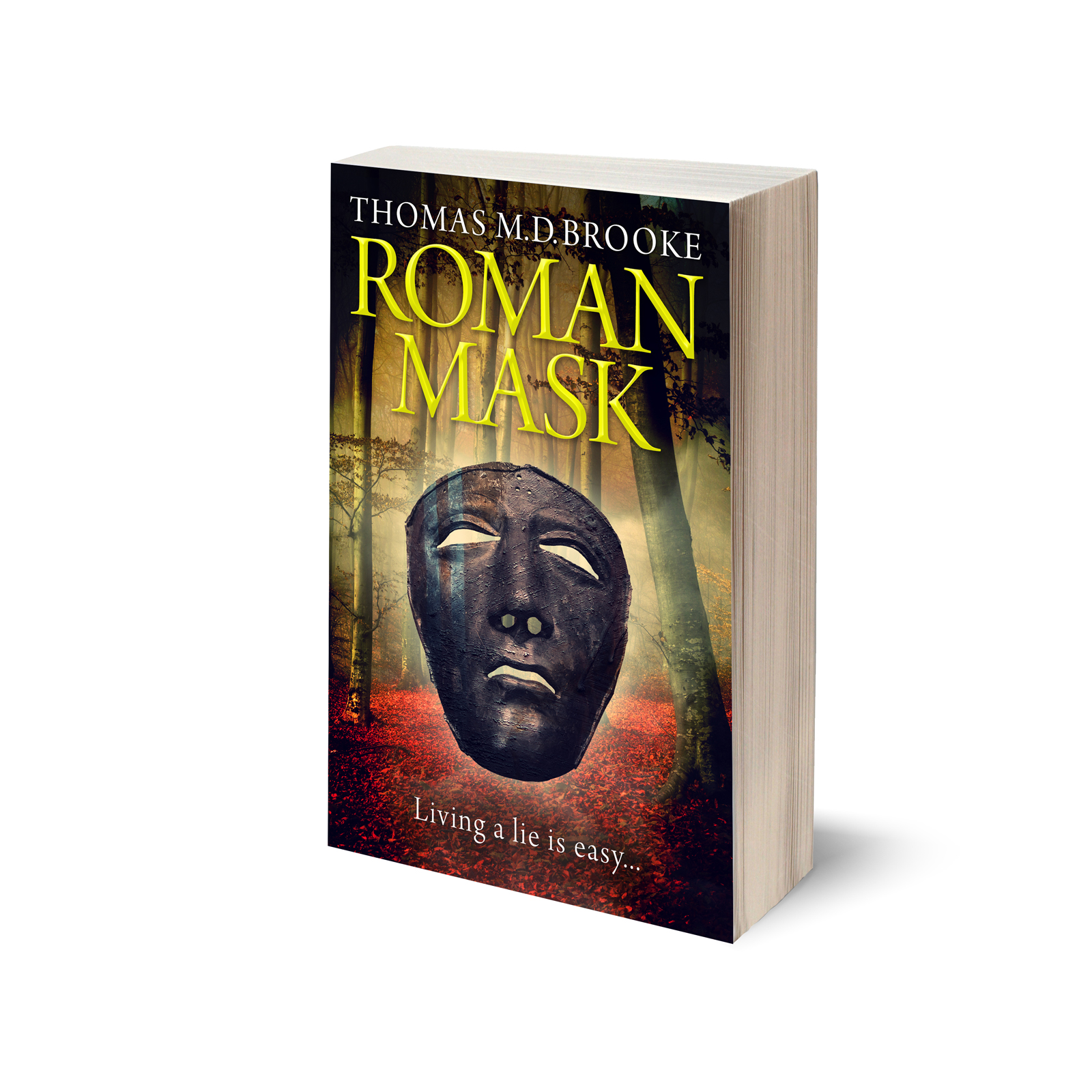
To celebrate the release of my novel ‘Roman Mask’ this week, I have decided to give away three Roman masks of my own!  You can see what they look like in the picture below.  Ok, they don’t look exactly like the mask found at Kalkriese (which is the image shown on the front cover of my book) but they are close enough and are suitably dramatic, so I thought they would make a nice prize.  They are all made from paper-mache and are hand painted.  If you would like one, simply enter the words ‘Roman Mask’ in the comment field.  Next week, I will put all the names in the hat and pull three out and ask the winners to send me their address so I can send them their mask.  The offer is open to anywhere in the world providing you have a postal address I can send it to.

IMAG0360

Incidentally, if anyone is interested in seeing the original Kalkriese mask it can be viewed at the Kalkriese museum  alongside other archaeological findings from the site of the battle of the Teutoburg forest which was first excavated in the 1990’s.

The release of my novel went well this week, and sales have been nice and steady, and I even have my first amazon reviews for my book!  You can see them here.   Amazon reviews are so important to any new novel, so if you have been kind enough to buy my novel, I would also really appreciate a review for my book as well.  If you buy the kindle version a pop-up will automatically appear when you finish the novel, or if you have bought the paperback you can submit a review through the Amazon site, it’s really easy, and I’d love to hear your views on my work.

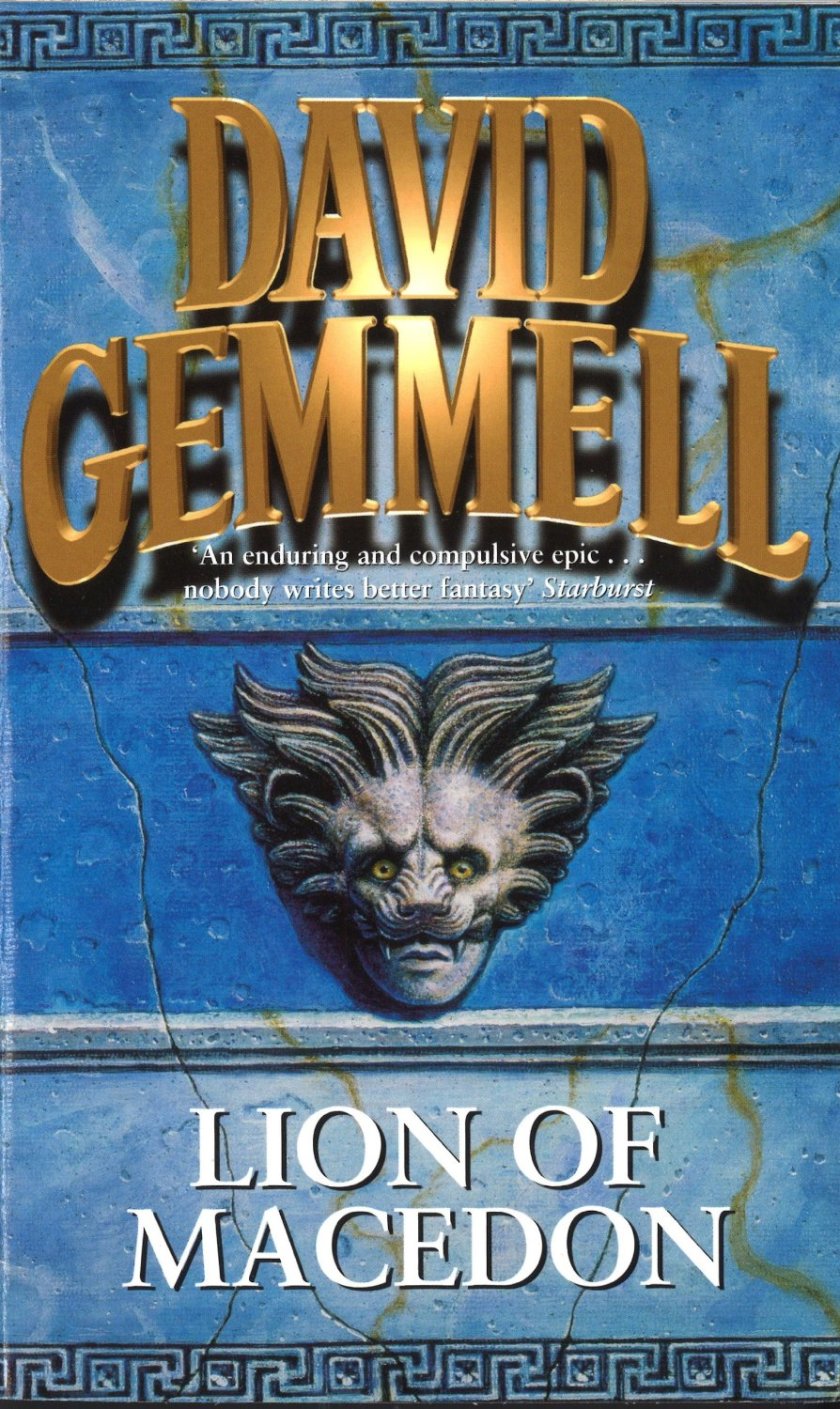
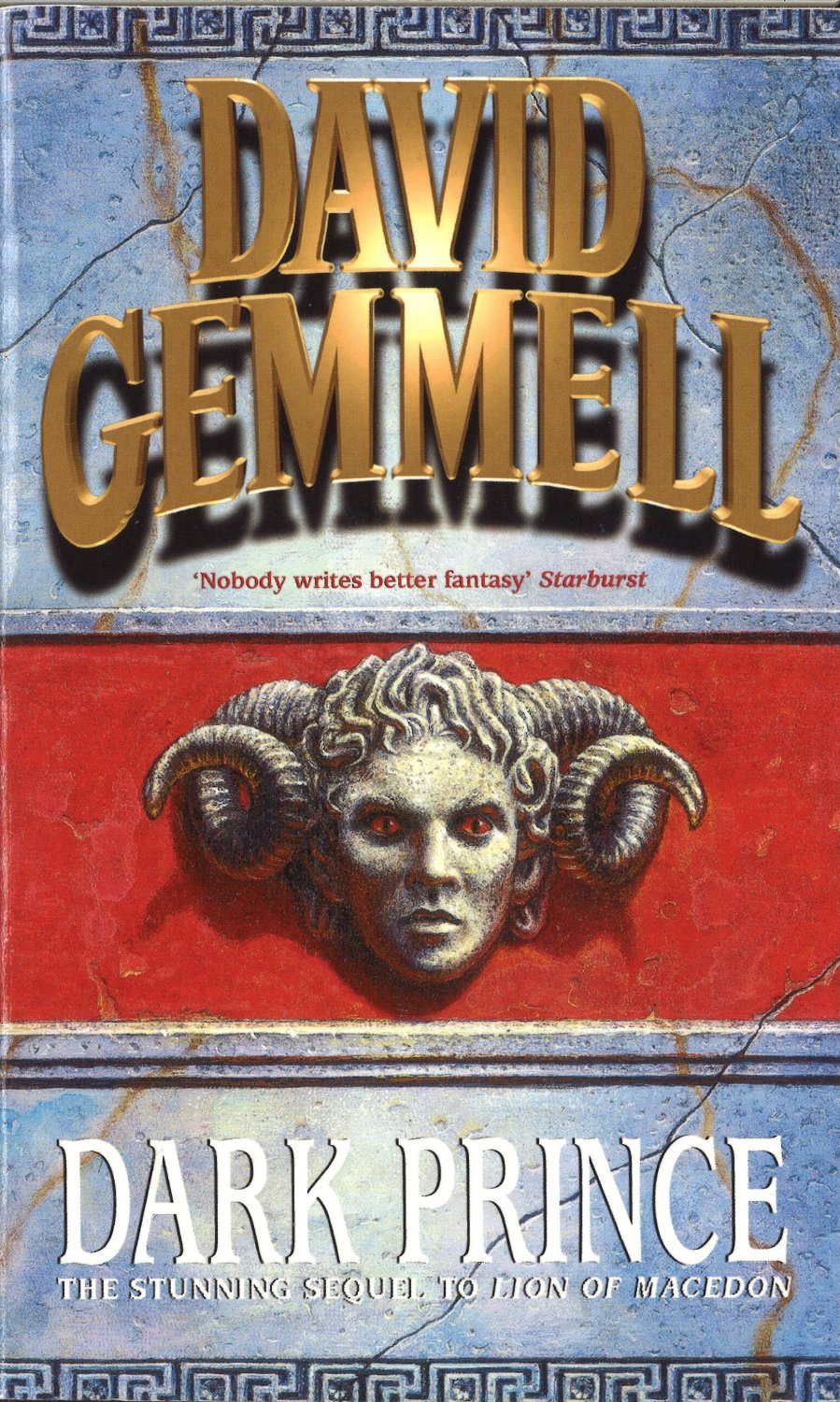
‘Lion of Macedon’ and ‘Dark Prince’ by David Gemmell

Dark Prince

Where Fantasy and History blend.

For those of you looking for a comprehensive and detailed history of Ancient Greece followed by Alexander the Great’s invasion of the Persian Empire you might find this series not exactly what you were expecting.   I think when Alexander starts fighting alongside Centaurs in a parallel world, this would steer you off the path of generally accepted mainstream history taught in most universities and schools…well, at least in this world.

However, that’s not the point of these novels, and as with a lot of books written by the sadly departed David Gemmell, he is fascinated by the concept of parallel lands similar to our own but imbued with magic.   This series focuses on the personalities of Alexander, his father Phillip, and in particular their General Parmenion.  It is the story of Parmenion that Gemmell’s tale is based, with him being brought up in Sparta in their fighting tradition under the harsh military regime of that land.  Any fans of the film 300 will love this part of the story as the Spartans are depicted in a similar vein to those in that movie.

Later the story develops into Alexander’s invasion of Persia, and Alexander’s dual nature – wise and reasonable at times, brutal and tyrannical as a demon at others, which turns out to be unsurprising as he really is possessed by one.  It’s a neat answer to the nature of Alexander, something that has fascinated and intrigued historians over the millennia.

I normally like my historical novels to have a high level of historical accuracy and a degree of authenticity, but this is a fantasy series, and it is among that genre that this novel should be judged rather than a genuine account of the past.  The characters in this series are as expertly constructed as we would normally expect from Gemmell, just as the action is equally fast paced and exhilarating.  It isn’t for the historical purists but if you like a really exciting story, with elements of fantasy interwoven with our own history, this series is great!

You can find it at Amazon here.

So you want to write a fantasy novel? For and against

Last week I looked at the PROs and CONs of writing a historical novel.  Hopefully, I managed to show some of the challenges a historical writer faces.  This week I want to move onto fantasy.  The fantasy novel has its own benefits and pitfalls – here are a few of them.

Breaking chains

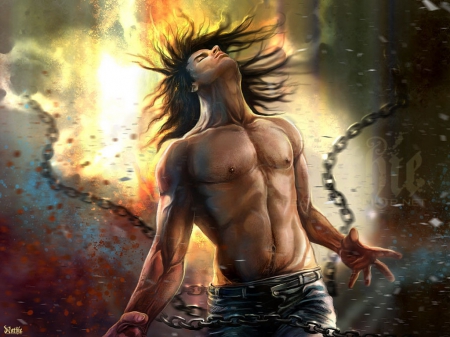
PRO:  There are no limits – unlike writing a historical novel, you are no longer constrained by the events of the past, so your imagination is now left unbound.  Create a world where everything is how you want it, teaming with life, filled with magic and weird and wonderful creatures, spread over expansive plains, seas, and mountains.  Only gods and writers are given this opportunity.

dragon

CON:  When fantasy is bad, it can be really bad.  When writing a fantasy novel, please keep your reader in mind.  That might sound obvious, but the very freedom that fantasy can offer writers, can lead them to forget this.  A writer may want to display the full magnitude of their imagination, but if that comes at the cost of telling a coherent story, then the novel can slip into something little more than a tool for the writers own ego.  Always remember writers are story-tellers first and foremost.

steam engine

PRO: There are no longer any pitfalls in regards to historical accuracy.  No-one can challenge anything that occurs in your own world – if you decide they invented steam power before the advent of gunpowder, so be it!  Your characters can also become anything you want them to be, become a king, an emperor, a magician of the highest order –hereditary lineage is no barrier to your characters ambition.

winding path

CON:  Sometimes too much freedom can bring its own problems.  You may no longer be constrained by the events of history, but that increases the chance of your novel wandering off on tedious tangents and dead-end plots.  Be very sure of the story you want to tell, as you no longer have history to keep you on track.

magic

PRO:  Magic! To draw energy from the world around them, create and cast spells of power and mystery, to control others by the power of their mind or the force of their will – what can possibly compare to the power that gives a character, or the mystery this can imbue in a world.

Middle_Earth1

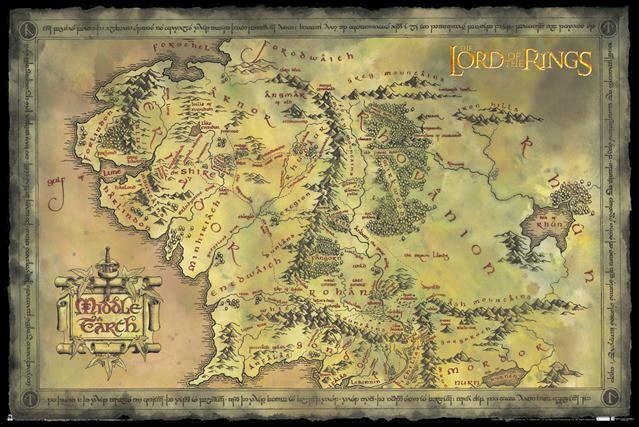
CON:  Make sure your world is original.  The problem with the fantasy genre is that arguably the greatest example of the genre is the one that started it – J.R.R. Tolkien’s the Lord of the Rings.  Much as we all love his novels, you don’t want to create a poor man’s Middle Earth.  Be especially wary of this if you inhabit your world with the well-known elves, orcs, and dwarves – I’m not saying you can’t, but make sure your world and your novel is in itself unique.

OUT TODAY!! Roman Mask by Thomas M D Brooke

What do we expect of our heroes? Self-sacrifice? Bravery? Strength of character? Maybe a hint of self-deprecation? Well, Cassius doesn’t have any of those traits. Cynicism – certainly. Cowardice – possibly. Prepared to live a lie in order to further his own ends – absolutely!

Rome AD 9

Augustus Caesar rules Imperial Rome at the height of its power, as the Roman Empire stretches across the known world. Cassius, son of one of her most powerful families, is the personification of Rome’s imperial strength: wealthy, popular, a war hero with a decorated military career – none of Rome’s fashionable parties are complete without him – except, he hides a secret.

After his nerve is broken in Germany, the thought of genuine armed combat is enough to send him into a cold sweat of fear and shame. But this doesn’t dissuade him from living off a false reputation so he can continue a life of casual affairs, wine, and parties, as he is seduced by the many vices of Rome.

However his scandalous life is soon upset by a summons from the Emperor’s wife. It ends his happy decadent life and returns him to Germany to assist the Roman legions in their greatest ever trial, and the events that will resound down in history, in the dark forests of the Teutoburg…

Where to buy!

Kindle

  • Amazon.com $2.99 here.
  • Amazon.co.uk £1.99 here.
  • Amazon.de €2.99 here.

Paperback

  • Amazon.com $14.99 here.
  • Amazon.co.uk £9.99 here.
  • Amazon.de €14.99 here.

Also available in all other Amazon regions.

Apologies if I drive you all crazy tomorrow…

Ok, I better apologise in advance, because tomorrow I think I might drive everyone mad telling them about my book which comes out tomorrow!! It’s so exciting having my novel go live, so grant me this day of  blatant self-promotion! My blog will return to normal soon, where we can discuss other novels in the Historical or Fantasy genre…but tomorrow is MY DAY!

dfw-tb-trm-cover-3d-nologo

Roman Mask: A fast paced action packed novel that begins in Rome AD 9, but leads to the events that will resound down in history, in the dark forests of the Teutoburg….

It’s been a long journey getting to this point, so it is wonderful to finally see it all come together.  I have loved the Historical-novel genre my entire life, so I am delighted to finally be able to contribute something to it.  It truly is a lifetime’s ambition just to get to this point, regardless of anything else that might come of this in the future.

I plan to be doing lots of promotional work over the summer for Roman Mask, and I am in the beginning stages of organising a blog tour for August (hopefully) where I will have my novel reviewed by several well respected historical websites, conduct interviews on the motivations and inspirations behind the novel, and finally I will also be writing a few guest blog posts.  I will let you know the details of this tour as soon as the plans are finalised.  However, I will not be neglecting my own blog, and you can hear all the news on the novel, in the normal Sunday update!

The novel is available as E-book from tomorrow (you can pre-order now and it will automatically be delivered to you kindle tomorrow), and I’ve just checked and the paperback version has just gone live, a day early…so you could order it now!!

Here is where you can purchase it!

Amazon.com $2.99 E-book  or $14.99 Paperback

Amazon.co.uk £1.99 E-book or £9.99 Paperback

Amazon.de €2.99 E-Book or  €14.99  Paperback

Map final New

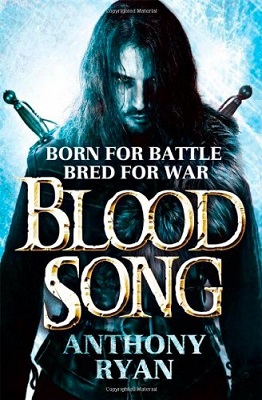
Anthony Ryan – Blood Song. Fantasy Novel

Some schools are tough…really tough.  Those who claim that school days are the happiest of your life have forgotten the playground bully – not to mention the coterie of sycophants who normally accompany the bully on their regular round of intimidation.  However, no matter how difficult and challenging some schools are, I’m pretty sure none go quite to the extremes depicted in Anthony Ryan’s novel Blood Song, the first of the Raven Shadows series.

In the Unified Realm, power is shared between the King and seven religious orders.  The Sixth of these orders, takes young boys – from every echelon of society – and teaches them to be the ultimate warrior, skilled with sword, bow, knife, or any other device designed for cutting bits off, or poking into people.  The methods they employ are so extreme that many don’t make it through their school years – a sort of Darwinian survival of the fittest played out to wheedle out those not strong enough to represent the shady ideals of the military order.

The story is based around a young boy named Vaelin who is deposited on the Sixth’s orders doorstop at ten.  We learn of his progress through the years, the enemies he makes and the foes he thwarts, but also quite touchingly the friends he makes and the bonds that develop between the young boys as they learn to cope with the extremely strict and extreme training enforced on them by their hard-eyed tutors.  The companionship of the boys is a vital part of the novel, as it offsets the stringent training regime that turns the boys from young novices into accomplished warriors, because even at this school for military perfection, boys are just boys, and firm friendships are formed.

As Vaelin emerges from the school as a young man, he needs all the skills taught him as he and his companions find themselves at the forefront of a misconceived war, instigated by their own King, and the conflicting loyalties this places upon them.

I really enjoyed Blood Song, and I will definitely be reading the rest of the series as it is off to a great start.  It will be interesting to see how the boys cope with life now their unorthodox schooling is at an end.

You can purchase this novel from Amazon here.

So you want to write a novel? Historical or fantasy, the PROs and CONs

As I’ve stated in earlier posts, I think both the historical and fantasy novel have more in common than separates them.  Both appeal to readers who want to escape the modern world with all its safe structured uniformity, and be transported to another time or place where the actions the characters can make a difference and life can be exciting and have real meaning.  However there are obvious differences, and when I decided to write a novel I had to decide which way I wanted to go – historical or fantasy.  In both cases I chose historical, but don’t let that make you think it is my preference, as I genuinely love both genres (I WILL write a fantasy novel at some stage).

This week I will go through the PROs and CONs of the Historical Novel, and I will follow this up next week with the PROs and CONs of the fantasy equivalent.

study

Pro: Researching a subject to base your novel around can actually be fun.  If you’re like me, and you love history, finding out about an era or particular subject can be immensely rewarding as you lift the veil on the past.  Tip: Choose a subject you love…you are going to be spending a lot of time on this subject, so make sure it’s not something you’re liable to get bored with.

catapult_1

Con: Don’t get carried away with small details.  Although it is tempting to put all you have learnt into a novel, you can ruin the all-important immersion of the story if you are periodically stopping to explain one historical fact or another.   When I wrote my first novel, I was very excited to learn all about ancient Greek siege engines, after researching the siege at Halicarnassus, and duly put it all in my novel….only for my father (who was helping me edit the novel) to put big thick red crosses through these pages with a polite note that said ‘too much information’.  He was completely right: remember you are a novelist not a teacher, and even though your readers will appreciate genuine historical detail, don’t go overboard and remember to slip it into your story with stealth and a subtle deft touch.

timeline

Pro: Historical events can provide a structure to base your novel on.  It is often a problem for an author to keep the events of his story in a coherent chronology, however if you stick to the historical events of the past, you already have a ready-made timeline from history just waiting for you.

inaccurate history

Con: Historical accuracy.  Nobody wants to write a novel that isn’t historically authentic.  Where it is perfectly right and proper that the author should be allowed a certain amount of artistic license to mould their story, you want to remain true to the actual events of the past and not distort beyond the point of credulity.  When I wrote Roman Mask I spent as much time checking the historical facts as I did on anything else, but still woke up in a cold sweat in the middle of the night a few times worrying I’d got something wrong.

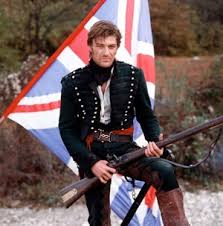
sharpe

Pro: You can shine a light on a period of history you think people need to know about.  This is often a clincher for history buffs who desperately want the world to hear about a fantastic period of history that nobody seems to be aware of.  Rather than driving everybody crazy in the pub talking about it, write a book then the world can know!

excalibur

Con: Readers own preconceptions of a period.  It’s easy to upset people if you’re going to trample over a much loved historical icon.  Whilst taking an original or revisionist approach can be applauded at times, it certainly shouldn’t be done just for the sake of it, and be aware that there are a lot of people you might upset if you go too far…tread carefully.

slavery

Pro: Set the record straight.  You might know of a particular period of history, that makes your blood boil with rage at the injustice and unfairness.  What’s the worst thing about this injustice – nobody ever talks about it, or even knows about it!  Time to tell the world and set the record straight.  If you don’t tell everyone about what happened, who will?

Irish

Con: Writing about events that are topical today, can bring its own problems.  You might write a well meaning novel based around a period in the not too distant past, only to start receiving hate mail soon after.  Why?  Because the closer you get to today’s present, the more likely the wounds of history are liable to be fresh.  It is great that people can still be moved by historical events, and that people haven’t forgotten their past – but you don’t want to be the one at the receiving end of the ire.  Tread carefully.