Latest Posts

A fun packed read, starting at the beginning – Gates of Rome, Conn Iggulden #historical #fiction #gladiators

Gates of Rome

When a famous character of the past is depicted in a novel, where do you start?  Normally the proscribed path would be to research the history books, find out where he or she first comes to the attention of the historians and start your story there.  However, with some historical figures that means that you don’t pick up their story until they are approaching middle age, and you learn nothing of what shaped their character or motivated them through their youth.  That’s certainly the case with Julius Caesar; by the time he started conquering Gaul he was already in his forties and often bemoaned the fact that Alexander the Great managed to achieve so much – he conquered all the lands from Greece to India – by the age of thirty.

So rather than wait until Julius Caesar has become a successful Senator and skillful politician, Conn Iggulden, in his novel ‘Gates of Rome’ has gone right back to the beginning and starts his story when Julius – or Gaius as he goes by then – is just a child, growing up with his best friend Marcus, on a farm outside of Rome.  It is a great lesson in going back to the roots of a character and learning what the author feels may have shaped their youth, inspired them, or drove them to succeed beyond all expectation.

The story centres around the two youths, Gaius and Marcus, being guided by their tutor and mentor – a retired gladiator – who not only teaches them to fight, but also pushes them to excessive limits – and in so doing, brings a whole new concept to the notion of tough love.  It’s an incredibly enjoyable and fast paced novel, and you can clearly recognise the influence of the brilliant fantasy writer David Gemmell, who Conn Iggulden attributes as a great inspiration to his writing.  The story rattles along with rich and colourful characters at every turn.  It shows that the veil between historical and fantasy writing is much thinner than many would suppose.

Gates of Rome is one of my favourite historical novels and sets up the four book series brilliantly as you see the two boys grow to manhood and then embark on the careers that the history books have recorded and we now know.  If you haven’t already read this novel, I can’t recommend this book enough, if you love your history told with an exciting edge and at great pace, I know you’ll love it!

You can purchase the novel on Amazon here.

An Alternative view on History. Guest Article by Burmesa #Byzantine #Conquistadors

I’ve been really looking forward to this post.  Last week I published two articles on  periods of history to set a novel.  Burmesa who has a keen interest in history, and also hosts a brilliant blog on animation named Animestus, read the article and very kindly offered to write an alternative view.  Burmesa has a strong interest in the Byzantine period, and the Spanish Conquistadors, and has highlighted the Pro’s and Con’s of setting a novel in these periods.  So, over to Burmesa…..

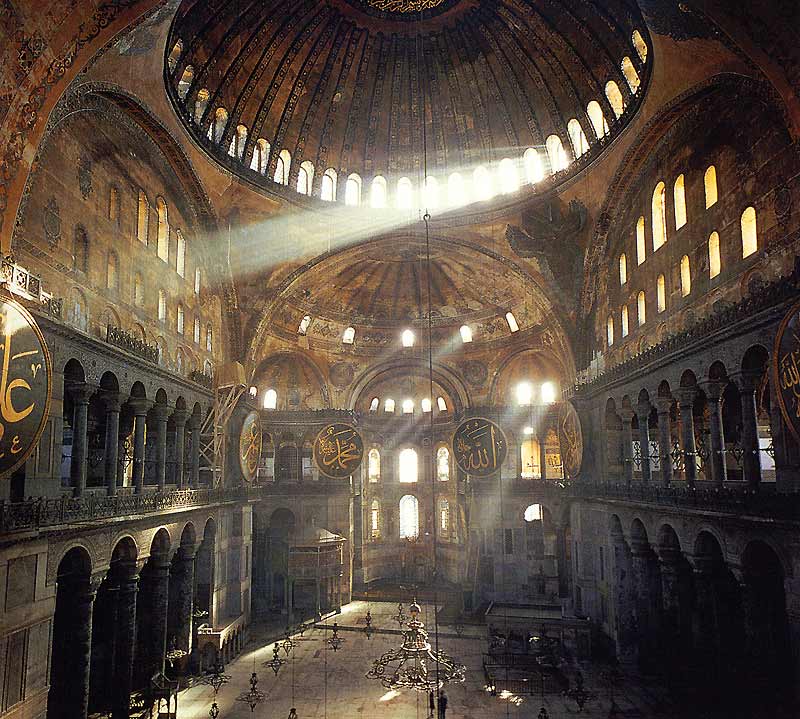
Byzantine pic

Byzantine Empire 330-1453 AD

Pros:
The Byzantine Empire has it all, which is no big surprise considering it reigned for more than a thousand years. Still, it mainly revolves around these three elements: Religion, wars, and intrigue (the urban definitions of both “Byzantine” and “Byzantine Plot” have not been made by chance). The Byzantine Empire was heavily influenced by the prevalence of Christianity. Also, it is the period during which all modern religious beliefs were either born or established. If your story’s theme is religion, this is your go to period. There’s lots of material, in artifacts, history and in the development of modern belief systems and philosophy.
Many religions, lots of space and lots of nations, all those elements result in lots of wars all over the place. Wars with the Arabs, with the Turks, with Attila the Hun, with Slavs, with early Russian tribes, and let’s not forget The Crusades. Not to mention that they also developed some very destructive weapons (such as what the Greeks called “liquid fire” which is now believed to have been some sort of ancient flamethrower) Those wars were very important in establishing the physical and cultural backgrounds and borders of modern Europe (and partially Middle East).
As for the intrigue, the Byzantine Empire was huge (for that time), was in a lot of turmoil and with great diversions in its population. Being an emperor meant being in constant fear of being assassinated. There were scheming brothers, fathers, mothers, sons, sisters, cousins, compatriots, not to mention many, many enemies etc. «Game of Thrones» is child’s play in comparison to these guys.
Cons:
If religion is not your thing, then you can just scratch all things mentioned above. Sure, there was a lot going on during those times, but it was all flavored by religion. Also, most historic novels in regards to this time period are written in Greek.

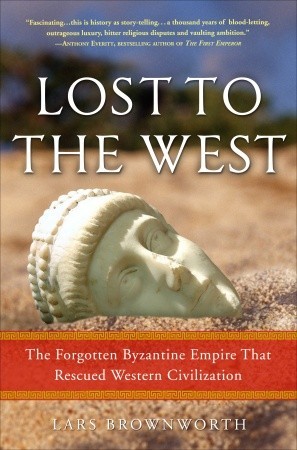
You can read more about the Byzantine period in Lars Brownworth’s book here.

Conquistadors

The Conquistadors:
1400-1700 AD
Pros:
Locations, travel routes, civilizations, legends and hero archetypes to your heart’s desire. From the colonies and the journey of Portuguese and Spanish ships around the African coasts to China and Japan, to the legendary trips across the Atlantic and towards (the then New World) North and South America. Depending on the time frame and purpose, the role of Conquistadors can vary from explorer to religious leader, warrior or mercenary. As a result, their missions could hold both positive and negative effects. They discovered the world, communicated and exchanged ideas and materials with many different civilizations and at the same time brought slavery, transmitted diseases and were even accused of committing genocide in South America. That’s cause for some heavy material right there.
Lastly, the Conquistadors are surrounded by legend due to their stories and travels. There are legends about mythical creatures, great sea monsters, imaginary lands and of course, there’s the story of the Fountain of Youth.
Cons:

The only Con I can think of is how chaotic that time period was. Too many variants can make a story lose its focus.

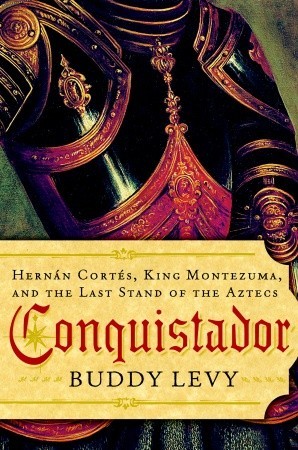
You can read more about the Conquistadors in Buddy Levy’s highly recommended book here.


The Name of the Wind by Patrick Rothfuss #Kingkiller #fantasy #novel

The Name of the Wind

Magic is crucial to fantasy novels, spanning the genre in many different forms, as sorcerers of many different guises fill their novels with mystery, wisdom, and sage-advice from a lifetime of accumulated knowledge.  But other than giving a general explanation of ‘a lifetime of study’ or ’many years of hard work’ we often never find out how these same wizards, warlocks, or magicians learnt to weave their spells and magic.

Patrick Rothfuss has taken this subject in his intriguing new trilogy named the Kingkiller chronicles, The first of which is called ‘The Name of the Wind’.  The story is explained through a series of recollections from his lead character, Kvothe, as he tells his story to a chronicler to give a genuine account of his life.  It reveals how Kvothe learnt his many different disciplines – both physical and mental – ranging from learning to fight, crafting magical items, to calling the wind to act via his will.  His studies, at a very unusual university, is interspersed with the friendships and the alliances he made, as well as the enemies the gifted student makes.  Patrick Rothfuss’ love and knowledge of music also becomes clear and Kvothe’s dedication to music is also interwoven into this story and makes a nice distraction from his progress at the university.

The recollections are told in the first person, periodically broken up when Kvothe stops his story to update the writer of his biography.   This I was less sure about as Kvothes’ tale is so well told that when the story is halted in this way, being dragged out of the complete immersion felt like a cold bucket of water being thrown over me.  But I am making quibbles here to a great and fascinating story as Kvothe learns his craft and skills.  Only the first two novels of the trilogy are currently available thus far, so how the story will develop and progress in the final installment – and he ends up killing a king – I don’t know, but I can’t wait to find out…

Mark Lawrence – Prince of Thorns

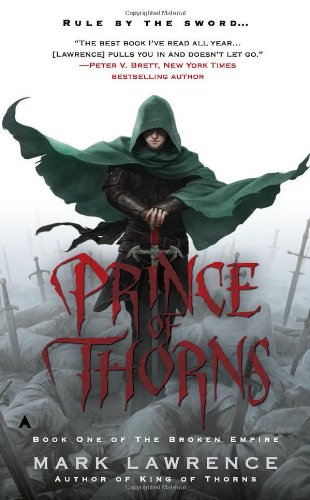
Ok, I have spent a fair bit of time discussing Historic Novels this week, so I’d like to return to fantasy novels in this post.  I have chosen to discuss one of my favourite recent series, The Broken Empire Trilogy, written by Mark Lawrence, starting with the novel The Prince of Thorns.

When you first meet Lawrence’s character, Jorg, you are shocked.  No really, you are.  I’m used to un-conventional characters and anti-heroes, but this guy is just plain nasty, and the fact that he is just a young damaged youth somehow makes it worse.  But that is the attraction of these books – the complex but darkly charismatic Jorg gradually pulls you into his angry world.  I’ll not give too much away, but his psychopathic behaviour is intrinsic to the plot as the story unfolds.  Jorg leads a rough bunch of mercenaries, through a post-apocalyptic world full of knights, magicians, and radioactively mutated monsters.  If you’re hoping for brotherly companionship amongst the band of mercenaries, you’ll again be disappointed, as this lot will not only sell your grandmother, they’ll eat all her cats too!  But somehow Lawrence keeps the story together through Jorg’s wit, dark humour, and dare I say it…charm?

Surprisingly you really start to warm to Jorg, and it is not long before you’re rooting for him to bring everyone down with his particular skill for chaos and mayhem, especially after his deviant behaviour is explained.  The greatest creation of these novels is certainly the main character, but he has some engaging companions, most of which have back stories that are well thought out and explained.

These novels will not be loved by everyone, but if you’re bored of the ordinary fare of heroically brave and honest souls, I can guarantee you won’t be disappointed with Jorg.

Great periods of History to write about – stage 2 (Tudors to WW2) #Historical #Fiction

Ok, last time I discussed five era’s from Ancient Greece until the Medieval age, this time I’ll be bringing things up until the modern age.

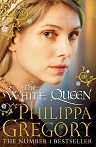
The White Queen - Philippa Gregory

Featured novel: Philippa Gregory, The White Queen

The End of the medieval period and the coming of the Tudors 1455 – 1603 – War of the Roses, a large King with some unfortunate wives, an iconic Queen.

PRO’s:  Where to start with this one!  There are so many stories in this period, be it the Princes in the Tower, the battle of Bosworth Field, Henry VIII and his never ending quest for love  – tearing England apart in the process – and that’s before you even get to Elizabeth 1st and the defeat of the Spanish Armada.  This period more than any other personifies English History in most people’s imagination.

CON’s:  Despite the War of the Roses ending in 1485, it seems that some people have yet to realise it.  There are still many in the UK and around the world that are either die-hard Plantagenets or Tudors, and are liable to get very cross with you if your account doesn’t favour their side (My sister is one of them, so you can count me out).  You could turn to the later history of Henry or Elizabeth (everyone likes them) but you will be up against some very stiff competition as this is a popular era for writers.  If you do choose anything from this period, try and find a new angle to tell the story…

Pride and Prejudice - Jane Austen

Featured novel: Jane Austen, Pride and Predudice

The period drama 1700 – 1850 – the era of Romance, village greens, and dastardly villains.

PROs: You get this one right, you might end up very rich.  Not only is this a popular era for novels, if your book is good enough, it could be turned into one of those period dramas so beloved of Sunday night television.  The class divide can provide your novel some much needed conflict, but don’t lose sight of why people love these novels so much, a glimpse into an idealised world of gentleman, ladies, balls, and beautiful dresses.

CONs:  There is some rather daunting competition from novelists like Jane Austen amongst others, but who ever said it would be easy? My difficulty in writing about this period is that unfortunately I need a battle or two, or at least the odd chance of a few fellows being chopped up.  Shame though, as this era has such commercial appeal.


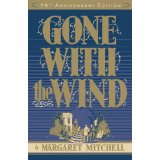
Featured novel: Gone with the Wind, Margaret Mitchell

American Civil War – 1861 -1865 Yankee Doodle and Dixie go toe to toe.

PROs: The scale of this conflict was truly shocking as the United States underwent its greatest trial.  The fact that this conflict was brother against brother only increased the tragedy.  A novel that can reflect the divided loyalties’ of the participants and recapture the uncertainty of the period is what you are after.  The strong conflicting issues of slavery and emancipation provides an opportunity for your novel to have real gravitas.

CON’s: Be really sure of your American History and Politics.  As we gradually near the modern age, there is an increased likelihood that your novel will impact on issues that are still contentious points in the present day.  The racial tensions and issues from the American civil war have lost none of their potency so it is advisable to really do your homework before you offend anyone.  This shouldn’t be a reason not to write your novel, just be aware.

Birdsong Sebastian Faulks

Featured novel: Sebastian Faulks, Birdsong

World War one 1914 -1918 – the misery of the trenches, and a new way of war.

PROs: The grim realities of modern warfare became clear as machine guns and mud filled trenches replaced cavalry and any notions of glorified military traditions.  The stark horrors of modernised artillery and mechanised warfare made the bravery of the soldier’s stories all the more heart-breaking.  The war poetry of the period can provide you with much inspiration and genuine personal accounts are available to add authenticity to your novel.

CONs: It is very difficult for any novel based on this conflict to be anything other than very dark – which is fine, but don’t let this lose your focus on the basics of good writing and the need for believable characters with genuine human relationships with one another.  The comradeship shown from some of the war poems should provide instruction that your novel shouldn’t solely be about the gas, trenches, and misery of the conflict.

Featured novel: The Time in Between, Maria Duenas

Between the wars 1918 -1939 – the roaring twenties, the great depression, the rise of a dark power.

PRO’s: Rather than focus of the second great conflict of the twentieth century, I decided to look at the period immediately before the war.   Whether you set your novel during the time of the prohibition America, the dark days of the depression, the Nazi’s rise to power in Germany, or the Spanish Civil war of the thirties, your novel should be able to hold a sense of the impending storm to come.

CON’s: As we approach our own timeline, there is always a chance that you might write a perfectly plausible set of events in your novel, only for an (old) reader of yours to call you and say, ‘Hey! I was there, you’ve got that wrong!!’  Make sure you do your homework before being caught out!

Okay, that’s it for now.  However, there are so many more areas of History to examine, and I am delighted to say that next week Burmesa – who writes a fantastic blog on animation called ‘Animestus’  – will be putting forward some alternative era’s.  See it here next week!!

Great periods of history to write about – STAGE 1 (Ancient to Medieval)

Okay, so you want to write a historical novel, but what period of history do you choose?  The list is endless, but here are a few options….

The King Must Die

Featured novel: The King Must Die by Mary Renault

Ancient Greece 1200BC – 300BC:  Greek gods, myths, large scale battles of Hoplites…

PRO’s:  The birthplace of democracy, the Olympics, philosophy, and other ideas that shaped the modern world, give you lots of subject matter to base your novel around; whilst the mythology of Ancient Greece allows your novel to be full of gods, goddesses, and all the mysticism that goes with it.  If you prefer a little more action, don’t worry – you have the warlike Spartans, their rivalry with the Athenians, or Alexander the Great’s invasion of Persia.  Disclaimer: I couldn’t resist the last on that list, so I tried my hand at that myself in the first novel I wrote.

CONS:  It can be more difficult than you think to research a historical period so far in the past.  Although there are a host of non-fictional books to use as research, you may well get stumped on relatively straightforward questions halfway through writing your book.  Unless you happen to be a professor of ancient history, or be a leading authority on the subject (and even if you are), you may find yourself asking, ‘Did they have those? If not, what on Earth did they use instead??’ and sometimes all the research in textbooks or on the internet won’t answer your question.
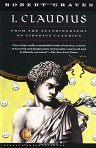
i Claudius Robert Graves

Featured novel: I Claudius by Robert Graves

Ancient Rome 300BC – 450AD: No one shows decadence quite like the Romans…

PRO’s: If you find the ancient Greeks a little bit too noble, you can’t beat a Roman for a bit of vice, corruption, betrayal, and fornication…the odd Gladiatorial swordfight can go down well too!   Okay, I’m a little bias because my forthcoming novel is set in the Roman world, but the Romans will always make an intriguing subject matter, not just by what they achieved and gave us, but also by their flaws.  Political dramas are just as at home here as more military novels.

CON’s:  The Romans were like us in some ways, but in others, definitely not.  The Romans believed in slavery, held deep seated prejudices against virtually everyone, enjoyed chopping up people in the arena, and military aggression was something to be celebrated.  This might make choosing a leading character with more gentle characteristics tricky.  The solution used to be simple: Make the Romans the bad guys, and your leading character a poor persecuted Christian.  Unfortunately, that’s no longer going to cut it.  Blame it on all those swords and sandal epics of the 1940s – 1960s, but this has been done to death and unless your readers are practicing Christians themselves, will find this subject matter boring.  You could choose another subjugated race (there are a lot to choose from!) and although that’s a better idea (think Spartacus) it’s still a bit of a cop out.   It’s the Romans that everybody finds interesting, so write your novel about them.

Mists of Avalon - Marion Zimmer Bradley

Featured novel: The mists of Avalon by Marion Zimmer Bradley

Arthurian legends and the dark ages 450AD – 600AD: Sword in the stone, the round table, the one true king…

PROs: You would have thought that writing any novel based in the dark ages to be difficult, due to the fact that they wrote practically nothing down and only myths and legends really survived this period.  However, that can be a strength as much as a hindrance.  Because we know so little about this period, you are given a much freer rein on what you write about.  No one truly knows whether King Arthur even existed, so you can come up with your own take on this subject, following a great tradition of writers who have done exactly the same.

CONs:  Readers pre-conceived ideas about King Arthur.  You might write the most ground shaking new novel, find archaeological evidence supporting your new theory on what the leather armour of the period looked like, weave a tale of love, betrayal, and redemption, only for the reader to say: What! No round table!!

This is because it is such a well-known subject, although nothing can be proved one way or another, the readers are likely to have their own preconception of what they think the legend should consist of.  To make matters worse, one person’s preconception is likely to be very different from the next.  Some will still think that the Knights of the Round Table should have nice shiny armour, others that the sword of power should be called Caliburnus and not Excalibur.  Some would have Merlin a wizard, others a druid, or even a priest.

Still, if you like stirring up a new debate, why let that stop you…

The Last Kingdom - Bernard Cornwell

Featured novel: The last Kingdom by Bernard Cornwell

The Vikings – 800AD -1066AD:  Let’s go a Viking!

PRO’s: You can’t beat the Vikings for pure adrenaline pumping action.  Tales of the sea are always exciting, but when you can add in raids of the British coastline at the end of the journey, plus running home with gold and fair maidens, you’re on to a winner.  Add in some Viking mythology, the Halls of Valhalla, and maybe drinking from the skulls of your vanquished foes, you have a true boys own adventure.

CON’s: You might have missed the boat on this one.  The popular TV series is fulfilling this niche nicely for most people in need of some Viking action.  However, this could also be an opportunity too: undoubtedly the TV series will generate more interest in the era, and if you can come at it from a different angle – maybe a touch more realism, or authentic history, you could make this era your own.  Remember, a well written novel will always be able to portray a historical period more easily than a TV series.

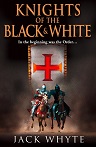
Knights of the Black & White - Jack Whyte

Featured novel:  Knights of the Black and White by Jack Whyte

Medieval History and The Crusades. 1100 – 1350 AD The Knights Templar.

PRO’s: There are plenty of stories involving knights, castles, sieges, and battles throughout medieval Europe to research and write about.  What’s more, unlike the Arthurian period we spoke of earlier, the knights genuinely did wear the shiny armour so beloved of our chivalric imaginings.  However, it is the Knights Templar, formed during the crusades to escort pilgrims to the holy land that seems to have captured the attention of the modern reader.  Whether that is because of their secretive and cult like mystery, or simply because we are fascinated by the strange notion of warrior priests, I don’t know, but their attraction as subject matter is undeniable.

CON’s:  The Knights Templar were a devoutly religious order, who zealously believed in their founding principles, church, order, and mission.  As we live in far less devout times, it is sometimes difficult to convey the required level of religious fervour to any characters whilst holding the attention of the modern reader – or at least it would be to me.  As an interesting topic though, there is a lot of scope in this period.

There isn’t one proscribed path….

This week I have looked at four separate novelists which have all made a great contributions to the two genres, but all have used very different writing styles.  In summary:

David Gemmell – fast paced, exciting stories, interspersed with highly developed character development outside of the leading cast.  The sort of novel you can’t stop once you start.

Bernard Cornwell – Gritty, realistic adventures closely matched to real events.  Strong emphasis on real history, and very clear and understandable battle scenes.  Will finish one of his books feeling you have learnt a lot, without realising how.

Robin Hobb – Slower paced, but beautifully written novels, with a lot of detailed description and strong emotional journeys.  Immersion guaranteed into a rich and vibrant world, through close connection to leading characters.

George McDonald Fraser – History told in the most unorthodox of styles – with a leading character as far removed from the mainstream as can be imagined.  Detailed history of the nineteenth century including some of its lesser known events; all held together by the author’s sharp wit and dark humour.

So you can see that there is no generic method for writing and being successful.  Each of these books are very different in their approach, but everyone tells a fascinating story.  You can see how varied both genres can be and how diverse the writing.

However there is one thing that all these novels have in common – strong characters.  I will be returning to the characters in novels in future blogs as I think that is the true test of a novels enduring charm…

George McDonald Fraser – The Flashman papers.

Flashman

Okay, I’ll admit that this one isn’t for everyone.  George McDonald Fraser’s Victorian character, Flashman, that he took from ‘Tom Browns schooldays’ is a coward, a scoundrel, and a complete all round rotter.  Flashman manages to find himself involved in all the leading events of the nineteenth century, despite spending most of his time trying to run from trouble, and somehow always manages to come out smelling of roses, and being decorated with plaudits and medals.  The detailed historical research that went into these novels are also interspersed with George McDonalds Fraser’s quick wit, and they form a fun ride through some fascinating periods of history.

The reason it is a controversial choice, is that even the most cynical hearted of readers couldn’t possibly condone some of Flashman’s behaviour, but it is key to these novels.  The novels raise an interesting point in the depiction of certain characters in Historical novels.  I know from my own experience of writing that it is impossible to create a believable character in the past if we try and impose our own modern values and morals to them.  For example, a novel set in Ancient Rome, creating a main character who is anti-slavery, non-discriminating of other cultures, and believes that all are born equal, would be completely unbelievable and the reader would reject it.  The same could be said of a nineteenth century Victorian imperialist like Flashman – how else would you depict him?

Anyway, leaving aside the philosophical pros and cons of his writing, his novels are really good fun, and if you can put up with the non-political correct nature of them, are a fascinating read.  My favourite is ‘Flashman at the Charge’, and depicts the events of Crimean war and the charge of the light brigade.  You can buy a copy on Amazon here.

Robin Hobb – The Tawny Man series

FoolsErrand-US

Robin Hobb’s writing is characterised by its depth and incredibly detailed description, added to this is a deep insight into her characters inner thoughts and emotions.  It is far removed from some of the faster paced novels so characteristic of the fantasy genre, but that is why her novels achieve something that many other can’t, and that is to bring the reader into complete immersion into the worlds she creates.  The time she spends describing the emotional journey of her characters is what I would identify as the key to her novels.  When somebody dies in her novels, you really feel it, because you have learnt what that character means to others, and by the same token, yourself.  It is important because lives are important, and Robin Hobb never loses sight of that.

I have chosen the ‘Tawny Man series’ as my favourite, because it was with this series that I really identified with the main character, a moody, roughhewn man, whose life is characterised by the close bond he holds with his wolf – being a dog lover, this really hit the mark for me!  It shows that characters in fantasy novels do not have to be the traditional heroic type, you can learn to identify with a rich blend of personalities, as long as they are explored thoroughly.

The ‘Tawny Man series’ is actually the second of the Farseer trilogies, so if you wish to start this journey you had better start with the first book of the first series, which can be bought here.

Bernard Cornwell – The Sharpe series (any of them)

Sharpe

Most of you will be familiar with these stories, from the T.V. series that leapt Shaun Bean to stardom in the UK, and ultimately led to him becoming noticed by Hollywood.  The Lord of the Rings, or Game of Thrones will now be what most will associate him with, but for me he’ll always be Richard Sharpe.  After the pilot series of Sharpe’s Rifles (two episodes back in 1993) I was intrigued by the story, and when I found an old battered copy of one of his novels in my grandmother’s bookshelf (My grandfather, before his death, had a great interest in Waterloo) I was led into a fantastic ride through the Napoleonic wars, as Sharpe led his rag-tag company of riflemen through the peninsular of Spain.  It proved a long held theory of mine, that the historical novel will always be superior to the film or TV series as the writer has so much more scope to explain the historical details so important in this genre.  Before long I was an expert on the Baker rifle, how to load one, the difference between that and a smooth-bore musket, and it wasn’t long before I started to think I had a good understanding of French and British battle tactics.  My heart swelled with pride as the series was concluded at Britain’s triumph at Waterloo and felt I learnt a good deal about the Napoleonic wars.  That is the beauty of historical novels – you learn as you read, and skilfully done, you never even realise you’re being taught.

The TV series did achieve one thing for me however – Richard Sharpe, in my mind’s eye, was always Sean Bean.

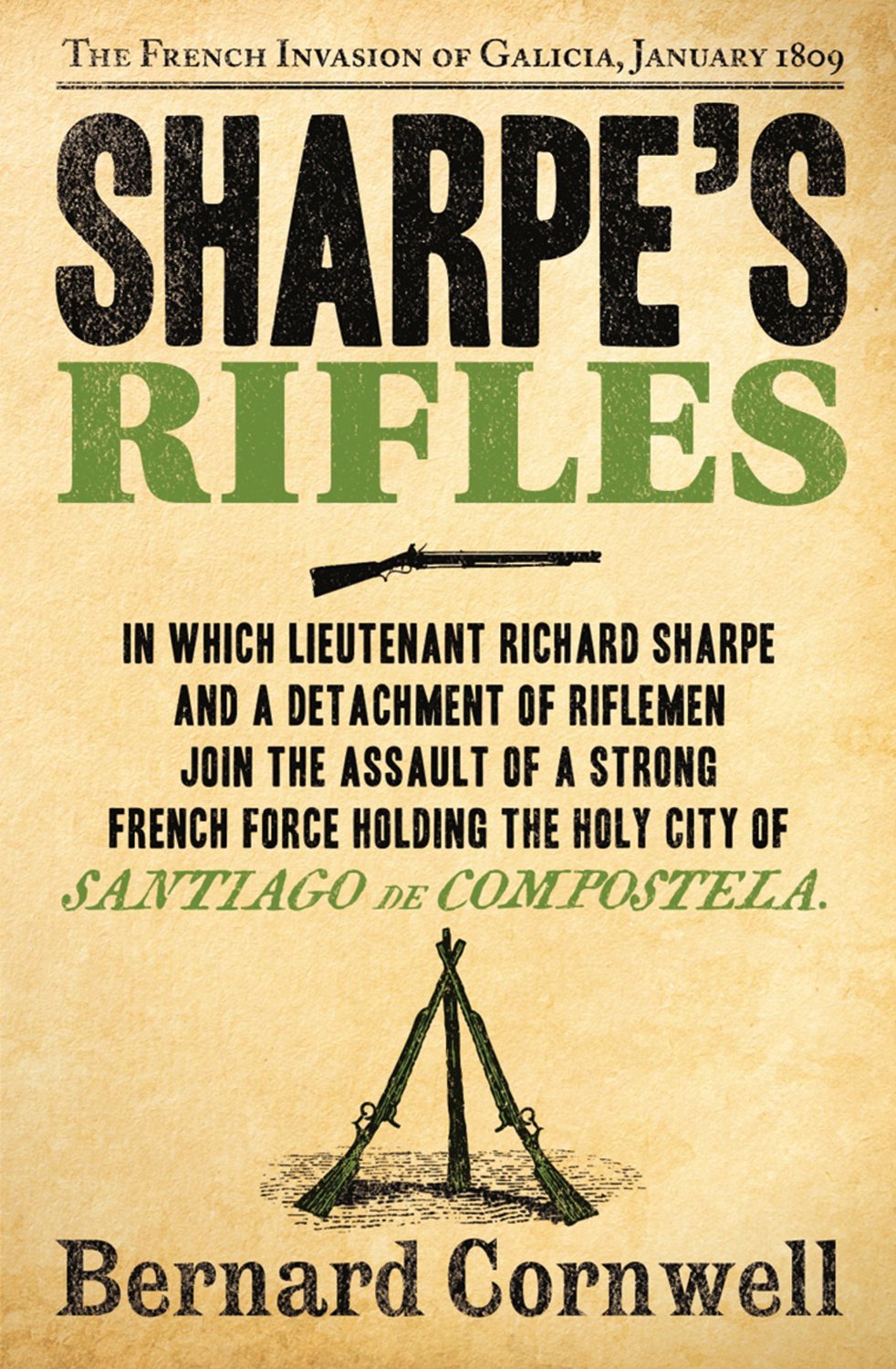
I will return to Bernard Cornwell’s writings a lot in the future, as he has written several brilliant series of books, however if you can’t wait his own blog can be found here. Alternatively you can purchase Sharpe’s rifles from Amazon here.